


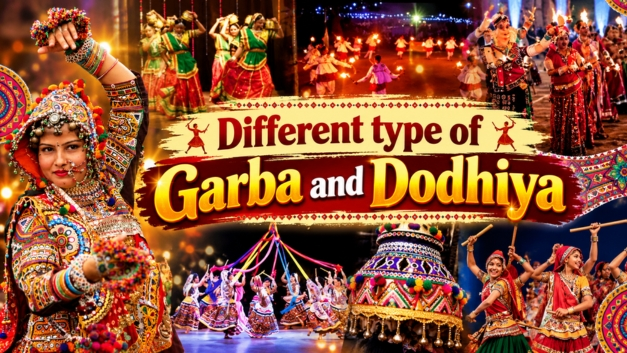
Gujarat’s Navratri is more than nine nights of music and dancing. It is a celebration of faith, folk culture, community and generations coming together. From traditional Garba in village courtyards to energetic Dandiya Raas and modern DJ nights, the festival has evolved while keeping its cultural roots alive.
Today, younger generations are giving Navratri a new identity through fusion music, creative dance moves, colourful outfits and social media trends. However, traditional styles such as Taali Garba, Dodhiya and folk Raas continue to hold an important place in Gujarat’s cultural heritage.
Here is a look at the different types of Garba, Dandiya and Dodhiya, and how they have transformed from traditional celebrations into the Gen Z festival experience.
1. Traditional Garba: The Roots of Gujarat’s Navratri
Garba is one of Gujarat’s most recognised folk dance forms, traditionally associated with the worship of Goddess Amba and the celebration of Navratri. Dancers move in circles, using rhythmic claps, turns and coordinated footwork around a central lamp or an image of the Goddess.
In earlier times, Garba was commonly organised in village courtyards, neighbourhood streets, temple grounds and community spaces. People gathered to sing traditional devotional songs accompanied by folk instruments, creating an atmosphere centred on devotion and togetherness.
Garba was not simply about dance steps. It was a way for communities to celebrate their traditions, pass folk songs from one generation to another and strengthen social bonds.
In December 2023, Garba of Gujarat was inscribed on UNESCO’s Representative List of the Intangible Cultural Heritage of Humanity, recognising its cultural importance.
2. Different Types of Traditional Garba
Taali Garba
Taali Garba is performed using rhythmic handclaps and coordinated steps. Dancers move in a circle, following the beat of the music and changing directions or adding turns as the rhythm develops. It is one of the most familiar forms of Garba and can be enjoyed by beginners as well as experienced dancers.
Be Taali Garba
Be Taali, or two-clap Garba, incorporates two claps into a repeating rhythmic pattern. Dancers combine the claps with footwork and turns to create a flowing group performance. The rhythm and exact movements can vary according to the song and local tradition.
Tran Taali Garba
Tran Taali, or three-clap Garba, adds a third clap to the rhythmic sequence. It requires dancers to maintain coordination between their hands, feet and body movements. The style is popular among people who enjoy traditional Garba with a more detailed rhythmic pattern.
Hinch Garba
Hinch is associated with a lively, bouncing movement and a strong rhythmic flow. Depending on the local style and music, dancers may use quick steps, turns and coordinated movements to maintain the energy of the circle. It shows how traditional Garba can become increasingly energetic as the music develops.
3. What Is Dodhiya? A Traditional Form of Raas
Dodhiya, also written as Dodhiyu or Dodhi in different contexts, is associated with traditional Raas dance styles in Gujarat, particularly in Kachchh.
The Government of Gujarat’s Kachchh district website identifies Dodhiya among the different styles of Dandiya Raas performed in the region. Traditional Raas can involve coordinated formations, rhythmic stick movements, changing directions and energetic footwork.
Unlike the simple circle formation often associated with Garba, Raas styles can include more elaborate group patterns and interactions between dancers. Dodhiya is a reminder that Gujarat’s folk dance culture is much more diverse than the familiar Garba steps seen at large Navratri events.
4. Dandiya Raas: Dancing with Sticks
Dandiya Raas is another major folk dance tradition associated with Navratri. Dancers use a pair of small wooden sticks, known as dandiyas, and tap them rhythmically while moving with partners or within a group formation.
Traditional Raas is linked to Krishna’s Raas Leela in popular cultural and religious interpretations. In Navratri celebrations, Dandiya is often performed after Garba, although the order varies between events.
Some common features include:
- Partner movements: Dancers coordinate their steps with other participants.
- Rhythmic stick tapping: The sticks create a distinctive beat alongside the music.
- Group formations: Dancers may move in lines, circles or changing patterns.
- Increasing tempo: The rhythm can become faster as dancers become more familiar with the sequence.
Traditional Dandiya is a lively expression of teamwork, rhythm and community participation.
5. How Garba and Dandiya Have Changed Over Time
The evolution of Navratri can be understood through the way people gather, the music they enjoy and the scale of celebrations.
Earlier generations: Community and devotion
Traditional celebrations often centred on local communities, devotional singing, live folk instruments and simple dance formations. People learned steps by watching family members and experienced dancers. The emphasis was on participation, cultural continuity and devotion rather than elaborate stage productions.
The growth of organised Garba events
As cities expanded, larger Navratri grounds and organised events became increasingly prominent. Live singers, professional musicians, coordinated lighting and larger dance circles helped bring traditional folk culture to wider audiences. Traditional songs continued to be performed alongside newer compositions and popular recordings.
The modern festival era
Today, many Navratri events combine folk music with amplified sound systems, elaborate stages, professional performers, themed decorations and ticketed entry.
Garba has also become an important part of Gujarat’s cultural identity beyond the state, with celebrations organised across India and internationally. The transformation has created new opportunities for performers, musicians, event organisers, costume designers and local businesses, while also encouraging discussions about preserving the traditional spirit of the festival.
6. Gen Z Garba: Where Tradition Meets Modern Style
For Gen Z, Navratri is both a cultural celebration and a major social experience. Young people continue to participate in traditional Garba and Dandiya while adding their own preferences in music, fashion and presentation.
DJ Garba and Bollywood Fusion
Many contemporary events blend traditional Gujarati Garba songs with Bollywood tracks, remixes and electronic beats. These performances offer a different atmosphere from traditional folk gatherings. However, traditional devotional songs and live folk performances remain popular at many events.
Fast-Paced Garba and Fusion Steps
Young dancers often experiment with faster footwork, spins, coordinated group routines and movements inspired by different dance styles. Some events also feature choreographed performances and competitions, while open dance circles allow people to participate at their own pace.
Navratri Fashion Trends
Traditional chaniya cholis, kediyus, embroidered jackets, mirror-work outfits, oxidised jewellery and colourful accessories remain central to the festival.
Modern styling has introduced contemporary cuts, sneakers with traditional outfits, coordinated group looks and creative ways of wearing dupattas. The result is a mix of traditional Gujarati fashion and individual expression.
Instagram Reels and Social Media
Garba performances are now regularly shared through Instagram Reels, YouTube Shorts and other social platforms. Signature steps, outfit transitions, group videos and trending music help young people share their celebrations with wider audiences.
Social media has also helped introduce Gujarati folk dance to people who may not have grown up attending Navratri events.
7. Old Garba vs Modern Gen Z Garba
| Feature | Traditional Garba | Modern Gen Z Garba |
|---|---|---|
| Music | Folk songs and devotional singing | Folk songs, DJ mixes and fusion tracks |
| Venue | Homes, courtyards, temples and community spaces | Large grounds, clubs and organised events |
| Dance style | Traditional claps, steps and circular formations | Traditional steps mixed with modern choreography |
| Clothing | Regional traditional attire | Traditional outfits with contemporary styling |
| Main experience | Devotion, community and cultural continuity | Culture, socialising, fashion and entertainment |
| Sharing memories | Family albums and community memories | Reels, stories, photos and short videos |
Both forms can coexist. Modern celebrations do not automatically replace traditional Garba; many events combine the two.
8. Why Traditional Garba, Dandiya and Dodhiya Still Matter
Even as music and event formats change, the cultural value of Gujarat’s folk dances remains significant.
They preserve cultural heritage: Traditional steps, songs and rhythms help pass regional knowledge to younger generations.
They bring people together: Garba and Raas allow people from different age groups and backgrounds to participate in a shared celebration.
They support local talent: Singers, musicians, dance teachers, artisans and costume makers contribute to the festival experience.
They connect young people with their roots: Gen Z can explore new styles while learning the traditions that shaped Gujarat’s cultural identity.
The challenge is not to stop Navratri from evolving, but to ensure that traditional dance forms remain visible and accessible alongside modern entertainment.
Conclusion
From Taali Garba and Hinch to Dandiya Raas and Dodhiya, Gujarat’s folk dance traditions reflect the energy and diversity of Navratri. What began as community-centred celebrations has expanded into large cultural events enjoyed by people across India and around the world.
Gen Z has introduced new music, fashion, choreography and digital trends, but the heart of the celebration remains connected to Gujarat’s heritage.
Whether someone prefers traditional Garba in a neighbourhood circle, the rhythmic tapping of Dandiya sticks or a modern DJ Garba night, each style offers a different way to experience Navratri.
The music may change, and the dance floor may grow, but Gujarat’s Garba spirit continues from one generation to the next.
Also read, Navratri Food in Surat 2026: Fasting Foods, Snacks and Surti Twists
Watch Latest News Videos on KRH News: Click Here