


A Complete Analysis of the New Train Ticket Cancellation System and Refund Structure in India
Introduction to the New Cancellation Rules
Indian Railways Ticket Cancellation Rules 2026: Indian Railways has introduced a major change in train ticket cancellation rules, which will directly impact millions of passengers across the country.
These new rules are already being implemented between 1 April and 15 April, and they mainly focus on changing refund timings and making the system more passenger-friendly.
The biggest highlight of this update is:
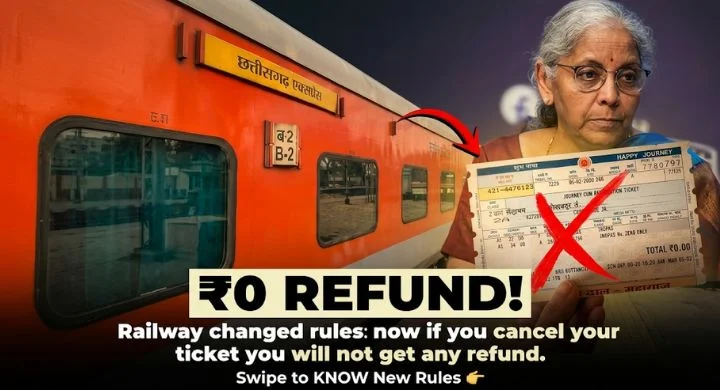
No refund if ticket is cancelled within 8 hours before departure
Old Ticket Cancellation Rules (Before the Change)
Earlier, the refund system was comparatively more flexible. The structure was as follows:
- 48 hours before departure → Full refund
- 48 to 12 hours → 75% refund
- 12 to 4 hours → 50% refund
- Within 4 hours → No refund
This system allowed passengers more flexibility, especially in last-minute situations.
New Ticket Cancellation Rules (After the Change)
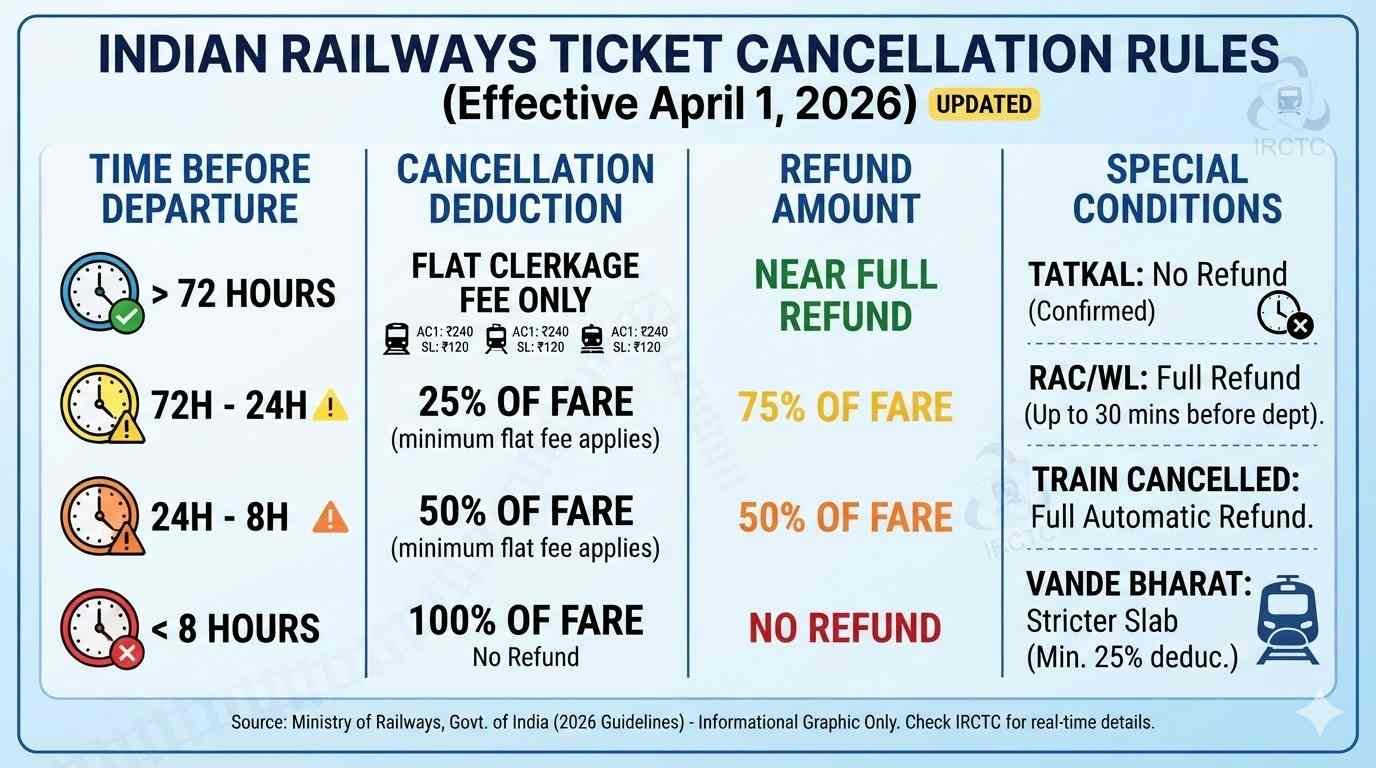
Under the new policy, the refund timing windows have been revised and extended:
- 72 hours before departure → Full refund
- 72 to 24 hours → 75% refund
- 24 to 8 hours → 50% refund
- Within 8 hours → No refund
The key change is that the no-refund window has increased from 4 hours to 8 hours, making last-minute cancellations more costly.
Major Changes You Should Know
1. Increased No-Refund Window
Earlier, passengers could cancel tickets up to 4 hours before departure and still get some refund. Now:
If you cancel within 8 hours, you lose the entire ticket amount.
2. Extended Planning Time for Full Refund
The time required for a full refund has increased:
From 48 hours → 72 hours
This means passengers now need to plan cancellations earlier.
3. Automatic Refund Process (TDR Simplified)
Earlier, passengers had to file a Ticket Deposit Receipt (TDR) manually in some cases.
Now:
TDR will be generated automatically, making the refund process smoother and faster.
4. Counter Ticket Cancellation Made Easier
Passengers can now:
Cancel counter tickets from any railway station, not just the booking station
This is a major convenience improvement.
5. Boarding Station Change Flexibility
Passengers can now:
Change their boarding station up to 30 minutes before departure
This is especially helpful in cities with multiple railway stations.
Impact on Passengers
These changes will have both positive and negative effects on travelers.
On one hand, the system becomes more organized and digital-friendly. On the other hand, it requires better planning from passengers.
Last-minute cancellations will now be more expensive than before.
Key Features of the New System
- Revised refund timing structure
- No refund within 8 hours of departure
- Automatic TDR processing
- Flexible counter ticket cancellation
- Boarding station change option (up to 30 minutes prior)
Advantages of the New Rules
- More transparency in refund system
- Improved passenger convenience
- Faster and automatic refund processing
- Better flexibility for boarding changes
- Simplified cancellation procedures
Disadvantages of the New Rules
- Stricter rules for last-minute cancellations
- Higher chances of losing money if plans change suddenly
- Less flexibility compared to old system
- Requires early decision-making by passengers
Important Advice for Passengers
To avoid losing money, passengers should:
- Cancel tickets well in advance (before 72 hours if possible)
- Avoid last-minute cancellations
- Double-check travel plans before booking
- Use online platforms for faster processing
Conclusion
The new cancellation policy introduced by Indian Railways is a significant reform aimed at improving efficiency and transparency. While it brings several conveniences like automatic refunds and flexible boarding options, it also introduces stricter rules for late cancellations.
The most important takeaway is:
Plan early, cancel early — or risk losing your entire ticket amount
Final Reminder (Punch Line)
“Cancel within the last 8 hours… and your refund is gone!”
Also read, Indian Railways RailOne App: Book Tickets and Track Trains
Watch Latest News Videos on KRH News: Click Here