


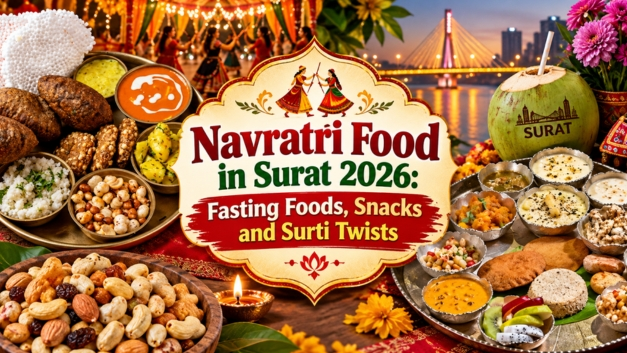
Navratri Food in Surat 2026 Guide: Navratri is one of the most eagerly awaited festivals in Gujarat, and Surat celebrates it with a unique combination of devotion, Garba, music and food. While many devotees observe fasting during the nine-day festival, fasting food in Surat has developed into a diverse food culture of its own.
From sabudana khichdi and singhara puri to vrat-friendly snacks and creative Surti-style dishes, residents can explore several options while following their dietary traditions.
In 2026, Sharad Navratri will begin on October 11 and continue until October 19, followed by Dussehra on October 20. During this period, many households, food outlets and home chefs prepare special dishes using ingredients permitted during vrat.
This guide explores popular Navratri fasting foods in Surat, snack options, Surti-inspired twists and practical tips for enjoying festival food safely.
What Is Navratri Fasting Food?
During Navratri, many devotees avoid regular grains, certain pulses, onion, garlic and other ingredients according to their personal religious practices.
Common ingredients used in vrat-friendly cooking include:
- Sabudana
- Samak rice or barnyard millet
- Singhara flour
- Kuttu flour
- Rajgira
- Potatoes
- Sweet potatoes
- Fruits
- Milk and dairy products
- Peanuts
- Makhana
- Rock salt or sendha namak
Fasting rules can vary between families and communities. Therefore, people should follow the dietary practices they personally observe.
Popular Navratri Food in Surat 2026
1. Sabudana Khichdi
Sabudana khichdi is among the most popular fasting dishes across India and is widely enjoyed in Surat during Navratri.
Made with soaked tapioca pearls, peanuts, potatoes and sendha namak, the dish provides a filling option for devotees observing a fast.
A well-prepared sabudana khichdi should have separate, soft pearls rather than a sticky texture. Lemon juice, coriander and mild spices can be added according to individual fasting preferences.
2. Sabudana Vada
Sabudana vada is a popular vrat-friendly snack prepared using sabudana, mashed potatoes, roasted peanuts and permitted spices.
The mixture is shaped into small patties and traditionally deep-fried. Some households also prepare shallow-fried or air-fried versions.
In Surat, sabudana vada can be enjoyed as a breakfast item, evening snack or post-Garba meal.
3. Singhara Flour Puri
Singhara flour, also known as water chestnut flour, is commonly used during fasting.
Singhara puri is prepared with flour, boiled potatoes, sendha namak and water. It is often served with vrat-friendly potato curry, curd or pumpkin-based vegetables.
Since puris are generally fried, people looking for lighter options can choose smaller portions or try baked alternatives.
4. Kuttu Roti and Paratha
Kuttu flour, or buckwheat flour, is another common fasting ingredient.
Kuttu roti or paratha can be paired with:
- Vrat-friendly aloo sabzi
- Plain curd
- Pumpkin curry
- Peanut-based chutney
- Cucumber raita
Kuttu flour should be stored properly and checked carefully before use. Food safety authorities have previously warned about the risks associated with old, contaminated or improperly stored fasting flours, particularly during Navratri. <Cite refs={[“turn520958search29”]} />
5. Samak Rice Khichdi
Samak rice, also called barnyard millet, is frequently used as a substitute for regular rice during fasting.
Samak rice khichdi can be prepared with potatoes, peanuts, cumin and mild spices. It is suitable for those who prefer a complete meal instead of fried snacks.
The dish can also be served with fresh curd or a simple vrat-friendly vegetable preparation.
6. Rajgira Rotla
Rajgira, or amaranth, is another ingredient used in fasting cuisine.
Rajgira rotla can be prepared using rajgira flour and served with curd, potato sabzi or peanut chutney. Its texture is different from traditional wheat rotla, but it offers an interesting alternative for those following vrat diets.
7. Aloo Jeera
Aloo jeera is a simple and widely accepted fasting preparation when made with permitted ingredients.
It generally includes potatoes, cumin, green chillies, coriander and sendha namak. The dish can be served with singhara puri, kuttu roti or samak rice.
Its simple preparation makes it popular in homes during Navratri.
8. Makhana Snacks
Makhana, or fox nuts, are increasingly popular as a light fasting snack.
They can be roasted with ghee, sendha namak and permitted spices. Some people also prepare sweet makhana using milk, jaggery or other suitable ingredients.
Roasted makhana is a convenient option for people who need a quick snack during work or between Garba sessions.
Navratri Snacks with a Surti Twist
Surat is known for its creative food culture, and local food habits often inspire new versions of traditional dishes. During Navratri, familiar flavours can be adapted using fasting ingredients.
1. Vrat Locho-Style Steamed Snack
Traditional Surti locho is generally made using ingredients that may not be permitted during fasting. However, a vrat-friendly version can be experimented with using suitable flour alternatives, potatoes or samak-based mixtures.
Such a preparation should be clearly labelled as a fasting-inspired variation rather than traditional locho.
Possible toppings may include:
- Roasted peanuts
- Curd
- Coriander
- Sendha namak
- Mild green chutney made with permitted ingredients
2. Sabudana Khaman-Style Bites
A fasting-inspired steamed snack can be prepared using sabudana, potatoes and peanuts.
Although it is not traditional khaman, the texture and presentation can resemble a soft steamed snack. It may be served in small portions with vrat-friendly chutney.
3. Vrat-Friendly Surti Chutneys
Chutneys add flavour to fasting meals, but ingredients must be checked carefully.
Possible options include:
- Coconut and coriander chutney
- Peanut chutney
- Curd-based dip
- Green chilli and coriander chutney
- Roasted peanut and lemon dip
Regular packaged sauces and chutneys may contain ingredients that are not suitable for every fasting tradition, so homemade versions can offer better control.
4. Potato-Based Fasting Snacks
Potatoes are widely used during vrat and can be adapted into several snack formats, such as:
- Aloo tikki
- Potato wedges
- Stuffed potato bites
- Crispy potato cups
- Potato and peanut patties
For a lighter preparation, baking or air-frying can reduce the amount of oil used.
5. Vrat-Friendly Cold Coco-Inspired Drink
Surat’s love for cold beverages can inspire a fasting-friendly cocoa drink made with milk, cocoa powder and suitable sweeteners.
However, consumers should check the ingredients of packaged cocoa powders, chocolate syrups and flavouring products, as some may contain additives or ingredients that do not match their fasting rules.
Sweet Dishes for Navratri in Surat
Fasting does not mean avoiding every sweet dish. Several desserts can be prepared using milk, fruits, makhana, rajgira and other permitted ingredients.
Popular Options Include:
- Makhana kheer
- Sabudana kheer
- Rajgira ladoo
- Fruit chaat
- Banana milkshake
- Sweet potato halwa
- Coconut ladoo
- Dates and dry-fruit bites
- Singhara flour halwa
- Homemade shrikhand
Traditional Surti sweets such as ghari may contain ingredients that are not suitable for all fasting practices. Devotees should check the recipe before consuming them during vrat.
Fruits and Light Food Options During Navratri
People who prefer lighter meals can include seasonal fruits and simple preparations in their routine.
Some practical options are:
- Bananas
- Apples
- Papaya
- Pomegranate
- Guava
- Coconut
- Cucumber
- Sweet lime
- Watermelon
- Fruit bowls with curd
Fruit-based meals can be useful during busy days, especially for people attending Garba events or working long hours.
However, individuals should maintain balanced food intake and hydration according to their health needs and fasting practices.
Where Surat Residents May Find Navratri Food Options
During Navratri, vrat-friendly food may be available through:
- Home kitchens
- Tiffin services
- Traditional farsan outlets
- Restaurants offering fasting menus
- Sweet shops
- Cafés with seasonal menus
- Food delivery platforms
- Community food stalls
Availability may vary by area and date. People should confirm ingredients, preparation methods and whether separate utensils are used for fasting food.
Instead of assuming that every item labelled “farali” follows the same rules, customers should ask about:
- Flour used
- Salt used
- Cooking oil
- Spice mixtures
- Cross-contamination
- Dairy ingredients
- Packaged sauces
- Preparation surface and utensils
Food Safety Tips for Navratri 2026
The Food Safety and Standards Authority of India has highlighted the increased demand for fasting products such as samak rice, kuttu flour, singhara flour, fruits, vegetables, makhana, dairy products and ready-to-eat snacks during festival periods.
FSSAI has also warned that old, fungus-affected or poorly stored kuttu flour may create food safety risks. It has advised food safety authorities to conduct inspections and sampling during the festive season. <Cite refs={[“turn520958search29”]} />
Consumers Should Follow These Precautions
Check Packaging and Expiry Dates
Before purchasing fasting flour, packaged snacks or dairy products, check the manufacturing date, expiry date and packaging condition.
Avoid Damp or Foul-Smelling Flour
Do not use flour that has an unusual smell, visible fungus, moisture or signs of infestation.
Prefer Freshly Prepared Food
Freshly prepared food is generally preferable to snacks that have been stored for long periods without proper temperature control.
Confirm Ingredients at Food Outlets
Ask whether the food contains regular salt, wheat flour, rice flour, onion, garlic or other ingredients that may not be permitted during your fast.
Be Careful with Street Food
Festival stalls can become crowded, and food may remain exposed for extended periods. Check whether food is covered and handled hygienically.
Stay Hydrated
People observing a fast should pay attention to fluid intake during permitted hours. Coconut water, milk, fruit-based drinks and plain water may be suitable depending on individual fasting practices.
Homemade Navratri Food vs. Outside Food
Both homemade and restaurant-prepared fasting food can be convenient, but each has different considerations.
| Factor | Homemade Food | Outside Food |
|---|---|---|
| Ingredient control | Easier to control | Requires confirmation |
| Hygiene | Depends on home practices | Depends on outlet standards |
| Oil and salt | Can be adjusted | May be higher |
| Freshness | Usually easier to monitor | Varies by preparation time |
| Variety | Depends on cooking skills | Wider menu options |
| Convenience | Requires preparation | Convenient during busy schedules |
FSSAI’s Hygiene Rating Scheme is designed to help consumers make informed choices about food businesses based on food safety compliance. Consumers can look for food safety information and verified hygiene details where available. <Cite refs={[“turn520958search2”]} />
A Simple One-Day Navratri Food Plan
Here is an example of a fasting-friendly food routine. Individual requirements and religious practices may differ.
| Time | Food Option |
|---|---|
| Morning | Warm water, fruit or milk |
| Breakfast | Sabudana khichdi or rajgira porridge |
| Mid-morning | Coconut water or seasonal fruit |
| Lunch | Samak rice khichdi with curd |
| Evening | Roasted makhana or sabudana vada |
| Dinner | Singhara roti with aloo sabzi and cucumber |
| Dessert | Makhana kheer or fruit bowl |
This is only a general food-planning example and should be adjusted according to personal dietary requirements and fasting rules.
Why Navratri Food Is Becoming More Diverse
Navratri food has evolved beyond a limited selection of traditional fasting dishes. Urban consumers increasingly look for:
- Quick breakfast options
- Health-conscious snacks
- Gluten-free alternatives
- Baked and air-fried preparations
- Protein-rich ingredients
- Convenient tiffin meals
- Restaurant-style vrat dishes
- Creative regional variations
Surat’s food culture, known for experimentation and variety, provides space for traditional fasting recipes and modern adaptations to coexist.
However, a dish should not be considered suitable for fasting only because it is marketed as “healthy” or “farali.” Ingredient verification remains important.
Final Thoughts
Navratri food in Surat combines traditional fasting recipes with the city’s interest in creative flavours and convenient food options. From sabudana khichdi, singhara puri and samak rice to vrat-friendly snacks and Surti-inspired adaptations, devotees have several choices during the nine-day festival.
The best approach is to enjoy food that matches personal religious practices while paying attention to freshness, ingredient quality, hygiene and balanced eating.
As Navratri 2026 approaches, Surat’s fasting food culture is expected to remain an important part of the festival experience alongside Garba, devotion and community celebrations.
Also read, Surat Garba Outfits Guide for Navratri 2026
Watch Latest News Videos on KRH News: Click Here