


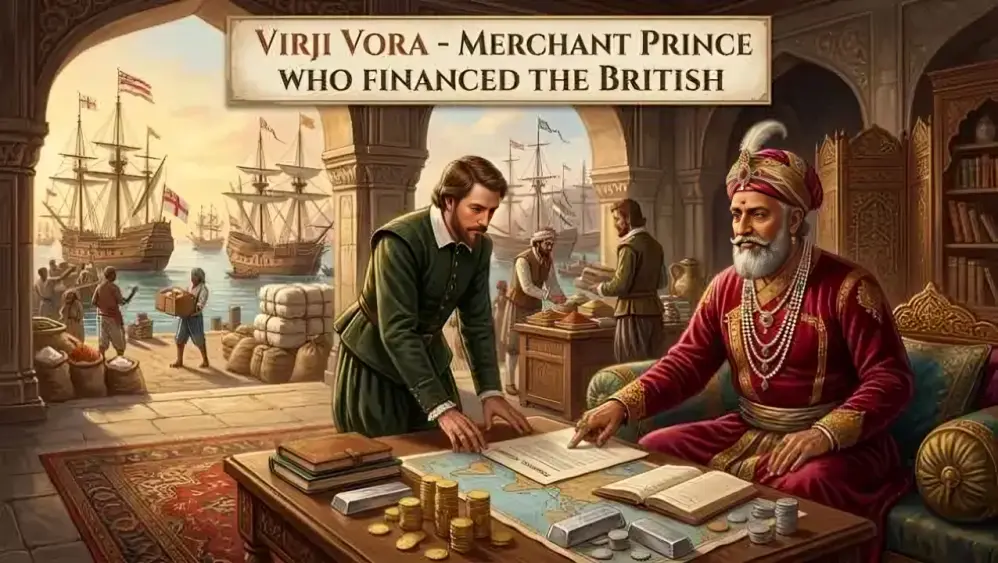
The Businessman from Surat Who Became Stronger Than Global Trading Powers
Long before modern banks, stock markets, and multinational corporations existed, Surat was one of the biggest trading hubs in India, and one man stood above all others in wealth, influence, and business power: Virji Vora.
Known as the “Merchant Prince,” Virji Vora was among the richest and most powerful businessmen of the 17th century. His influence was so vast that even the powerful British East India Company reportedly turned to him for loans when they needed financial support.
This remarkable story shows how Surat was not just a city of trade but a city that shaped global commerce.
Surat: India’s Biggest Trading Hub in the 1600s
A Global Marketplace Before Mumbai and Ahmedabad
During the 17th century, Surat was one of the most important port cities in India.
It was the center of international trade where merchants from:
- Britain
- Portugal
- Netherlands
- Arabia
- Persia
- Africa
regularly arrived for business.
Ships from around the world used Surat’s port for importing and exporting goods. At the time, Surat was far more commercially significant than many other Indian cities.
Major goods traded included:
- Spices
- Cotton
- Silk
- Indigo
- Precious stones
- Tea and luxury goods
In this thriving environment, Virji Vora built an empire that made him one of the wealthiest traders in Asia.
Who Was Virji Vora?
The Business Genius Behind Massive Trade Networks
Virji Vora was not just a trader; he was a financial strategist.
His business empire was spread across:
- Cotton trade
- Silk exports
- Spice imports
- Precious commodities
- Large-scale merchant financing
But his real strength was not only products, it was capital and control.
Historians mention that Virji Vora had such enormous financial power that he could buy huge quantities of goods at once and control supply in the market. By managing supply and demand, he could directly influence prices and market conditions.
This made him far more than a merchant; he became a market controller.
British East India Company Took Loans from Him
When Foreign Powers Needed Money, They Came to Surat
One of the most fascinating parts of Virji Vora’s story is his financial relationship with the British East India Company. At a time when the British were expanding trade operations in India, they often needed local financial support.
Instead of banks because formal banking systems were limited they relied on wealthy merchants like Virji Vora.
Historical records suggest that the British East India Company borrowed money from him to manage business operations and trade expansion. This shows the scale of his influence.
Imagine a local businessman being powerful enough to finance one of the world’s biggest colonial trading companies. That is why British traders reportedly referred to him as the “Merchant Prince.”
A Time Before Modern Banking
Merchants Were the Banks of Their Era
In the 1600s, there were no formal banking systems like today.
There were:
- No corporate banks
- No digital transactions
- No stock exchanges
- No formal loan institutions
Large merchants like Virji Vora acted as “walking banks.”
They financed trade, gave loans, managed credit systems, and supported large-scale commercial operations. Their reputation, trust, and business network were their financial institutions.
Virji Vora’s credibility was so strong that both Indian and foreign traders depended on him. This made him one of the earliest examples of financial leadership in Indian business history.
Why Virji Vora Still Matters Today
Surat’s Legacy of Entrepreneurship
Modern Surat is known for:
- Diamond industry
- Textile markets
- Export businesses
- Startup culture
- Entrepreneurial growth
But this spirit of business leadership did not begin recently.
It has deep historical roots and Virji Vora represents that legacy. He proved that business is not only about selling products, but about vision, financial intelligence, and strategic influence.
His story reminds today’s entrepreneurs that real power in business comes from trust, relationships, and long-term thinking.
Unlocking Surat: More Than Just a City
A Place That Created Global Influence
Surat is often known for trade and textiles, but its historical importance runs much deeper. It produced merchants who influenced international economies and shaped colonial trade systems. Virji Vora is one of the strongest examples of that forgotten history.
He was not just a wealthy man he was proof that Indian merchants once stood at the center of global commerce. His story deserves to be remembered not only as local history, but as global business history.
Final Summary
Virji Vora’s journey from Surat to becoming the “Merchant Prince” of international trade is a powerful reminder of India’s rich commercial legacy. At a time when global powers like the British East India Company were expanding their control, a businessman from Surat held enough financial strength to support them.
That is not just history it is pride. Surat was not only a trading city. It was the home of visionaries who shaped the world economy. And Virji Vora remains one of its greatest business legends.
Also read, Cost Of Living In Surat – Everything You Need To Know (Updated Prices 2026)
Watch Latest News Videos on KRH News: Click Here