


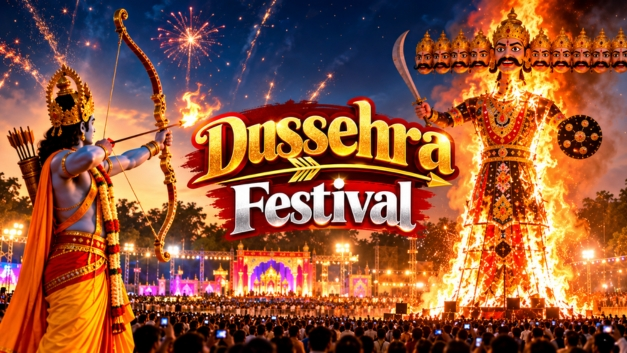
Vijayadashami, widely known as Dussehra or Dasara, is one of the most significant Hindu festivals celebrated across India. The festival symbolises the victory of good over evil and the triumph of truth, courage and righteousness over injustice.
In 2026, Vijayadashami will be celebrated on Tuesday, October 20, according to national and festival calendars. It marks the culmination of Navratri celebrations in many parts of India and follows nine days of worship, fasting, cultural performances and devotion.
From the spectacular burning of Ravana’s effigies in North India to the grand Mysuru Dasara procession and Durga Puja celebrations in West Bengal, the festival reflects India’s diverse cultural and religious traditions. Its significance also extends beyond India, particularly to Nepal and Hindu communities around the world.
Vijayadashami 2026: Date and Important Details
Here are the key details about Dussehra 2026.
- Festival Name: Vijayadashami, Dussehra or Dasara
- Date: Tuesday, October 20, 2026
- Hindu Calendar: Ashwin month, Shukla Paksha Dashami
- Religious Significance: Victory of Lord Rama over Ravana and Goddess Durga over Mahishasura
- Associated Festival: Sharad Navratri
- Main Celebrations: Ravan Dahan, Durga Puja rituals, temple worship, processions and cultural programmes
The exact ritual timings may vary by location and local religious calendar. In Bengal, Vijayadashami-related Durga Puja observances and idol immersion may follow a different schedule from the principal Dussehra date elsewhere in India.
What Is Vijayadashami and Why Is It Celebrated?
Vijayadashami is derived from two Sanskrit words: Vijaya, meaning victory, and Dashami, referring to the tenth lunar day.
The festival is associated with two major Hindu traditions.
1. Lord Rama’s Victory Over Ravana
According to the Ramayana, Lord Rama fought Ravana, the king of Lanka, to rescue Goddess Sita. Rama’s victory represents the triumph of righteousness over arrogance, injustice and evil. In many parts of India, this story is commemorated through Ramlila performances and the burning of large effigies of Ravana, Meghnad and Kumbhakarna.
2. Goddess Durga’s Victory Over Mahishasura
Another major tradition celebrates Goddess Durga’s victory over Mahishasura, a powerful demon who threatened the gods and the world. After days of battle, Goddess Durga defeated Mahishasura, symbolising the victory of divine power over destructive forces. This story is especially important during Durga Puja in West Bengal and several eastern and northeastern states.
Both traditions share the central message that evil cannot ultimately prevail over truth, justice and righteousness.
History of Dussehra: The Stories Behind the Festival
The history of Vijayadashami is rooted in Hindu religious literature, mythology and centuries-old regional traditions.
The Ramayana and the Victory of Lord Rama
The Ramayana describes the journey of Lord Rama, his exile, the abduction of Sita by Ravana and the eventual battle in Lanka.
With the assistance of Lakshmana, Hanuman and the vanara army, Rama fought Ravana and rescued Sita. His victory became a lasting symbol of moral responsibility, devotion and the defeat of wrongdoing. Over generations, communities developed traditions of narrating and performing episodes from the Ramayana. Ramlila became one of the best-known ways of presenting these stories to the public, particularly in northern India.
The final day of these performances often coincides with Dussehra, when Ravana’s effigy is burned before large crowds.
Goddess Durga and the Defeat of Mahishasura
The second major religious tradition centres on Goddess Durga’s battle against Mahishasura. According to Hindu mythology, the gods united their divine powers to create Durga, who fought the demon and defeated him. Her victory represents the strength of divine feminine energy and the restoration of cosmic balance.
In West Bengal, this story forms the spiritual foundation of Durga Puja, one of the region’s most important annual festivals.
How the Traditions Became Part of Indian Culture
Over centuries, these religious narratives became connected with local art, theatre, music, temple traditions and community celebrations.
Different regions developed distinctive ways to observe the festival. As a result, Dussehra today is not a single uniform celebration but a collection of traditions united by the themes of victory, renewal and righteousness.
How Is Dussehra Celebrated Across India?
India celebrates Vijayadashami in many different ways, depending on local customs, religious beliefs and cultural history.
1. North India: Ravan Dahan and Ramlila
In Delhi, Uttar Pradesh, Haryana, Rajasthan and other parts of North India, Dussehra is closely associated with Ramlila, a theatrical presentation of the Ramayana. Communities organise performances over several days, bringing the story of Rama, Sita, Lakshmana and Ravana to life.
The celebrations reach their climax with Ravan Dahan, during which large effigies of Ravana, Meghnad and Kumbhakarna are set alight. Families visit festival grounds, enjoy local food and watch cultural performances. Delhi’s Ramlila grounds are among the prominent places to experience these celebrations.
2. Gujarat: Navratri, Garba and Vijayadashami
In Gujarat, Dussehra follows nine nights of Navratri celebrations dedicated to Goddess Durga and other forms of divine feminine energy. Garba and Dandiya Raas are central to the festivities. People dress in colourful traditional clothes and gather at community grounds, residential societies and organised venues for devotional music and dance.
Cities such as Surat, Ahmedabad, Vadodara and Rajkot are known for their enthusiastic participation in Navratri. Vijayadashami marks an important religious conclusion to this festive period. Families may visit temples, perform puja and participate in traditions associated with prosperity and new beginnings.
3. West Bengal: Durga Puja and Vijaya Dashami
In West Bengal, especially Kolkata, Durga Puja is the main celebration associated with the festival period. Elaborately decorated pandals display artistic idols of Goddess Durga and her family. Devotees visit the pandals, participate in rituals and enjoy cultural programmes.
Vijaya Dashami marks the farewell to Goddess Durga, with traditions that include sindoor khela among participating married women, farewell rituals and the immersion of idols. The celebrations express the belief that the goddess returns to her divine home after visiting her devotees.
4. Karnataka: The Grand Mysuru Dasara
Mysuru in Karnataka is famous for its historic Dasara celebrations. The festival includes religious ceremonies, cultural programmes, illuminated monuments and a grand procession associated with Goddess Chamundeshwari, a form of Goddess Durga.
Mysuru Palace becomes a major attraction during the festival period, drawing visitors from across India and abroad. The celebrations connect royal heritage, religious devotion and regional culture.
5. Himachal Pradesh: Kullu Dussehra
Kullu Dussehra is distinctive because its major celebrations begin on Vijayadashami and continue for several days. Local deities are brought in processions, and devotees gather at Dhalpur Maidan. The festival features traditional music, religious ceremonies and community participation.
Unlike many places where the festival concludes with Ravan Dahan, Kullu’s celebrations follow their own distinctive traditions centred on local deities and regional heritage.
6. Maharashtra: Shami Puja and New Beginnings
In Maharashtra, Vijayadashami is associated with worship, family gatherings and the exchange of leaves from the Apta tree, traditionally regarded as symbolic of gold and prosperity.
Many people consider the day auspicious for beginning new work, purchasing important items, starting educational activities or undertaking new ventures. Some communities also observe rituals connected with the Shami tree and the symbolic return of victory and prosperity.
7. South India: Ayudha Puja and Saraswati Worship
In parts of South India, Dussehra is associated with Ayudha Puja, during which tools, vehicles, instruments, machinery and other work-related objects are worshipped. The custom expresses gratitude for the instruments people use to earn their livelihoods and perform their duties. Saraswati Puja traditions also honour learning, knowledge, arts and education. In some regions, Vijayadashami is considered an auspicious occasion for children to begin learning or writing.
How Is Dussehra Celebrated Around the World?
Dussehra-related traditions are observed outside India through Hindu religious communities, cultural associations and the Indian diaspora. The customs differ by country and community.
Nepal: Dashain
Nepal celebrates Dashain, one of its most important annual festivals, during a period that overlaps with the wider Vijayadashami and Navratri season.
The festival includes worship of Goddess Durga, family reunions, blessings from elders and the application of tika and jamara. The tenth day, known as Vijaya Dashami, is particularly important for receiving blessings from family elders. Although Nepal’s Dashain traditions have their own calendar and cultural practices, the festival shares the broader theme of divine victory over evil.
United States: Community Dussehra Celebrations
In the United States, Hindu temples and Indian cultural organisations organise Dussehra events in various cities. Celebrations may include Ramlila performances, Ravana effigy burning where permitted, devotional programmes, traditional food and family gatherings. These events provide opportunities for younger generations to learn about the Ramayana and Indian cultural traditions.
United Kingdom: Temple and Community Events
Indian communities in the United Kingdom observe Dussehra through temple worship, cultural gatherings and festival programmes. Depending on the organisers and local facilities, celebrations may include Ramlila performances, music, dance and educational activities about the significance of Vijayadashami.
Canada: Cultural Programmes and Festive Gatherings
In Canada, Hindu temples and community associations may organise Dussehra celebrations featuring religious ceremonies, cultural performances and family events. These gatherings help preserve Indian traditions while bringing together people from different cultural backgrounds.
Australia and Other Countries
Hindu communities in Australia and other countries also mark Dussehra through temple programmes, community events and devotional activities. The scale and format of celebrations vary according to local communities, venues and regulations. Not every country or city hosts a large public event, but the festival’s central message remains meaningful to devotees worldwide.
Important Rituals and Traditions of Vijayadashami
Several rituals are associated with Vijayadashami, although their observance varies by region and family tradition.
- Shastra Puja: Some communities worship weapons or other instruments associated with protection, duty and work.
- Ravan Dahan: The burning of Ravana’s effigy symbolises the defeat of arrogance, injustice and evil.
- Ayudha Puja: Tools, machinery, vehicles and professional equipment may be honoured as part of the festival.
- Shami Puja: Worship of the Shami tree is observed in certain traditions, with associations of victory and prosperity.
- Temple Visits: Devotees visit temples to offer prayers to Lord Rama, Goddess Durga and other deities.
- Starting New Ventures: Some families consider Vijayadashami an auspicious day to begin new activities, subject to their religious and regional customs.
Why Is Vijayadashami Considered an Auspicious Day?
Vijayadashami represents victory, confidence, renewal and the beginning of a positive phase. Many people choose the occasion to start a business, begin a course of study, purchase tools or undertake other meaningful activities.
The belief is connected with the festival’s stories of victory and the restoration of righteousness. However, specific customs and auspicious timings vary, and people may consult their local panchang or religious authorities for ritual guidance.
The Message of Dussehra in Modern Life
Beyond its religious importance, Dussehra offers a message that remains relevant in contemporary society. The defeat of Ravana can be understood as a reminder to overcome arrogance, dishonesty, greed and harmful behaviour. Goddess Durga’s victory represents courage, determination and the strength to confront injustice.
The festival also encourages people to reflect on their responsibilities towards family, society and the environment. Celebrating Dussehra can therefore mean more than watching an effigy burn. It can be an opportunity to recognise personal shortcomings, make better decisions and work towards a more responsible and compassionate life.
Frequently Asked Questions About Vijayadashami 2026
1. When is Dussehra in 2026?
Dussehra, also known as Vijayadashami, falls on Tuesday, October 20, 2026, according to the national holiday calendar.
2. Why do we celebrate Vijayadashami?
The festival commemorates Lord Rama’s victory over Ravana and Goddess Durga’s victory over Mahishasura. Both stories symbolise the triumph of good over evil.
3. Is Vijayadashami the same as Dussehra?
Yes. Vijayadashami and Dussehra are commonly used names for the festival. Dasara is another widely used name, particularly in Karnataka.
4. What is the connection between Navratri and Dussehra?
Navratri is a nine-night festival dedicated to the worship of the divine feminine. Vijayadashami follows this period and marks the tenth-day celebration associated with victory. Regional calendars and rituals may differ.
5. How is Dussehra celebrated in Gujarat?
Gujarat celebrates Navratri with Garba, Dandiya Raas, devotional music and temple worship. Vijayadashami is observed with prayers and regional traditions associated with victory and auspicious beginnings.
6. How is Dussehra celebrated in West Bengal?
In West Bengal, Durga Puja culminates with Vijaya Dashami rituals, farewell ceremonies and the immersion of Goddess Durga’s idols.
7. Is Dussehra celebrated outside India?
Yes. Hindu communities in Nepal and countries such as the United States, the United Kingdom, Canada and Australia observe Dussehra-related traditions through religious ceremonies and cultural programmes. Nepal’s Dashain has its own distinctive customs.
8. What is the main lesson of Dussehra?
The festival teaches that truth, righteousness and courage can overcome injustice, arrogance and destructive behaviour.
Conclusion
Vijayadashami 2026 will be celebrated on October 20, bringing together millions of devotees through religious rituals, cultural performances and family traditions.
Whether through Ravan Dahan in North India, Garba celebrations in Gujarat, Mysuru Dasara in Karnataka or Durga Puja in West Bengal, the festival reflects India’s extraordinary cultural diversity. Its message extends beyond geographical boundaries: victory is not simply about defeating an enemy, but also about choosing truth, overcoming personal weaknesses and standing up for what is right.
As families and communities prepare for Dussehra 2026, the festival offers an opportunity to celebrate heritage while carrying its timeless message of goodness, courage and renewal into everyday life.
Official and reference sources:
- Incredible India – Dussehra: https://www.incredibleindia.gov.in/en/festivals-and-events/dussehra
- India Government Holiday Calendar: https://www.india.gov.in/calendar
- India Post – Holidays List 2026: https://www.indiapost.gov.in/holidays-list
Also read, Durga Ashtami 2026: Date, Significance, Kanya Pujan and Celebrations Across India