


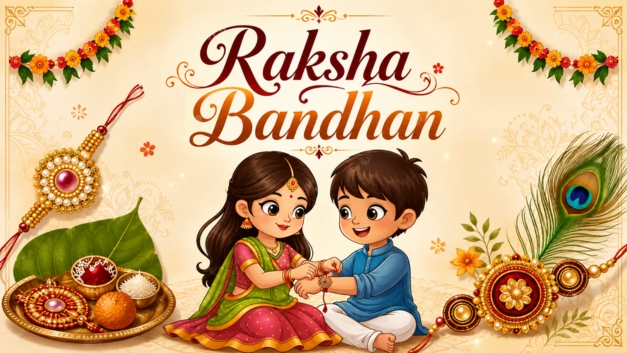
Raksha Bandhan is one of India’s most cherished festivals, celebrating the emotional bond between brothers and sisters. Every year, families come together to tie the sacred rakhi, exchange gifts, share sweets and reaffirm their affection and responsibility toward one another.
In 2026, Raksha Bandhan will be celebrated on Friday, August 28. The festival falls on the full moon day, or Purnima, of the Hindu month of Shravan. According to the Hindu calendar, the Purnima tithi begins at 9:08 AM on August 27 and ends at 9:48 AM on August 28, 2026.
While the festival is traditionally associated with the brother-sister relationship, its broader message is about love, protection, trust, family unity and lifelong emotional support.
When Is Raksha Bandhan 2026?
Raksha Bandhan 2026 Date: Friday, August 28, 2026
The festival is observed during Shravan Purnima, making the full-moon day particularly important for Rakhi rituals.
Raksha Bandhan 2026 Tithi
- Purnima Tithi Begins: August 27, 2026, at 9:08 AM
- Purnima Tithi Ends: August 28, 2026, at 9:48 AM
- Festival Day: Friday, August 28, 2026
The exact auspicious Rakhi-tying period varies by location because Hindu Panchang timings are calculated according to the local sunrise and geographical location.
Raksha Bandhan 2026 Rakhi-Tying Muhurat
According to Drik Panchang’s 2026 calculations for several Indian locations, the Raksha Bandhan thread ceremony begins after Bhadra has ended. For example, the listed timing for Sirohi is 6:18 AM to 9:48 AM on August 28, while timings vary slightly across cities.
Why Is Bhadra Important on Raksha Bandhan?
Traditional Hindu calendars advise devotees to avoid tying Rakhi during Bhadra, a period considered unsuitable for auspicious activities. Therefore, families should check their local Panchang before performing the Rakhi ceremony rather than relying on a single nationwide clock time.
What Is the Meaning of Raksha Bandhan?
The words Raksha Bandhan literally refer to a bond or promise of protection.
The rakhi represents:
- Love between siblings
- Mutual protection
- Trust and emotional support
- Family unity
- Respect and responsibility
- A lifelong connection between brothers and sisters
Although the traditional ceremony focuses on a sister tying the rakhi around her brother’s wrist, modern celebrations increasingly emphasize mutual care rather than one-sided protection.
History of Raksha Bandhan
Raksha Bandhan has evolved over centuries and is associated with several religious stories, cultural practices and historical traditions. There is no single universally accepted historical origin for the modern festival. Instead, several legends are connected with the custom of tying a sacred thread.
Indra and Indrani
One traditional story comes from Hindu mythology involving Lord Indra and his wife Indrani.
According to the traditional account, Indrani tied a sacred protective thread around Indra’s wrist before a battle. The thread was associated with protection and victory. This story is one of the traditional explanations for the protective symbolism behind the Raksha Bandhan ritual.
Krishna and Draupadi
Another widely known tradition connects Raksha Bandhan with Lord Krishna and Draupadi.
According to popular retellings, Draupadi tore a piece of cloth from her sari and tied it around Krishna’s injured finger. Krishna is believed to have promised to protect her in return. Although versions of the story differ across sources, the tale has become an important part of popular Raksha Bandhan mythology.
The Story of King Bali and Goddess Lakshmi
Another traditional legend associates the festival with Goddess Lakshmi and King Bali.
According to the story, Lakshmi tied a sacred thread to King Bali and accepted him as a brother. The story highlights the festival’s broader idea that a rakhi can represent affection, trust and a sacred relationship beyond biological siblings.
Why Is Raksha Bandhan Celebrated in Shravan?
Raksha Bandhan falls on Shravan Purnima, the full moon day of the Hindu month of Shravan.
Shravan is considered a spiritually significant month in Hindu tradition and is particularly associated with devotion, fasting and worship of Lord Shiva. Raksha Bandhan therefore arrives during a period already marked by numerous religious observances and family traditions.
How Is Raksha Bandhan Celebrated?
The traditional Raksha Bandhan ceremony is simple but emotionally meaningful.
1. Preparing the Puja Thali
Families prepare a decorated thali containing items such as:
- Rakhi
- Roli or kumkum
- Rice grains
- Diya
- Sweets
- Flowers
- Akshat
The exact items can vary according to family and regional traditions.
2. Performing Tilak
The sister applies a tilak to her brother’s forehead as part of the ceremony.
3. Tying the Rakhi
The sister ties the rakhi around her brother’s wrist while offering prayers for his happiness, health and prosperity.
4. Offering Sweets
The siblings exchange sweets after the Rakhi ceremony.
5. Exchange of Gifts
The brother traditionally gives his sister a gift as a gesture of affection.
Today, however, gift exchange is generally mutual, with brothers and sisters often choosing gifts for each other.
Raksha Bandhan 2026: What Are the Traditional Foods?
Food is an important part of Raksha Bandhan celebrations.
Depending on the family and region, festive meals may include:
- Kheer
- Puri
- Halwa
- Shrikhand
- Laddoo
- Barfi
- Dhokla
- Gujarati sweets
- Dry fruits
- Homemade snacks
In many families, sisters prepare or bring their brothers’ favourite sweets and dishes as part of the celebration.
Raksha Bandhan Traditions Across India
Although the basic Rakhi ceremony remains similar, different regions have their own customs.
North India
Rakhi celebrations are generally centered around family gatherings, Rakhi ceremonies, sweets and gifts.
Gujarat
In Gujarat, Raksha Bandhan is observed alongside the wider religious atmosphere of Shravan. Families often combine the festival with temple visits, prayers and traditional meals.
Maharashtra
The festival coincides with Narali Purnima, an important coastal tradition associated particularly with fishing communities.
Rajasthan
Rakhi celebrations can include elaborate family gatherings and traditional Rajasthani sweets and meals.
South India
The day can have different regional names and customs, with Shravan Purnima observances taking different forms depending on local traditions.
Raksha Bandhan Is More Than a Brother-Sister Festival
Over time, Raksha Bandhan has expanded beyond its traditional form.
Today, people may tie rakhis to:
- Sisters
- Brothers
- Cousins
- Close friends
- Mentors
- Soldiers
- Community members
The central idea has gradually evolved into a celebration of relationships, gratitude and mutual support.
Modern Raksha Bandhan Celebrations in 2026
Technology has changed the way families celebrate Raksha Bandhan.
For siblings living in different cities or countries, celebrations can include:
- Video-call Rakhi ceremonies
- Online gift deliveries
- Digital Rakhi greetings
- Personalised gifts
- Online sweets and flower deliveries
- Social media celebrations
This has allowed the festival to remain emotionally relevant even when families cannot physically meet.
Eco-Friendly Rakhi Trends in 2026
Growing environmental awareness is also influencing Rakhi celebrations.
Many families are choosing:
- Seed rakhis
- Cotton rakhis
- Handmade rakhis
- Reusable packaging
- Plastic-free decorations
- Locally made gifts
Eco-friendly celebrations allow families to preserve the emotional meaning of the festival while reducing unnecessary waste.
Interesting Facts About Raksha Bandhan
1. Raksha Bandhan Falls on a Full Moon
The festival is celebrated on Shravan Purnima, making the full moon an important part of its calendar significance.
2. The Date Changes Every Year
Because the festival follows the Hindu lunar calendar, Raksha Bandhan does not fall on the same Gregorian calendar date every year.
3. Rakhi Is a Symbolic Thread
The rakhi is not merely a decorative bracelet. Traditionally, it symbolizes a sacred promise of affection, protection and responsibility.
4. Bhadra Is Traditionally Avoided
Traditional Panchang calculations advise avoiding Rakhi-tying during Bhadra.
5. Raksha Bandhan Has Several Origin Stories
Stories involving Indra-Indrani, Krishna-Draupadi and King Bali-Lakshmi are among the popular traditions associated with the festival.
Why Raksha Bandhan Is Important Today
Modern life has made family relationships increasingly difficult to maintain. Siblings may live in different cities, work in different countries or have busy professional lives. Raksha Bandhan provides an annual opportunity to pause and reconnect.
Its importance today lies not only in the rakhi itself but also in:
- Spending time with family
- Expressing gratitude
- Resolving old disagreements
- Supporting siblings emotionally
- Maintaining cultural traditions
- Passing traditions to younger generations
The festival therefore remains relevant even as the way people celebrate it continues to change.
Raksha Bandhan 2026: How to Celebrate Meaningfully
If you want to make Raksha Bandhan more memorable this year, consider combining traditional rituals with meaningful gestures.
You can:
- Perform the Rakhi ceremony together.
- Prepare a family meal.
- Exchange handwritten messages.
- Give a thoughtful rather than expensive gift.
- Visit a temple together.
- Donate food or essentials to someone in need.
- Choose an eco-friendly Rakhi.
- Take family photographs and preserve memories.
The most valuable part of the festival is the relationship itself—not the price of the Rakhi or gift.
Frequently Asked Questions About Raksha Bandhan 2026
When is Raksha Bandhan 2026?
Raksha Bandhan will be celebrated on Friday, August 28, 2026.
When does Purnima Tithi begin in 2026?
The Purnima Tithi begins at 9:08 AM on August 27, 2026.
When does Purnima Tithi end?
The Purnima Tithi ends at 9:48 AM on August 28, 2026.
What is the best time to tie Rakhi?
The auspicious Rakhi-tying time varies according to location. Traditional guidance recommends performing the ceremony after Bhadra has ended and during an appropriate auspicious period.
Why is Raksha Bandhan celebrated?
Raksha Bandhan celebrates the bond of affection, protection, trust and responsibility between siblings and loved ones.
Is Raksha Bandhan only for brothers and sisters?
Traditionally it focuses on brothers and sisters, but modern celebrations can include cousins, friends and other relationships based on mutual affection and protection.
Conclusion
Raksha Bandhan 2026 will be celebrated on Friday, August 28, bringing families together during the auspicious Shravan Purnima.
From the simple act of tying a rakhi to exchanging sweets, gifts and heartfelt wishes, the festival represents something much larger than a single ritual. It is a celebration of relationships, memories, responsibility and unconditional support. As Indian families increasingly live across cities and countries, festivals like Raksha Bandhan provide an important opportunity to reconnect with loved ones and preserve cultural traditions.
Whether celebrated through a traditional family gathering, a temple visit, an eco-friendly Rakhi or a video call with a sibling living abroad, the message remains the same: relationships become stronger when they are celebrated, protected and valued.
Also read, Real vs. Fake on Your Plate: The Analogue Paneer Crisis and India’s Crackdown
Watch Latest News Videos on KRH News: Click Here