


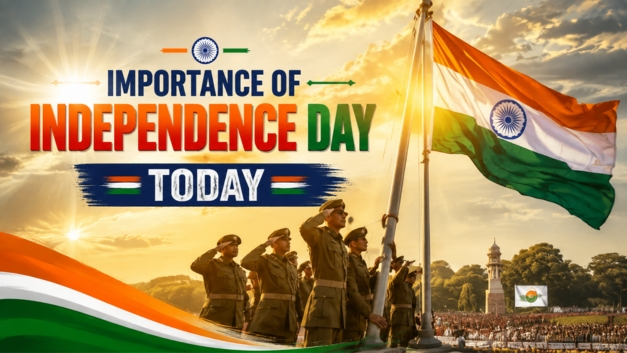
Why India Still Celebrates Independence Day With Pride
Every year on August 15, India celebrates Independence Day to commemorate its freedom from British colonial rule in 1947. In 2026, as India marks its 80th Independence Day, the occasion remains much more than a national holiday.
Independence Day is a reminder of India’s long freedom struggle, the sacrifices made by countless freedom fighters, and the responsibility that comes with living in a free and democratic nation.
For today’s generation, Independence Day also offers an opportunity to understand how India’s journey from colonial rule to a modern global economy has shaped everyday life, education, technology, democracy and opportunities for citizens.
What Is the History Behind India’s Independence Day?
India became independent from British rule on August 15, 1947. The country’s independence followed decades of political movements, protests, civil disobedience campaigns and sacrifices by freedom fighters.
Leaders such as Mahatma Gandhi, Sardar Vallabhbhai Patel, Jawaharlal Nehru, Subhas Chandra Bose, Bhagat Singh and many others played important roles in India’s freedom movement, along with millions of ordinary citizens whose contributions are remembered as part of the nation’s history.
At midnight between August 14 and 15, 1947, India formally achieved independence. Jawaharlal Nehru delivered his famous “Tryst with Destiny” speech, marking the beginning of a new chapter in India’s history.
Why Is Independence Day Important Today?
The meaning of Independence Day has evolved with India’s changing society. For people who lived through the freedom movement, independence represented liberation from colonial rule. For younger generations, it represents the freedoms, rights and opportunities available in an independent democratic country.
1. It Reminds Us of the Sacrifices of Freedom Fighters
Independence was not achieved overnight. Thousands of people participated in India’s freedom movement, faced imprisonment, lost their livelihoods and, in many cases, sacrificed their lives. August 15 gives the country an opportunity to remember these sacrifices and understand the difficult journey that led to independence.
2. It Strengthens National Unity
India is one of the world’s most diverse countries, with different languages, religions, cultures, traditions and communities. Independence Day provides a common national occasion where citizens across the country come together under the Tricolour.
From schools and colleges to government offices, residential societies and public spaces, celebrations reinforce the idea that diversity can coexist with national unity.
3. It Helps Young People Understand India’s History
For children and young adults, Independence Day can make history more meaningful.
Instead of seeing the freedom movement only as chapters in textbooks, students can use the occasion to understand:
- How colonial rule affected Indian society
- Why the freedom movement emerged
- How ordinary citizens participated
- Why democratic institutions matter
- How India’s Constitution protects citizens’ rights
- Why freedom comes with responsibility
This makes Independence Day particularly important for the younger generation.
Independence Day and Democracy
Political independence was only the beginning of India’s journey. After independence, India established itself as a democratic republic based on constitutional principles. Today, citizens have fundamental rights and participate in the country’s democratic process through elections, public institutions and civic participation.
Independence Day therefore also reminds citizens that democracy requires active participation. Voting responsibly, respecting the law, protecting public property and staying informed about important national issues are all part of being a responsible citizen.
Freedom Comes With Responsibility
One of the most important lessons of Independence Day is that freedom should not be viewed only as a collection of rights. Freedom also creates responsibilities.
Citizens can contribute to the country by:
- Following laws and regulations
- Respecting other communities
- Protecting the environment
- Paying taxes honestly
- Voting responsibly
- Helping people in need
- Avoiding misinformation
- Respecting public spaces
- Supporting education and social development
A strong nation depends not only on government institutions but also on responsible citizens.
Why Independence Day Matters in the Digital Age
The meaning of patriotism has changed significantly in the digital era.
Millions of Indians now use smartphones and social media every day. National celebrations can reach people instantly through digital platforms. However, the digital age also brings new responsibilities.
Fake news, manipulated videos and misleading information can spread rapidly during major national events. Therefore, modern patriotism also means checking information before sharing it, respecting different opinions and using technology responsibly.
Young Indians can celebrate Independence Day not only by posting the national flag online but also by becoming responsible digital citizens.
India’s Journey Since Independence
India’s transformation since 1947 has been significant.
The country has developed major capabilities across:
Space and Science
India has built a globally recognized space programme and achieved important milestones in satellite technology, lunar exploration and scientific research.
Technology
India has emerged as a major technology and digital services hub, with millions of people working in IT, software, artificial intelligence and digital businesses.
Infrastructure
Modern highways, airports, metro systems, ports, railways and digital infrastructure are transforming cities and connecting different parts of the country.
Economy
India has developed into one of the world’s major economies, supported by manufacturing, services, technology, agriculture, trade and entrepreneurship.
Digital India
Digital payments, online government services and digital identity systems have changed how millions of citizens interact with businesses and government institutions. These developments show how the meaning of independence extends beyond political freedom to India’s ability to build its own future.
Independence Day and the Next Generation
For today’s youth, Independence Day should be an opportunity to ask an important question:
What kind of India do we want to build in the next 25 years?
The country faces major opportunities as well as challenges, including:
- Employment and skill development
- Climate change
- Urban development
- Education
- Healthcare
- Artificial intelligence
- Cybersecurity
- Rural development
- Sustainable economic growth
- Social equality
The next phase of India’s development will depend heavily on young people.
Students, entrepreneurs, scientists, engineers, artists, teachers and professionals all have a role to play in shaping India’s future.
How Schools Can Make Independence Day More Meaningful
Schools and colleges can move beyond traditional flag-hoisting ceremonies by encouraging students to participate in meaningful activities.
Some ideas include:
- Freedom movement storytelling sessions
- Historical exhibitions
- Patriotic debates
- Essay-writing competitions
- Documentary screenings
- Visits to historical sites
- Community service activities
- Environmental campaigns
- Digital literacy programmes
- Discussions about the Constitution and fundamental rights
Such activities can help students connect India’s history with present-day responsibilities.
How Families Can Celebrate Independence Day
Independence Day does not have to be limited to official ceremonies.
Families can celebrate by:
- Watching documentaries about India’s freedom struggle
- Reading about freedom fighters
- Visiting historical monuments
- Watching patriotic films
- Discussing India’s history with children
- Participating in local community events
- Displaying the national flag respectfully
- Supporting local social initiatives
Even a simple family conversation about India’s history can help younger generations understand the importance of August 15.
Independence Day and Patriotism in 2026
In 2026, patriotism can take many forms. It can mean doing one’s job honestly, helping a neighbour, respecting the environment, supporting local businesses, following traffic rules or contributing to the community. Patriotism does not always require a large public celebration. Sometimes, it is reflected in everyday actions that make society cleaner, safer, more responsible and more inclusive.
Independence Day Is More Than a Holiday
For many people, August 15 is simply a public holiday. But its historical significance goes far beyond an additional day off from work or school. It represents the end of colonial rule and the beginning of India’s independent journey. Every generation inherits the freedom achieved by previous generations. It also inherits the responsibility to protect democratic values and contribute to the country’s development.
Conclusion
Independence Day 2026 is an opportunity to look back at India’s remarkable journey while thinking about the country’s future. The significance of August 15 is not limited to remembering 1947. It is about understanding the value of freedom, democracy, unity and responsibility in today’s world. As India continues to grow as a global economic, technological and cultural power, the true meaning of independence lies in how citizens use their freedom to build a stronger and more inclusive nation.
This Independence Day, let the celebration go beyond flags, speeches and social media posts. Let it be a reminder that the future of independent India is ultimately shaped by the choices and actions of its citizens.
Also read, Best Patriotic Movies and Series to Watch on Independence Day 2026
Watch Latest News Videos on KRH News: Click Here