


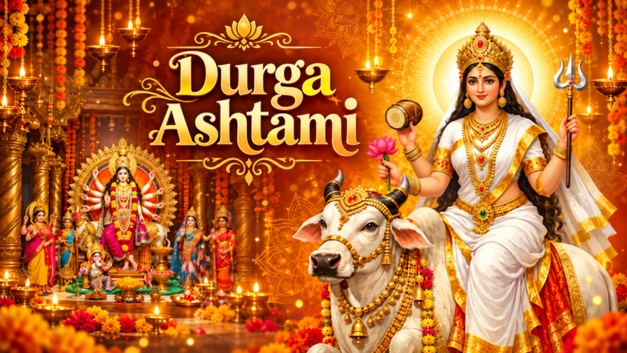
Durga Ashtami 2026 will be observed on Monday, October 19, as devotees across India prepare to worship Goddess Durga during Sharadiya Navratri. Also known as Maha Ashtami or Maha Durgashtami, the festival is one of the most important days of Navratri and Durga Puja.
On this auspicious occasion, devotees offer prayers to Goddess Durga, observe fasts, perform special rituals and seek blessings for peace, strength, prosperity and protection. Kanya Pujan, in which young girls are worshipped as manifestations of the Divine Mother, is another important tradition followed by many families.
When Is Durga Ashtami 2026?
Durga Ashtami falls on the eighth lunar day, known as Ashtami Tithi, during the bright half of the Hindu month of Ashwin.
| Festival Detail | Information |
|---|---|
| Festival | Durga Ashtami 2026 |
| Date | Monday, October 19, 2026 |
| Also Known As | Maha Ashtami, Maha Durgashtami |
| Occasion | Sharadiya Navratri |
| Goddess Worshipped | Maa Mahagauri |
| Major Rituals | Durga Puja, fasting, Kanya Pujan |
| Vijayadashami | Tuesday, October 20, 2026 |
According to the Drik Panchang calendar, the Ashtami Tithi begins at 8:27 AM on October 18 and ends at 10:51 AM on October 19. Durga Ashtami is observed on October 19 according to the listed festival calendar. Since Ashtami and Navami overlap this year, families may follow different traditions for Kanya Pujan and related rituals.
Devotees should consult a local panchang or priest for the appropriate puja timings in their city.
What Is Durga Ashtami?
Durga Ashtami is a Hindu religious festival dedicated to Goddess Durga and her divine power. It is observed on the eighth day of Sharadiya Navratri, a nine-night festival celebrating the different forms of the Divine Mother.
The day holds special importance for devotees who worship Goddess Durga as the symbol of courage, protection, righteousness and the victory of good over evil. In many parts of India, Durga Ashtami is marked by elaborate temple prayers, offerings, devotional songs and community celebrations. In West Bengal, it is one of the major days of Durga Puja, when devotees visit beautifully decorated pandals and participate in special worship ceremonies.
Why Is Durga Ashtami Important?
Durga Ashtami carries deep religious and cultural significance in Hindu tradition.
1. Symbol of the Victory of Good Over Evil
Goddess Durga is widely worshipped as the divine force that protects the world from evil and restores balance. Her worship reminds devotees of the importance of courage, justice and standing against wrongdoing.
2. Worship of the Divine Feminine
The festival honours Shakti, the feminine divine power associated with creation, protection and transformation. Devotees express gratitude for the strength and guidance they believe the Goddess provides.
3. A Day for Prayer and Spiritual Discipline
Many devotees observe a fast, chant prayers, read sacred texts and visit temples. These practices are intended to encourage devotion, self-discipline and reflection.
4. Family and Community Traditions
Durga Ashtami brings families and communities together through puja ceremonies, food offerings, devotional gatherings and charitable activities.
Which Form of Goddess Durga Is Worshipped on Ashtami?
During Navratri, devotees worship nine forms of Goddess Durga, collectively known as Navadurga. Durga Ashtami is traditionally associated with Maa Mahagauri, the eighth form of the Goddess.
Maa Mahagauri is associated with purity, peace, compassion and spiritual renewal. Devotees pray to her for happiness, well-being and the removal of difficulties from their lives. Special offerings, flowers, sweets and prayers may be presented to the Goddess according to family and regional customs.
How Is Durga Ashtami Celebrated Across India?
Durga Ashtami is celebrated in different ways across the country, reflecting India’s diverse religious traditions.
West Bengal: Grand Durga Puja Celebrations
In West Bengal, Maha Ashtami is one of the central days of Durga Puja. Devotees visit Durga pandals, attend special prayers and participate in rituals such as Pushpanjali, during which flowers are offered to the Goddess while prayers are recited. Traditional dhunuchi dances, devotional music and community gatherings add to the festive atmosphere.
Gujarat: Navratri Puja and Devotional Celebrations
In Gujarat, Durga Ashtami falls during the ongoing Navratri festivities. Devotees may perform home or temple puja, observe fasts and offer prayers to the Goddess. Navratri is also widely associated with Garba and Dandiya Raas, which bring communities together through traditional music and dance. Celebrations vary by family, community and location.
Uttar Pradesh and Bihar: Fasting and Kanya Pujan
In many households across Uttar Pradesh and Bihar, Ashtami is associated with fasting, Durga worship and Kanya Pujan. Families invite young girls for a traditional meal and offer gifts or other tokens of respect. Some families perform these rituals on Maha Navami instead, depending on their customs and the local calendar.
Delhi and Other North Indian Cities
Devotees visit temples, organise special pujas and observe Navratri fasts. Kanya Pujan and the preparation of traditional foods are also common household practices.
Karnataka, Tamil Nadu and Kerala
Navratri traditions in southern India vary by region. In some households, the festival includes the worship of books, musical instruments, tools and other objects associated with knowledge and work. Saraswati Puja and related observances form an important part of the wider Navratri period in several communities.
What Is Kanya Pujan and Why Is It Performed?
Kanya Pujan, also called Kanjak Puja in some regions, is one of the best-known traditions associated with Durga Ashtami and Maha Navami.
During this ritual, young girls are honoured as symbolic representations of the Divine Mother. Families invite girls to their homes, wash their feet according to tradition, offer prayers and serve them food.
The traditional meal often includes:
- Puri: Deep-fried Indian bread.
- Kala chana: Black chickpeas prepared as a savoury dish.
- Halwa: A sweet dish, often made with semolina.
- Prasad: Food offered to the Goddess and distributed as a blessing.
Some families also offer gifts, clothing, fruits or money. The specific rituals and the number or ages of girls invited vary according to regional and family traditions.
The practice expresses reverence for feminine power, innocence and the divine presence believed to be represented by the girls.
Do People Observe a Fast on Durga Ashtami?
Yes. Many devotees observe a fast on Durga Ashtami as part of their Navratri religious practices.
Fasting customs differ from household to household. Some people consume fruits, milk and permitted fasting foods, while others follow stricter observances according to their religious beliefs and personal circumstances.
Devotees may also:
- Perform morning prayers and offer flowers to Goddess Durga.
- Recite Durga Chalisa or other devotional texts.
- Visit temples and participate in special puja ceremonies.
- Light a diya and offer prasad.
- Complete their Navratri fast after Kanya Pujan or another family ritual.
Fasting is a personal religious practice, and individuals should follow a routine appropriate to their health and circumstances.
Durga Ashtami and Maha Navami 2026: What Is the Difference?
Durga Ashtami and Maha Navami are consecutive observances during Navratri, but both have distinct religious significance.
| Feature | Durga Ashtami | Maha Navami |
|---|---|---|
| Tithi | Eighth lunar day | Ninth lunar day |
| Associated Goddess | Maa Mahagauri | Maa Siddhidatri |
| Common Rituals | Durga Puja, fasting, Kanya Pujan | Special puja, havan, Kanya Pujan |
| Main Significance | Worship of Durga’s divine power | Completion of Navratri worship in many traditions |
In 2026, the two observances overlap on October 19 according to the cited panchang calendar. Some rituals may be performed according to the exact tithi and individual family customs. Vijayadashami, also known as Dussehra, falls on October 20.
How Can Families Prepare for Durga Ashtami?
Families planning to observe Durga Ashtami can prepare by cleaning the puja area, arranging flowers and offerings, checking local puja timings and deciding whether they will observe a fast or perform Kanya Pujan.
Those attending public celebrations should check temple schedules and local arrangements before travelling. Respecting the traditions of each community helps keep celebrations welcoming and meaningful.
Conclusion
Durga Ashtami is an important part of Sharadiya Navratri, bringing together devotion, fasting, traditional worship and community celebrations. From the grand Durga Puja pandals of West Bengal to Kanya Pujan in North Indian homes and Navratri festivities in Gujarat, the occasion is observed in many forms across India.
As Durga Ashtami approaches on October 19, 2026, devotees can prepare for the festival by learning about its significance, understanding their family traditions and checking local panchang timings for the appropriate rituals.
Also read, Best Garba & Pre-Navratri Locations in Surat 2026
Watch Latest News Videos on KRH News: Click Here