


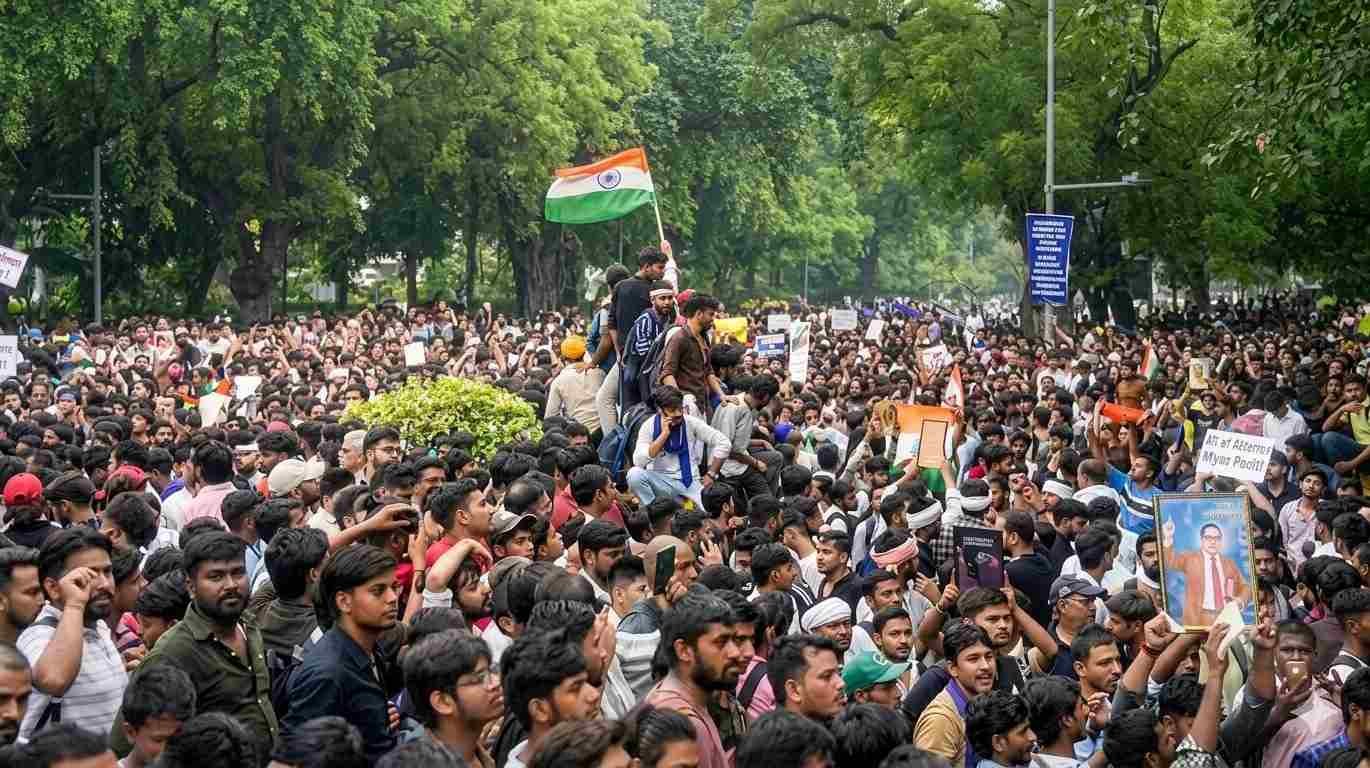
New Delhi: Delhi witnessed heightened security on Saturday, October 10, 2026, as police moved to prevent a planned protest by the Cockroach Janta Party (CJP) at Jantar Mantar. The protest was organised to demand the resignation of Chief Election Commissioner Gyanesh Kumar over alleged irregularities in the revision of electoral rolls.
Several political figures, activists and digital creators were reportedly detained as authorities enforced restrictions across the national capital. Reports also indicated significant security deployments and transport disruptions ahead of the planned demonstration.
Why Was the CJP Planning a Protest at Jantar Mantar?
The Cockroach Janta Party, led by Abhijeet Dipke, had announced the demonstration after earlier protests over the Election Commission’s Special Intensive Revision (SIR) of electoral rolls.
The group demanded Gyanesh Kumar’s resignation, alleging that voter-list revisions had led to the removal of eligible voters. Opposition leaders have also questioned the process and called for greater transparency. The Election Commission has maintained that electoral-roll revisions are part of the voter-verification process. The allegations of politically motivated deletions remain contested.
Dhruv Rathee and CJP Leaders Reportedly Detained
Media reports said prominent digital creator Dhruv Rathee and several CJP-linked figures were among those detained amid the security operation.
CJP founder Abhijeet Dipke and other organisers had maintained that the demonstration was intended to challenge the Election Commission and demand accountability over voter-list revisions.
Authorities had denied permission for the planned Jantar Mantar gathering, citing procedural and law-and-order concerns. Police restrictions were enforced before many demonstrators could reach the proposed protest site.
Heavy Security Across Delhi Ahead of the Protest
Delhi Police and other security personnel were deployed across key areas to prevent unauthorised gatherings and maintain public order.
According to reports published on October 10, authorities introduced extensive security measures, including barricades, vehicle checks and restrictions affecting transport services. Some reports also described mobile internet restrictions in parts of the capital.
The measures disrupted movement in several areas as police attempted to prevent protesters from assembling at Jantar Mantar.
What Is the Controversy Over Gyanesh Kumar and Voter Lists?
The protest centres on the Special Intensive Revision of electoral rolls, a process intended to verify and update voter lists.
Critics allege that the process risks excluding eligible voters and have demanded greater transparency from the Election Commission. The CJP and opposition groups have used these concerns to call for Kumar’s resignation.
The Election Commission’s position is that voter-roll revisions are part of the electoral process and that eligible individuals can seek inclusion through the prescribed procedures. The claims about the scale and political impact of voter deletions remain disputed, and the allegations should not be treated as established findings of wrongdoing.
What Happens Next?
The latest developments are likely to intensify the debate over electoral transparency, the right to peaceful protest and the handling of demonstrations in the national capital.
Further developments will depend on police decisions regarding those detained, any legal proceedings and responses from the Election Commission and protest organisers.
Also read, How to Start a Textile Business in Surat (2026 Guide)
Watch Latest News Videos on KRH News: Click Here