


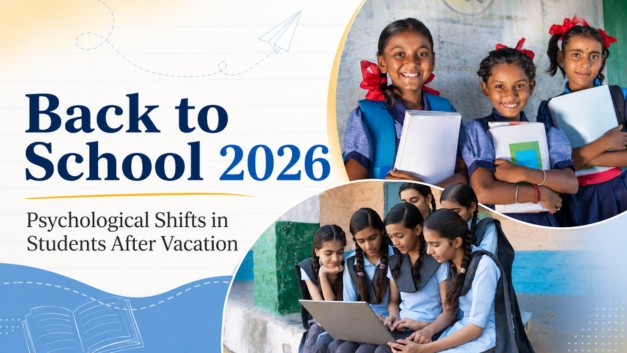
Back to School 2026: When the final stretch of summer vacation winds down, media headlines naturally flood with logistics- reopening dates, school supply sales, and transport schedules. However, for the millions of young minds preparing to return to the classroom, this period represents a massive, invisible psychological migration. Moving from the unstructured freedom of summer to the rigid, performance-driven environment of the academic year alters student routines, emotional well-being, and social dynamics.
Understanding the contemporary student’s mindset during this transition is critical for educators, parents, and digital publishers looking at the human side of educational news.
The Dual Mindset: Freedom vs. Structure
For a student, summer vacation is not merely a break from textbooks; it is a temporary suspension of chronic academic performance anxiety. The sudden shift back to structured environments triggers a complex cognitive recalibration.
On one hand, a significant percentage of students experience a sense of anticipation. Reconnecting with peer networks and engaging in collaborative environments provides essential social fulfillment. On the other hand, the abrupt reintroduction of early wake-up times, mandatory focus blocks, and strict behavioral codes can cause friction. Psychologists note that this sharp transition frequently causes transient sleep disturbances and behavioral irritability as the brain fights to adapt to sudden restriction.
The Rise of Post-Vacation School Anxiety
In recent academic cycles, educational researchers have identified a growing trend in post-vacation school anxiety. This is not simple reluctance to do homework; it is a profound stress response to a high-pressure environment. Factors driving this include:
- Social Realignment Anxiety: The fear of shifting peer hierarchies, classroom placements, and the pressure to fit in socially after months of isolation or localized interactions.
- Performance Dread: Immediate anxiety regarding standardized benchmarking tests that frequently occur early in the first academic term.
- Screen-Time Withdrawal: The modern student heavily relies on digital connectivity for recreation during holidays. Replacing dopamine-heavy, immediate-gratification screen time with long, offline focus blocks creates a palpable attention deficit during the initial weeks of school.
Social Dynamics and Peer Readjustment in the Modern Classroom
A classroom is as much a social ecosystem as it is an instructional space. When students step back through the school doors, they do not automatically pick up where they left off. Months of individual growth, varying family experiences, and uneven digital access during the summer create noticeable gaps between peers.
Re-establishing Peer Group Hierarchies
Students often spend the first fortnight of a new term navigating subtle social realignments. Friendships may have shifted, or students may find themselves in new divisions entirely separated from their familiar support systems. This structural reshuffling requires high levels of emotional resilience, particularly for introverted students or those transitioning into entirely new developmental phases, such as moving from primary school to middle school.
Actionable Coping Mechanisms: Easing the Student Transition
To ensure that students do not experience burnout within the first month of reopening, an empathetic, structured approach to onboarding is essential. Both home environments and school administrations play a pivotal role in smoothing this psychological curve.
1. The Implementation of Micro-Routines
Rather than forcing a jarring, single-day shift in sleep schedules, parents are encouraged to implement gradual micro-routines in the final week of vacation. Shifting sleep and wake-up times by just 15 minutes daily significantly reduces the physical shock of the first official school morning.
2. The “Soft Launch” Instructional Approach
Forward-thinking educational institutions are abandoning the practice of diving straight into dense, graded curriculum material on day one. Instead, schools are utilizing a “soft launch” strategy—focusing the first week on low-stakes collaborative projects, community-building exercises, and emotional expression workshops. This lowers the baseline anxiety levels of the student body and creates a psychological safe zone.
The Long-Term Developmental View
Ultimately, the transition from vacation back to school is a recurring milestone that shapes a student’s long-term adaptability. By shifting the conversation from simple reopening dates to the actual internal experiences of the students, communities can build healthier, more resilient educational environments that foster true academic engagement.
Analytical Comparison: Student Emotional Indicators Post-Vacation
The following table breaks down the typical behavioral shifts observed across different student demographics during the post-vacation reopening phase.
| Student Demographic Group | Primary Emotional Catalyst | Common Behavioral Indicator | Optimal Support Strategy |
| Primary School (Ages 6-10) | Separation anxiety from primary caregivers. | Regression in independence, somatic complaints (stomach aches). | Concrete physical routines, transitional comfort items. |
| Middle School (Ages 11-14) | Intense peer perception and social acceptance anxiety. | Sudden withdrawal, hypersensitivity to criticism, mood volatility. | Open-ended communication, validating social concerns without judgment. |
| High School (Ages 15-18) | Chronic academic performance and future-pathway stress. | Procrastination, sleep deprivation, over-reliance on stimulants/screens. | Time-management mentoring, clear boundary setting around rest cycles. |
Must read, 10 Inspiring Movies From Around the World That Every Student Needs to Watch in 2026
Watch Latest News Videos on KRH News: Click Here