


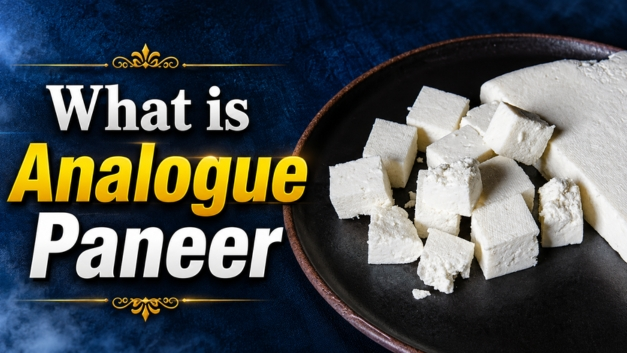
For millions of households and vegetarians across India, paneer is the ultimate comfort food. From rich Palak Paneer at a family dinner to a quick street-side paneer roll, cottage cheese serves as a primary source of protein and calcium. However, when you bite into a piece of restaurant-style paneer or pick up a budget-friendly block from the local market, how certain are you that it’s actually made of milk?
What Exactly is Analogue Paneer?
In simple terms, analogue paneer is a non-dairy or semi-dairy substitute designed to mimic the appearance, texture, and cooking behavior of traditional cottage cheese. While traditional paneer is derived solely from boiling and curdling pure milk, analogue paneer is manufactured using a concoction of:
- Vegetable oils and fats (such as palm oil) Indiatimes
- Starches and flour Slurrp
- Emulsifiers and stabilizers India Today
- Plant proteins (like soy or pea protein) and milk solids India Today
While manufacturing and selling analogue products is not inherently illegal under the Food Safety and Standards Authority of India (FSSAI) guidelines—provided they are transparently labelled—a dark side has emerged: fraudulent substitution.
Unscrupulous vendors, caterers, and eateries have been passing off cheap analogue paneer (which costs a fraction of pure dairy paneer to produce) as the real deal, deceiving consumers who pay premium prices for genuine nutritional value.
Why is Analogue Paneer a Cause for Concern?
The alarm bells ringing across India are driven by two major factors: health implications and deceptive trade practices.
- The Nutritional Gap: Authentic paneer is rich in bioavailable animal protein and natural fats essential for children, pregnant women, and fitness enthusiasts. Analogue paneer drastically underdelivers on protein, replacing wholesome dairy fats with processed vegetable fats, which can negatively impact long-term cardiovascular health if consumed unknowingly. Hindustan Times
- Deception in Hospitality: Routine food safety sweeps have revealed that hotels, cloud kitchens, and restaurants frequently use analogue paneer to cut costs without updating their menus or informing diners. Consumers walking into a restaurant assume they are fueling their bodies with dairy protein, only to consume heavily processed starches and industrial oils instead. Hindustan Times+ 1
The Current Situation in India: State Governments Lay Down the Law
The crisis has pushed state food safety administrations to take aggressive, frontline actions to protect public health.
- Maharashtra’s Sweeping Ban: Taking a monumental step, the Maharashtra Food and Drug Administration (FDA) issued a strict gazette notification completely banning the manufacture, processing, packaging, storage, distribution, and sale of analogue paneer across the state. Under stringent provisions of the Food Safety and Standards Act, violators face severe penalties ranging from six months of imprisonment and heavy fines to life imprisonment in extreme cases where adulterated or unsafe food leads to fatalities. Hindustan Times+ 1
- Gujarat Follows Suit: Reinforcing the regional momentum, the Gujarat government also announced a proactive ban on the production and sale of analogue variants of paneer, butter, and cheese to curb deceptive food practices. Hindustan Times
- Intensified Raids: Statewide enforcement drives, such as those witnessed in Pune and Mumbai, have led to massive raids on unauthorized godowns seizing thousands of kilograms of fake paneer, palm oil, and chemical binding agents. Indiatimes
How to Spot Pure Paneer vs. Analogue Paneer
While regulatory bodies are tightening the noose on suppliers, consumers must also stay vigilant. Keep these quick checks in mind the next time you buy paneer:
- The Texture Test: Pure paneer feels soft, slightly moist, and crumbles smoothly between your fingers with a natural graininess. If it feels overly rubbery, bouncy like a sponge, or snaps like plastic, it is likely packed with starches and binding agents. Slurrp
- The Taste and Smell: Authentic paneer has a mild, milky, and slightly sweet aroma. Analogue or chemically altered paneer often tastes bland, chalky, or carries an unnatural chemical aftertaste. Slurrp
- Check the Label: If buying packaged paneer, always check the ingredient list. If vegetable oils, modified starches, or plant proteins top the list instead of milk, it is an analogue product. When dining out, do not hesitate to ask establishments if they use pure dairy paneer. India Today
The Road Ahead
The crackdown on analogue paneer marks a watershed moment for consumer rights and food safety transparency in India. While synthetic substitutes have their place in commercial food processing under strict compliance, masking them as pure dairy is a direct breach of consumer trust. As states like Maharashtra and Gujarat set a precedent with zero-tolerance policies, the hope is for a nationwide shift toward absolute transparency ensuring that what is printed on the menu matches precisely what is served on our plates.
Also read, Why Analogue (Fake) Paneer is Banned, How to Spot It, and What the New Laws Mean for You
Watch Latest News Videos on KRH News: Click Here