


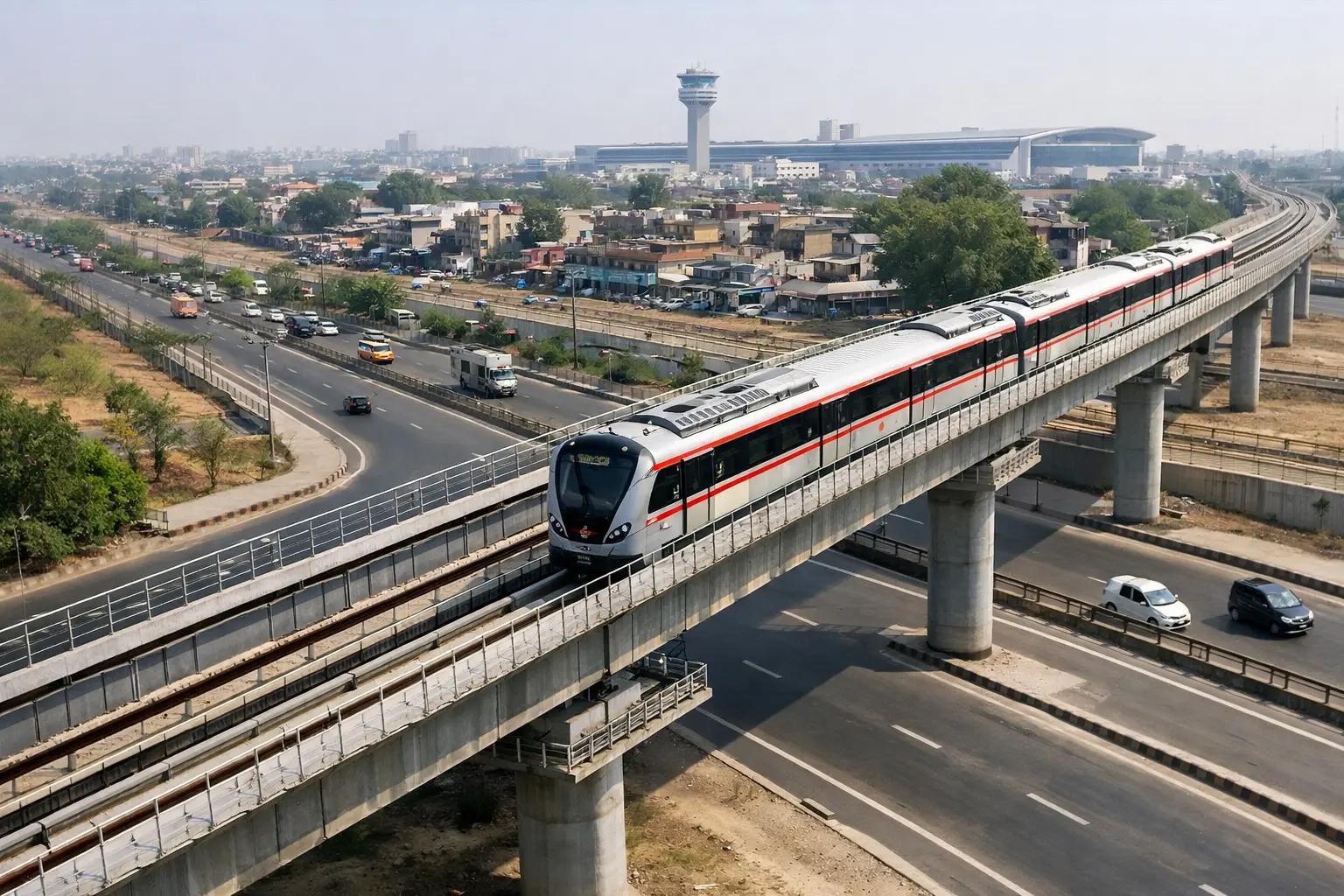
In a significant boost to urban transportation in Gujarat, the Union Cabinet chaired by Prime Minister Narendra Modi has approved the Ahmedabad Metro Rail Project Phase 2A. The project will develop a new 6.032-kilometre metro corridor connecting Koteshwar Road to Ahmedabad Airport, enhancing public transport accessibility and strengthening the city’s growing metro network.
The newly approved corridor will include five stations, comprising four elevated stations and one underground station. Once operational, the Ahmedabad-Gandhinagar Metro network will expand to a total length of 77.63 kilometres, making it one of India’s most extensive urban transit systems. The total completion cost of the project, including Interest During Construction (IDC), is estimated at ₹2,168.04 crore.
Route Details of Ahmedabad Metro Phase 2A
The new metro corridor has been designed to improve accessibility to Ahmedabad Airport while connecting key residential and commercial zones that currently lack efficient mass transit options.
Stations Included in Phase 2A
The five stations planned under the project are:
- Ashram Road
- Koteshwar Ancient Temple
- Sabarmati River
- Sardar Nagar
- Airport Station
The corridor will seamlessly integrate with the existing Ahmedabad-Gandhinagar Metro network, ensuring smooth transfers and improved connectivity for daily commuters.
Enhanced Airport Connectivity for Ahmedabad
One of the biggest highlights of Phase 2A is direct metro connectivity to Ahmedabad Airport.
Easier Access for Travelers
Passengers traveling to and from the airport will benefit from a reliable, fast, and affordable transportation option. Improved airport access is expected to reduce dependency on private vehicles and taxis while offering greater convenience for domestic and international travelers.
Better Integration with Public Transport
The metro corridor will improve links between the airport, railway stations, bus terminals, and important commercial districts, creating a more integrated transportation ecosystem across the city.
Supporting Future International Sporting Events
The metro expansion is also expected to support the development of sports infrastructure in the region.
Preparing for Major Global Events
Authorities anticipate that nearby sports facilities may be developed to support potential hosting requirements for the World Police Games 2029 and the Commonwealth Games 2030. Enhanced metro connectivity will play a crucial role in transporting athletes, officials, and spectators efficiently.
Reducing Traffic Congestion Across Ahmedabad
Ahmedabad has witnessed rapid urban growth over the past decade, resulting in increasing traffic congestion on major roads.
Alternative to Road-Based Transport
The new metro corridor will provide a fast and efficient alternative to private vehicles, helping reduce traffic pressure on key routes leading to the airport and surrounding areas.
Improved Road Safety
Reduced vehicle density can contribute to smoother traffic movement, lower accident risks, and shorter travel times for residents and visitors alike.
Environmental Benefits of Metro Expansion
The Ahmedabad Metro Phase 2A project aligns with India’s sustainable urban development goals.
Lower Carbon Emissions
Metro rail systems are widely recognized as environmentally friendly transportation solutions. By encouraging more commuters to switch from private vehicles to public transit, the project can significantly reduce carbon emissions and fuel consumption.
Sustainable Urban Mobility
The expansion will strengthen Ahmedabad’s commitment to cleaner transportation while supporting long-term environmental sustainability objectives.
Economic Growth and Investment Opportunities
Infrastructure development often serves as a catalyst for economic growth, and the Ahmedabad Metro Phase 2A project is expected to create substantial economic benefits.
Increased Productivity
Faster commuting times will allow residents and professionals to reach workplaces and business centers more efficiently, improving overall productivity.
Boost for Commercial Development
Areas surrounding the new metro stations are likely to attract investments, commercial activity, and real estate development. Improved accessibility often leads to increased business opportunities and property value appreciation.
Social Impact and Improved Quality of Life
The metro expansion will provide broader access to affordable public transportation for people from different socio-economic backgrounds.
Greater Mobility for Residents
Improved access to workplaces, educational institutions, healthcare facilities, and commercial centers will contribute to a better quality of life for thousands of residents.
Inclusive Urban Development
The project is expected to reduce transportation inequalities by offering safe, reliable, and affordable transit options to a larger population.
Employment Generation Through the Project
Apart from infrastructure benefits, the metro project will also create significant employment opportunities.
Jobs During Construction and Operations
During peak construction activity, Ahmedabad Metro Phase 2A is expected to generate employment for approximately 2,000 individuals. Additionally, around 500 people are likely to be employed during the operation and maintenance phase of the metro system.
Final Thought
The approval of Ahmedabad Metro Phase 2A marks another milestone in Gujarat’s urban infrastructure development journey. With a ₹2,168 crore investment, direct airport connectivity, enhanced public transport access, reduced traffic congestion, environmental benefits, and employment generation, the project is expected to transform mobility across Ahmedabad and Gandhinagar.
As the city’s metro network expands to 77.63 kilometres, Ahmedabad is positioning itself as one of India’s leading examples of modern, sustainable, and integrated urban transportation.
Also read, AMC Declares 25 Ahmedabad Underpasses as High-Risk Zones Ahead of Monsoon
Watch Latest News Videos on KRH News: Click Here