


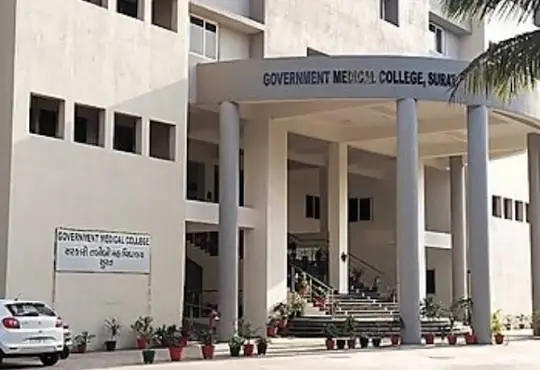
SURAT: The case surrounding the death of 29-year-old resident doctor Dr Harsh Pandya at Surat Medical College has taken a fresh turn, with the Veer Narmad South Gujarat University (VNSGU) seeking details from the medical college administration regarding the investigation into alleged ragging and harassment.
The development comes amid growing scrutiny of the college administration following the death of the first-year postgraduate Microbiology student, who was found dead in his hostel room at the Government Medical College campus. Recent investigations have already resulted in the suspension of four resident doctors for six months.
VNSGU Seeks Explanation From Medical College Dean
According to the information available, VNSGU has issued a notice to Government Medical College, Surat Dean Dr Jayesh M. Brahmbhatt, seeking details of the action taken following the alleged ragging incident.
The university has reportedly sought information regarding:
- Details of the internal investigation conducted by the college
- Action taken against students allegedly involved in ragging
- The role and responsibility of faculty members
- Details of measures taken to prevent similar incidents
- Compliance with reporting requirements related to ragging cases
Government Medical College, Surat is affiliated with VNSGU, making the university an important authority in matters concerning academic and institutional oversight.
Questions Over Delay in Submitting Investigation Report
The university’s concern reportedly includes the delay in submitting the investigation report after the death of Dr Harsh Pandya.
The issue has raised questions about whether the college administration followed the required reporting procedure promptly after the alleged ragging incident came to light. The reported delay has added another layer of administrative scrutiny to a case that has already attracted attention from the state health department, medical authorities and police.
Four Resident Doctors Already Suspended
The case had earlier led to disciplinary action against four resident doctors. According to reports, an anti-ragging investigation found that four senior resident doctors were involved in ragging of junior postgraduate students. The four doctors were subsequently suspended for six months from the hospital, hostel and teaching-related activities.
Four faculty members, including the Head of the Microbiology Department, were also issued show-cause notices in connection with the matter.
Police Register FIR Against Four Doctors
The matter has now moved beyond departmental action. According to a latest report, Khatodara police registered an FIR against four resident doctors based on a complaint submitted by Government Medical College authorities. The case reportedly concerns allegations of wrongful confinement in connection with the death of Dr Harsh Pandya.
The FIR marks a significant development as investigators examine whether alleged harassment and mistreatment of junior residents contributed to the circumstances surrounding the death.
What Happened to Dr Harsh Pandya?
Dr Harsh Pandya, a first-year postgraduate student in Microbiology, was found dead in his hostel room at the Government Medical College campus in Surat.
His death initially triggered allegations of ragging and harassment by senior resident doctors. His family also raised concerns about the treatment he allegedly faced, prompting authorities to launch a detailed investigation. The investigation subsequently brought alleged ragging involving multiple junior students to light and led to disciplinary action against four resident doctors.
Faculty Role Also Under Scrutiny
Apart from the alleged involvement of resident doctors, the role of faculty members has also come under scrutiny.
Reports indicate that four faculty members were issued show-cause notices, including the Microbiology department’s HOD. Investigators are examining whether faculty members were aware of the alleged ragging and whether adequate steps were taken to protect junior postgraduate students. The latest university-level scrutiny could therefore widen the focus from individual students to institutional responsibility and administrative oversight.
COGENT Portal Compliance Question Raised
Another issue highlighted in the reported university action concerns the requirement to upload information regarding ragging-related incidents on the UDAYAM-COGENT portal.
The Gujarat government’s COGENT platform is used by educational institutions for various administrative and academic processes. Official government information confirms that COGENT is operated under Gujarat’s Higher & Technical Education Department. The reported failure to follow the prescribed reporting procedure has raised questions over whether the college administration complied with the required institutional mechanism for documenting such incidents.
Growing Focus on Anti-Ragging Compliance
The developments have renewed attention on anti-ragging mechanisms in medical colleges, particularly at the postgraduate level. Medical education involves demanding academic schedules and long working hours, making a safe and professional environment essential for resident doctors and students.
The Surat case has therefore raised broader questions about:
- Monitoring of postgraduate hostels
- Functioning of anti-ragging committees
- Reporting of complaints
- Faculty accountability
- Protection of junior resident doctors
- Timely intervention in harassment cases
Investigation Continues in Surat
The university’s reported notice, the disciplinary action against four resident doctors and the police FIR indicate that the matter is being examined at multiple levels.
The college administration, university authorities, health department and police are now involved in different aspects of the case. Further action is expected after the authorities examine the investigation records, statements and other available evidence.
Conclusion
The death of Dr Harsh Pandya at Surat Government Medical College has developed into a wider institutional and criminal investigation, with questions now being raised over alleged ragging, administrative responsibility and compliance with reporting procedures.
With VNSGU seeking details from the medical college administration, four resident doctors already suspended and a police FIR registered, scrutiny of the Surat medical college’s handling of the matter is likely to continue. The case has also highlighted the importance of stronger anti-ragging mechanisms and timely reporting to ensure that medical students and resident doctors can work and study in a safe environment.
Also read, Surat Police Commissioner Issues Restrictions for Dasha Maa Festival 2026