


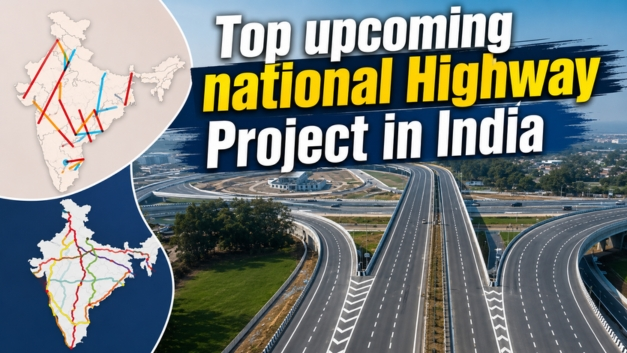
National Expressway & Highway Projects in India 2026: India is witnessing one of the largest road infrastructure revolutions in its history. Under flagship initiatives like Bharatmala Pariyojana, PM Gati Shakti, and the National Infrastructure Pipeline (NIP), the country is rapidly expanding its network of world-class expressways and national highways.
These mega projects are transforming connectivity between major cities, ports, industrial corridors, logistics parks, airports, and border regions while significantly reducing travel time and boosting economic growth. In this comprehensive guide, we explore the top national expressway and highway projects in India for 2026, their current progress, expected completion timelines, investment value, and their impact on India’s future.
Why Expressways Matter for India’s Economy
India currently has one of the world’s fastest-growing highway networks. Modern access-controlled expressways are helping the country by:
- Reducing travel time by 40–60%
- Improving logistics efficiency
- Lowering transportation costs
- Boosting tourism
- Supporting industrial corridors
- Enhancing export competitiveness
- Generating employment
- Improving regional connectivity
The Government of India aims to create a seamless high-speed road network connecting every major economic hub.
Top National Expressway & Highway Projects in India
1. Delhi–Mumbai Expressway
India’s Longest Greenfield Expressway
The Delhi–Mumbai Expressway is India’s most ambitious expressway project and one of the largest infrastructure developments in Asia.
Key Highlights
- Length: Approximately 1,350 km
- Estimated Cost: ₹1 lakh crore+
- States Covered:
- Delhi
- Haryana
- Rajasthan
- Madhya Pradesh
- Gujarat
- Maharashtra
Major Benefits
- Delhi to Mumbai travel time reduced from nearly 24 hours to around 12 hours.
- Faster freight movement.
- Boost to industrial corridors.
- Better connectivity to upcoming logistics hubs.
Large sections are already operational, while remaining stretches continue to progress toward full completion.
2. Ganga Expressway
Uttar Pradesh’s Mega Connectivity Project
The Ganga Expressway is among India’s longest expressways, connecting western and eastern Uttar Pradesh.
Project Details
- Length: Approximately 594 km
- Estimated Cost: ₹36,000 crore+
- Route: Meerut to Prayagraj
Key Advantages
- Improved religious tourism
- Better agricultural transportation
- Faster industrial development
- Reduced congestion on existing highways
The project is progressing rapidly and is expected to become a major economic corridor.
3. Mumbai–Nagpur Samruddhi Mahamarg
Maharashtra’s Game-Changing Expressway
Officially known as the Hindu Hrudaysamrat Balasaheb Thackeray Maharashtra Samruddhi Mahamarg, this expressway has transformed connectivity across Maharashtra.
Highlights
- Length: 701 km
- Connects: Mumbai to Nagpur
Benefits
- Travel time reduced from 16 hours to around 8 hours.
- Boost for agriculture.
- Industrial development.
- Tourism growth.
- Logistics efficiency.
Most sections are already operational, with remaining connectivity enhancements underway.
4. Bengaluru–Chennai Expressway
South India’s High-Speed Industrial Corridor
This access-controlled expressway is designed to improve connectivity between Karnataka and Tamil Nadu.
Project Highlights
- Length: Approximately 262 km
- Estimated Cost: ₹17,000 crore+
Importance
- Supports automobile industry
- Electronics manufacturing
- IT sector logistics
- Port connectivity
The project forms part of India’s expanding southern industrial infrastructure.
5. Dwarka Expressway
NCR’s Premium Urban Expressway
The Dwarka Expressway is expected to significantly ease traffic between Delhi and Gurugram.
Key Features
- Length: Approximately 29 km
- Access-controlled
- Multi-level interchanges
- Smart traffic management
Benefits
- Reduced congestion
- Faster airport connectivity
- Better residential accessibility
- Increased commercial development
6. Surat–Chennai Expressway
Connecting India’s Western and Southern Economic Powerhouses
One of India’s newest mega expressway initiatives, the Surat–Chennai Expressway aims to strengthen industrial connectivity between western and southern India.
Highlights
- Connects Gujarat with Tamil Nadu
- Supports manufacturing corridors
- Faster freight movement
- Better port connectivity
The project is expected to significantly benefit industries across multiple states.
7. Amritsar–Jamnagar Expressway
Strategic Defence and Economic Corridor
Stretching across northwestern India, this expressway connects Punjab with Gujarat.
Major Benefits
- Military logistics
- Border connectivity
- Industrial freight movement
- Port access
The corridor is expected to become one of India’s most strategically important highway projects.
8. Ahmedabad–Dholera Expressway
Gateway to India’s First Greenfield Smart City
This expressway connects Ahmedabad with the upcoming Dholera Special Investment Region.
Features
- High-speed connectivity
- Supports semiconductor investments
- Smart City development
- Industrial expansion
The project plays a critical role in India’s semiconductor and manufacturing ambitions.
9. Kanpur–Lucknow Expressway
Faster Travel Across Uttar Pradesh
The expressway aims to strengthen connectivity between two of Uttar Pradesh’s largest cities.
Benefits
- Reduced travel time
- Urban expansion
- Better business connectivity
- Improved tourism
10. Chennai Peripheral Ring Road
Transforming Southern Logistics
The Chennai Peripheral Ring Road is designed to decongest urban traffic while improving freight transportation.
Highlights
- Better port connectivity
- Faster industrial movement
- Reduced city congestion
- Improved regional logistics
India’s Expressway Revolution by the Numbers
| Project | Approx Length |
|---|---|
| Delhi–Mumbai Expressway | 1,350 km |
| Ganga Expressway | 594 km |
| Samruddhi Mahamarg | 701 km |
| Bengaluru–Chennai | 262 km |
| Dwarka Expressway | 29 km |
| Surat–Chennai | 1,200+ km (planned corridor) |
| Amritsar–Jamnagar | 1,200+ km |
| Ahmedabad–Dholera | 109 km |
Benefits of India’s New Highway Network
Faster Travel
Travel between major cities is becoming significantly quicker, reducing journey times by several hours.
Improved Logistics
Businesses benefit from lower transportation costs and faster deliveries.
Economic Growth
Highways attract industries, logistics parks, warehouses, and commercial investments.
Employment Opportunities
Construction and associated industries generate millions of direct and indirect jobs.
Tourism Development
Improved road connectivity encourages domestic tourism and boosts local economies.
Government Initiatives Driving Highway Development
Several flagship programmes are accelerating road infrastructure across India:
- Bharatmala Pariyojana
- PM Gati Shakti National Master Plan
- National Infrastructure Pipeline (NIP)
- National Logistics Policy
- Dedicated Freight Corridors
- Smart Cities Mission
These initiatives aim to integrate highways with railways, ports, airports, and industrial corridors.
Future of India’s Expressway Network
Experts believe India will soon possess one of the world’s largest access-controlled highway networks.
Future developments include:
- AI-powered traffic monitoring
- Smart toll collection
- Electric vehicle charging corridors
- Green highways
- Intelligent transport systems
- Digital infrastructure integration
As India’s economy continues to grow, expressways will play a central role in supporting trade, mobility, manufacturing, and regional development.
Frequently Asked Questions (FAQs)
Which is India’s longest expressway in 2026?
The Delhi–Mumbai Expressway remains India’s longest greenfield expressway.
Which expressway reduces Delhi to Mumbai travel time?
The Delhi–Mumbai Expressway cuts travel time to nearly 12 hours.
Which state has the largest expressway network?
Uttar Pradesh continues to lead India in operational expressway length.
What is Bharatmala Pariyojana?
Bharatmala Pariyojana is the Government of India’s flagship highway development programme focused on improving national connectivity and logistics.
Conclusion
India’s expressway revolution is reshaping transportation, logistics, and economic development across the country. Mega projects like the Delhi–Mumbai Expressway, Ganga Expressway, Samruddhi Mahamarg, Bengaluru–Chennai Expressway, and Surat–Chennai Expressway are creating faster, safer, and more efficient travel while unlocking new opportunities for industries and businesses.
As these ambitious highway projects move closer to completion, India is steadily building a world-class road infrastructure network capable of supporting its long-term vision of becoming a global economic powerhouse.
Also read, 2026 Mega Highway Projects in India: Tunnels, Roads and Bridges
Watch Latest News Videos on KRH News: Click Here