


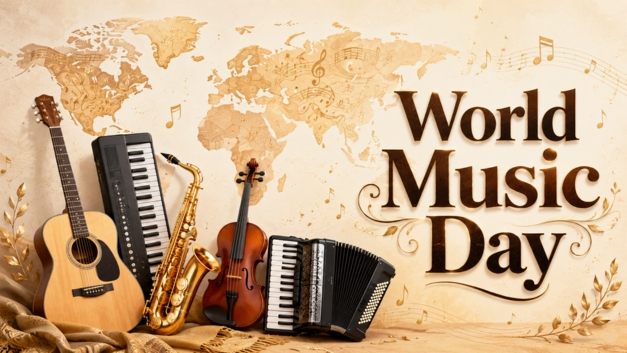
Music is the shorthand of emotion. It crosses borders without a passport, speaks to us when words fail, and unites humanity in a way nothing else can. Every year on June 21st, the globe stops to celebrate this powerful force on World Music Day.
As we step into 2026, the music landscape is shifting faster than ever. From street corners in Paris to global stadium tours by K-Pop icons, here is your ultimate guide to World Music Day 2026—its rich history, global celebrations, India’s thriving position, and the trends defining what we listen to today.
1. The History of World Music Day 2026: How It All Began
While music is ancient, the official celebration of World Music Day originally known as Fête de la Musique began in France in 1982.
The concept was envisioned by Jack Lang (the French Minister of Culture) and Maurice Fleuret, a French composer and music journalist. They noticed that despite music being everywhere, live, accessible music wasn’t hitting the streets.
The Core Philosophy: The festival was designed with two strict rules: all concerts must be completely free to the public, and all musicians (both world-class professionals and amateur street buskers) are invited to play.
They chose June 21st because it coincides with the Summer Solstice (the longest day of the year in the Northern Hemisphere), giving people the maximum amount of daylight to stay outside and play music long into the night.
2. Fascinating Facts About World Music Day
- Global Footprint: What started as a local French initiative is now celebrated in over 120 countries and 2,000+ cities worldwide.
- Make Music Day: In English-speaking countries like the US and the UK, the day is often marketed and celebrated as “Make Music Day.”
- No Stages Required: Unlike massive corporate festivals, World Music Day encourages performances on sidewalks, public parks, roofs, and porch steps.
- Health Benefits: Studies consistently show that participating in community musical events on this day lowers cortisol (stress) levels and boosts collective empathy.
3. How the World Celebrates World Music Day
Every country injects its own cultural flavor into the Summer Solstice celebrations:
- France: The birthplace of the event transforms entire cities into open-air concerts. You cannot walk a single block in Paris without bumping into a jazz trio, an electronic DJ set, or an opera singer.
- Germany (Berlin): Berlin takes a heavily electronic and alternative approach, with open-air raves, techno block parties, and indie bands taking over public plazas.
- Mexico: In places like Mexico City, the festival frequently marks international collaboration, featuring massive free outdoor stages blending traditional mariachi, folk, and modern Latin pop.
- The Philippines: Cities like Cebu expand the event into multi-day celebrations, pairing local independent choirs and acoustic acts with international instrumentalists.
4. India’s Position on the Global Music Map in 2026
India’s music scene is currently experiencing a historic renaissance, evolving from a Bollywood-dominated ecosystem to a major player on the global independent stage.
- The Rise of “I-Pop” and Indie Music: While Bollywood playback music remains a cultural pillar, non-film independent music (I-Pop) is dominating streaming charts. Gen-Z listeners are actively prioritizing indie artists, singer-songwriters, and regional hip-hop over movie soundtracks.
- Regional Dominance: Punjabi music, South Indian cinematic tracks (Tollywood and Kollywood), and regional hip-hop (DHH – Desi Hip Hop) are pulling in billions of streams globally, gaining massive fanbases in Canada, the UK, and the US.
- Global Collaborations: Indian artists are no longer siloed. Standard practice in 2026 features mainstream Indian musicians collaborating with Western pop stars, Latin artists, and African beatmakers, successfully blending traditional instruments (like the sitar and tabla) into modern electronic dance music (EDM).
5. Today’s Situation: The Post-Genre & AI Era
The state of music today in 2026 is defined by unprecedented accessibility, technological shifts, and a rebellion against traditional boundaries.
- The “Post-Genre” World: Thanks to algorithmic streaming, younger generations don’t stick to just one genre. Playlists seamlessly jump from country to heavy metal to synthwave.
- The Rise of Micro-Genres: Micro-genres like PluggnB (a dreamy, laid-back trap subgenre mixed with 90s R&B) and Hyperpop are breaking out of internet subcultures and impacting mainstream radio.
- The Tech vs. Organic Balancing Act: While Artificial Intelligence (AI) tools are heavily utilized for music production and mixing, there is a massive counter-movement. Audiences are craving “organic sounds” – raw, acoustic acoustic sets, live vinyl recordings, and minimal, human-led storytelling.
- Sustainability in Music: In 2026, the industry is fiercely eco-conscious. World Music Day events this year are heavily prioritizing solar-powered sound systems, digital ticketing, and zero-waste initiatives.
6. The Phenomenon of K-Pop in Today’s Era
You cannot talk about the current state of music without addressing the absolute juggernaut that is Korean Pop (K-Pop). In 2026, K-Pop is no longer a “trend” – it is a foundational pillar of the global music industry.
| Metric | K-Pop’s Position in 2026 |
| Global Appeal | Multi-lingual tracks blending Korean, English, and Spanish to maximize global chart performance. |
| Industry Influence | Setting global standards for music video production, fashion, and fan-engagement apps. |
| Sonic Evolution | Seamlessly blending Western Hip-Hop, British Garage, 80s Synthwave, and Afro-fusion. |
The Globalization of the “K-Pop System”
In 2026, major Korean entertainment agencies have successfully globalized their training systems. We are now seeing localized global groups trained under the K-Pop methodology operating heavily in the US, Europe, and Latin America.
Unparalleled Fan Culture
K-Pop’s secret weapon remains its hyper-organized fan communities. On World Music Day, K-Pop fans worldwide organize massive, coordinated random play dances in public parks, streaming parties, and charity drives – perfectly embodying the community-driven spirit that Fête de la Musique was founded upon.
Conclusion: Turn Up the Volume This June 21st
World Music Day 2026 reminds us that despite political, geographical, and cultural divides, humans all dance to the same heartbeat. Whether you are blasting the latest K-Pop comeback, vibing to an indie Indian artist, or busking on a street corner in your hometown, take a moment this Sunday, June 21st, to appreciate the soundtrack of our lives.
Also read, World Refugee Day 2026: History, Global Crisis Scale, and India’s Complex Humanitarian Stance
Watch Latest News Videos on KRH News: Click Here