


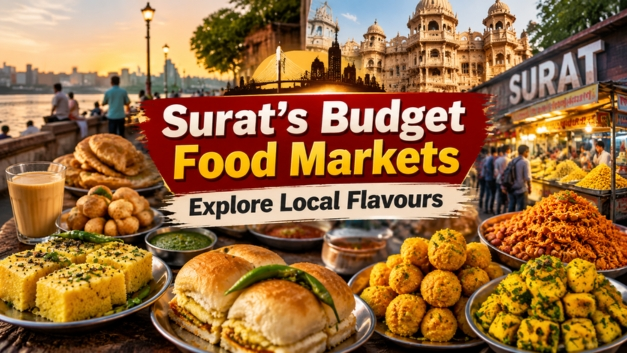
Surat is famous for diamonds and textiles, but ask a local what makes the city special and food will quickly become part of the conversation.
From locho and khaman to sev khamani, bhajiya, ghari and bhusu, Surat has developed a distinctive food culture that can be explored without spending a lot of money.
And with the festive season underway, the city’s food scene becomes even more interesting. Ganesh Chaturthi falls on September 14, 2026, followed by Ganesh Visarjan on September 25, while Navratri begins on October 11. This makes September and October a particularly good time to explore Surat’s traditional snacks, festive sweets and evening food markets.
Why Surat Food Markets Are Worth Exploring
Surat’s food culture is not limited to restaurants.
Some of the city’s most recognisable flavours are found in busy market areas, roadside stalls, old neighbourhoods and traditional food shops. The District Surat website itself highlights local favourites such as locho, ghari, Surti khaman, petis, rasaawala khaman, undhiyu and sarasiya khaja as part of the city’s food identity.
For budget-conscious visitors, this is an advantage because you can sample several dishes without paying for a full restaurant meal every time.
1. Chauta Bazaar: Traditional Surat Food and Festive Shopping
Chauta Bazaar is one of the old and busy commercial areas of Surat and is particularly interesting during the festive season.
While shopping through the market, visitors can look for traditional Gujarati snacks, farsan and sweets.
The area becomes especially relevant around festivals because Surat’s traditional food culture is closely connected with celebrations.
What to try
- Ghari
- Farsan
- Fafda
- Jalebi
- Khaman
- Bhusu
- Traditional sweets
Chauta Bazaar is also useful for visitors who want to combine food exploration with old-Surat shopping.
Budget tip
Instead of ordering a large meal at one place, try smaller portions from different shops. This allows you to experience more Surti flavours while keeping your spending under control.
2. Bhagal: A Good Area for a Local Food Walk
Bhagal is another area worth considering if your goal is to experience the older, more traditional side of Surat.
The neighbourhood has been associated with local food walks and culinary exploration, with food being used as a way to understand the area’s history and communities. For visitors, Bhagal works particularly well as an evening food exploration area.
What to look for
- Bhajiya
- Khaman
- Sev khamani
- Chaat
- Local snacks
- Tea
- Traditional sweets
Rather than searching for one particular restaurant, explore the surrounding lanes and compare the different snack options.
3. Bombay Market Area: One of Surat’s Budget-Friendly Food Zones
The Bombay Market area is another useful stop for anyone planning a Surat food crawl.
Recent local food guides identify the area as one of the city’s concentrated street-food zones, with options including locho, khaman, sev khamani, pav bhaji and other snacks. The biggest advantage is variety. You can start with one snack, walk around, try another dish and finish with something sweet without committing to an expensive restaurant meal.
Good options to explore
Locho: Soft, steamed and distinctly Surti.
Sev khamani: A popular Gujarati snack with the sweet-spicy flavour combination many Surti food lovers enjoy.
Pav bhaji: A familiar street-food option if you want something more filling.
Chai: An inexpensive way to finish a food walk.
Budget strategy
For two people, ordering smaller portions and sharing them can make a food crawl much cheaper than ordering separate full meals.
4. Ring Road: Food Alongside Surat’s Textile Hub
Ring Road is better known for Surat’s huge textile business, but the surrounding area also offers plenty of quick food options.
This can be particularly useful during the Navratri shopping season, when shoppers visit Surat for traditional outfits, fabrics and accessories. If you are planning a shopping trip, you can combine your textile-market visit with a short local food stop.
Try
- Khaman
- Locho
- Sev khamani
- Sandwiches
- Dosa
- Chaat
- Tea and cold beverages
The area can become extremely busy during the festive shopping period, so visitors should plan their food stop around their shopping schedule.
5. Gopi Talav Area: Snacks and Evening Food
Gopi Talav is one of Surat’s popular recreational areas and the surrounding locality offers opportunities to find quick snacks and evening food. For visitors who want a relaxed outing rather than a dedicated restaurant meal, the area can be included in a wider evening plan.
Budget-friendly choices
- Khaman
- Sev khamani
- Bhajiya
- Chaat
- Corn and quick snacks
- Tea
It is best to compare prices before ordering, particularly when buying multiple items.
6. Rander: A Different Side of Surat’s Food Culture
Rander offers a different culinary experience from the central market areas. The historic neighbourhood is particularly known for its distinctive food culture and a variety of savoury preparations. Visitors looking beyond the standard Surat food checklist can explore the area for local snacks and egg-based dishes.
Popular options to look for
- Egg dishes
- Bhajiya
- Local farsan
- Street snacks
- Tea
If you eat eggs, Rander can add a different dimension to a Surat food tour.
7. Chauta Bazaar and Ghari: A Must During the Festive Season
One of the most important seasonal food connections in Surat is Chand Padvo, a local full-moon celebration associated with eating outdoors and enjoying traditional delicacies. Surat’s official district website describes Chand Padvo as a distinctive local celebration where people enjoy food and snacks outdoors.
Ghari and bhusu are especially associated with this festive food tradition. A recent culinary feature also highlights Surti ghari and bhusu as signature festive foods associated with Chand Padvo. So if you are building a 2026 Surat food calendar, don’t limit it to everyday street food.
Surat Food to Try During the 2026 Festive Season
The September-October period brings several opportunities to explore seasonal and festival-related food.
Ganesh Chaturthi Food
Ganesh Chaturthi begins in Surat on September 14, 2026, making this one of the immediate festivals shaping the city’s food scene.
Visitors may encounter:
- Modak
- Pedas
- Traditional sweets
- Farsan
- Gujarati snacks
- Fasting-friendly foods
Large celebrations can also create temporary food stalls and increased evening activity around festival areas. For example, the Sarkar Ganesh Utsav 2026 is scheduled in City Light from September 14 to September 25.
Navratri 2026: Where Food Meets Garba Season
Navratri begins on October 11, 2026, and Surat’s food scene changes again as the city moves into one of Gujarat’s biggest festive periods. During Navratri, visitors will find two broad types of food options:
Regular Street Food
For people who are not fasting, regular Surat favourites remain available:
- Locho
- Khaman
- Sev khamani
- Bhajiya
- Chaat
- Sandwiches
- Dosas
Fasting-Friendly Food
People observing vrat may look for:
- Sabudana khichdi
- Sabudana vada
- Farali chevdo
- Kuttu preparations
- Rajgira items
- Potatoes
- Fruit-based dishes
Navratri-specific menus are already appearing in Surat food outlets, including sabudana khichdi, sabudana vada and vrat thalis.
How Much Does a Surat Food Crawl Cost?
You do not need a large budget to explore Surat’s local food. A simple food crawl can be structured like this:
| Food Plan | Approximate Budget |
|---|---|
| 2–3 small snacks | ₹50–₹100 |
| Snack + tea | ₹50–₹100 |
| Multiple snacks + drink | ₹100–₹200 |
| Larger street-food crawl | ₹200–₹400 |
| Festive sweets/farsan shopping | Depends on quantity |
These are planning ranges rather than fixed prices. Individual vendors, portion sizes and festive-season pricing can vary.
Best Time to Explore Surat Food Markets
For a street-food experience, evening is generally the most interesting time because many snack stalls and food areas become livelier after business hours.
Morning
Best for:
- Khaman
- Farsan
- Breakfast snacks
- Tea
Evening
Best for:
- Locho
- Sev khamani
- Chaat
- Bhajiya
- Pav bhaji
- Street-food walks
Festival evenings
Best for:
- Temporary food stalls
- Festive sweets
- Farali food
- Community celebrations
- Post-Garba snacks
During Ganesh Chaturthi and Navratri, however, crowds and traffic can be significantly higher than normal.
Budget Tips for Exploring Surat Food Markets
1. Carry Small Cash
Some smaller roadside vendors may not always offer the same payment options as established shops.
2. Share Portions
If you are travelling with friends or family, sharing different dishes is one of the easiest ways to try more food.
3. Compare Before Buying
Especially for sweets and farsan, compare quantities and prices before purchasing larger boxes.
4. Avoid Ordering Too Much at One Place
A food crawl works best when you sample rather than eat a complete meal at every stop.
5. Check Festival Prices
During major festivals, demand for sweets and snacks can rise. Check the price and quantity before ordering.
6. Carry Water
Street-food exploration can involve walking between different markets, especially in crowded areas.
7. Be Careful With Hygiene
Choose stalls with good customer turnover and food that appears freshly prepared. During festival periods, avoid food that has been sitting uncovered for long periods.
Final Word
A Surat food tour does not need to be expensive. From Chauta Bazaar and Bhagal to Bombay Market, Ring Road and Rander, the city offers plenty of opportunities to discover local flavours through small portions and budget-friendly snacks.
And with Ganesh Chaturthi in September and Navratri beginning in October 2026, the coming festive weeks offer an especially interesting time to explore Surat’s food culture. For first-time visitors, start with the classics locho, khaman, sev khamani, bhajiya and ghari and then explore the seasonal dishes and local specialities that make Surti food more than just street food.
Also read, Best Homemade Surati Monsoon Foods to Enjoy During Rainy Days in 2026
Watch Latest News Videos on KRH News: Click Here