


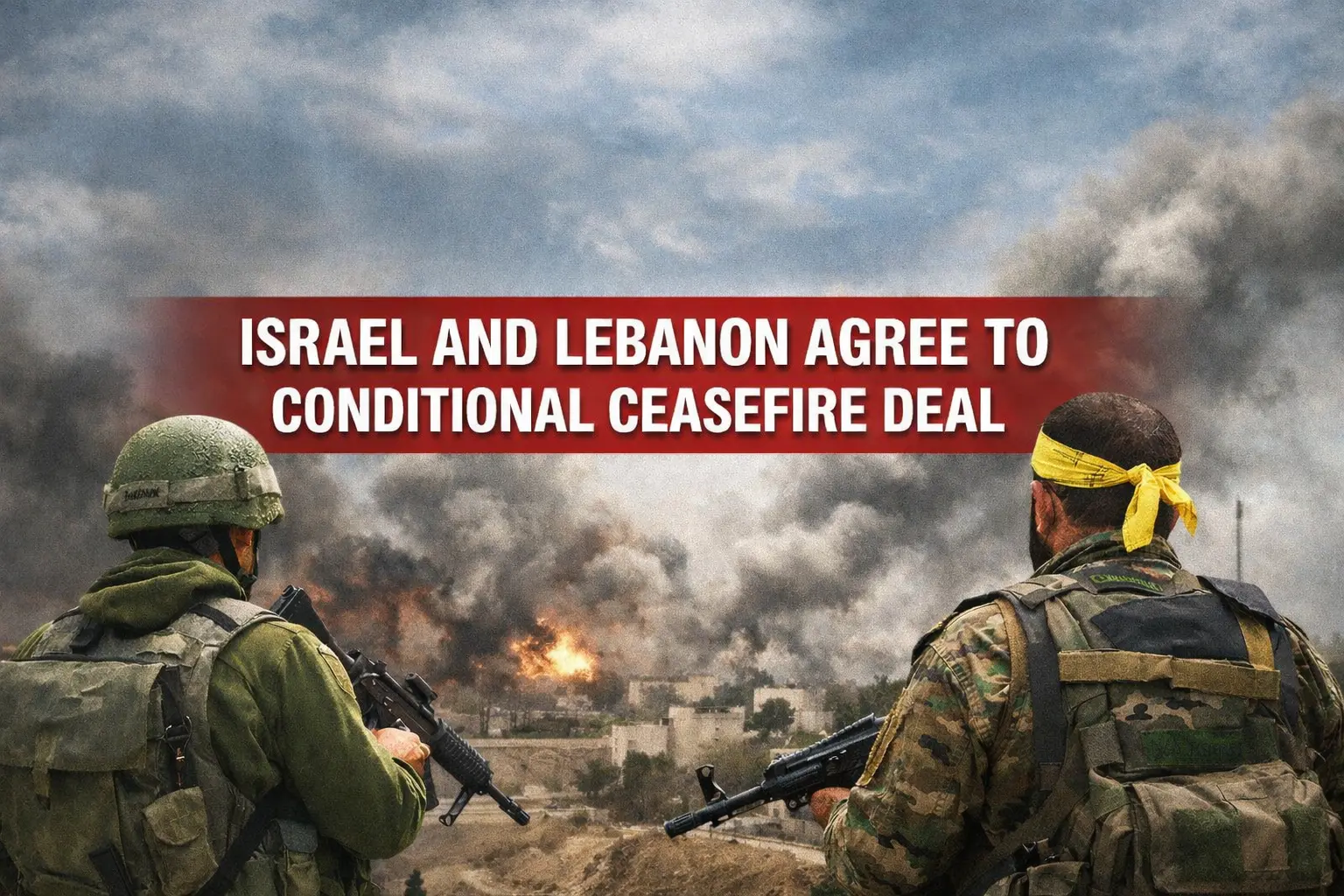
Israel and Lebanon have agreed to implement a conditional ceasefire following intensive US-mediated negotiations aimed at reducing tensions and preventing a wider regional conflict. The agreement marks a significant diplomatic development in the Middle East after months of military confrontations linked to the broader regional crisis involving Iran and Hezbollah.
According to a joint statement released by the United States, Israel, and Lebanon, the ceasefire will only take effect if Hezbollah completely ceases military operations and withdraws its operatives from areas south of the Litani River in southern Lebanon.
The deal is being viewed as an important step toward de-escalation, although uncertainty remains regarding Hezbollah’s response to the agreed conditions.
Key Conditions of the Ceasefire Agreement
Hezbollah Withdrawal Central to the Deal
Under the terms of the agreement, Hezbollah fighters are expected to leave designated areas in southern Lebanon. The plan also calls for the Lebanese Armed Forces to assume exclusive control over specific security zones, preventing the presence of non-state armed groups.
Pilot Security Zones to Be Established
The agreement includes the creation of “pilot zones” where the Lebanese military will oversee security operations and maintain full authority over the territory. The objective is to strengthen state control and reduce the risk of future cross-border clashes.
Officials involved in the negotiations stated that the arrangement is intended to build confidence between the two countries while laying the groundwork for a more comprehensive peace framework.
US Plays Key Role in Negotiations
Washington Hosts High-Level Talks
The ceasefire agreement emerged after two days of negotiations in Washington involving representatives from Israel, Lebanon, and the United States. American officials played a central role in facilitating discussions and encouraging both sides to move toward de-escalation.
Reports indicate that diplomatic intervention by the United States helped prevent further military escalation at a time when regional tensions were rapidly increasing.
Further Talks Scheduled
As part of the agreement, Israel and Lebanon have committed to continuing direct political and security discussions. The next round of talks is expected during the week of June 22, with both sides seeking to address unresolved issues and explore possibilities for a broader long-term arrangement.
Challenges Remain Despite the Agreement
Violence Has Continued in Recent Weeks
Although previous ceasefire arrangements were reached earlier this year, clashes and military operations continued in parts of southern Lebanon. Recent incidents included drone attacks, airstrikes, and cross-border exchanges that raised concerns about the stability of any future truce.
Security analysts caution that the latest agreement remains fragile and will depend heavily on implementation by all parties involved.
Hezbollah’s Position Remains Unclear
One of the biggest uncertainties surrounding the ceasefire is whether Hezbollah will fully accept the conditions outlined in the agreement. While the organization has previously indicated openness to ceasefire efforts, it has also opposed demands related to withdrawal and disarmament.
Observers believe Hezbollah’s response could determine whether the agreement evolves into a lasting peace initiative or remains a temporary pause in hostilities.
Impact on Regional Stability
Hope for Reduced Tensions in the Middle East
The agreement comes at a critical moment for the region, where conflicts involving Israel, Lebanon, Iran, and allied groups have contributed to growing instability. A successful implementation of the ceasefire could help reduce military tensions and create opportunities for broader diplomatic engagement.
International observers have welcomed efforts aimed at restoring stability and preventing further escalation that could affect neighboring countries and global markets.
What Happens Next?
The coming weeks will be crucial in determining the success of the ceasefire agreement. Implementation of the security arrangements, Hezbollah’s compliance with the conditions, and continued diplomatic engagement between Israel and Lebanon will all play a significant role in shaping the future of the region.
While challenges remain, the latest agreement represents one of the most significant diplomatic efforts in recent months to ease tensions along the Israel-Lebanon border and revive hopes for a more stable and peaceful Middle East.
Also read, Monsoon Arrives in Kerala: Rainy Season Officially Begins Across India
Watch Latest News Videos on KRH News: Click Here