


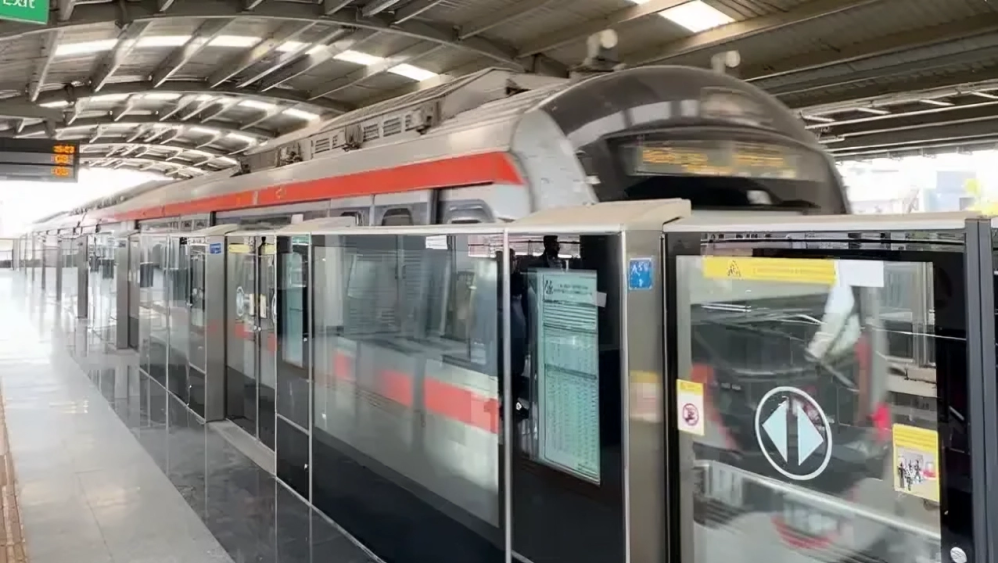
India has taken a major step toward next-generation railway infrastructure as the Central Government approved the ambitious Ahmedabad-Dholera semi high-speed rail corridor project in Gujarat.
The double-line rail project, estimated at ₹20,667 crore, will connect Ahmedabad (Sarkhej) with Dholera Special Investment Region (SIR), the upcoming Dholera International Airport, and the historic Lothal Maritime Heritage Complex.
The 134-kilometre-long railway corridor is being described as India’s first fully indigenous semi high-speed rail project, where the technology, systems, and execution will largely rely on Indian-made solutions. The project is expected to transform transportation, industrial growth, and regional connectivity in Gujarat while supporting India’s vision of self-reliant infrastructure development.
Ahmedabad-Dholera Rail Corridor Receives Cabinet Approval
The Central Cabinet recently approved the railway line project connecting Ahmedabad to Dholera, one of India’s most ambitious smart city developments. Officials stated that the project will feature a modern double railway line capable of supporting semi high-speed train operations.
The proposed route will strategically connect:
- Ahmedabad (Sarkhej)
- Dholera SIR
- Dholera International Airport
- Lothal Maritime Heritage Complex
The railway corridor is expected to play a major role in boosting industrial development and improving passenger connectivity across the region.
India’s First Fully Indigenous Semi High-Speed Rail Project
Focus on “Made in India” Technology
One of the biggest highlights of this project is the use of indigenous Indian technology. According to officials, this will be the first semi high-speed rail corridor in the country developed primarily using domestic expertise and locally manufactured systems.
The project aligns with the Government of India’s “Make in India” and “Atmanirbhar Bharat” initiatives aimed at reducing dependence on imported railway technologies. Experts believe this corridor could become a model for future railway modernization projects across India.
Semi High-Speed Rail to Improve Regional Connectivity
Unlike conventional railway lines, the Ahmedabad-Dholera corridor is expected to support faster train operations with upgraded rail infrastructure, signaling systems, and advanced safety technologies.
The improved connectivity will significantly reduce travel time between Ahmedabad and Dholera while supporting industrial and economic activities in the region.
Dholera SIR Set to Become a Major Growth Hub
Gujarat’s Largest Smart City Project
Dholera Special Investment Region (SIR) is one of India’s largest planned smart city and industrial projects. Located in Gujarat, the city is being developed as a future economic hub with world-class infrastructure, industrial zones, logistics parks, and residential developments.
The new rail corridor is expected to strengthen Dholera’s position as a global investment destination.
Better Connectivity for Dholera Airport
The upcoming Dholera International Airport is also expected to benefit significantly from the railway project. Once operational, passengers and businesses will gain faster access between Ahmedabad and the airport through high-speed rail connectivity.
Infrastructure experts say integrated rail-airport connectivity will improve logistics efficiency and encourage international investments in the region.
Lothal Maritime Heritage Complex to Get Major Tourism Boost
The rail project will also connect the world-famous Lothal Maritime Heritage Complex, which is being developed as an international tourism and cultural destination. Lothal, one of the most important sites of the Indus Valley Civilization, is expected to attract domestic and international tourists after the completion of the heritage complex.
Improved railway access is likely to increase tourism-related business opportunities, hotel growth, and local employment.
284 Villages and 5 Lakh People to Benefit
According to government estimates, around 284 villages and nearly 5 lakh people will directly benefit from the new railway corridor.
Expected Benefits Include:
- Faster transportation facilities
- Increased employment opportunities
- Better industrial connectivity
- Improved logistics and trade movement
- Real estate and infrastructure growth
- Easier access to airports and industrial zones
Experts believe the project will also support economic activities in surrounding rural areas and create long-term development opportunities.
Project Expected to Be Completed by 2030-31
Officials have indicated that the Ahmedabad-Dholera rail corridor is expected to be completed by 2030-31. Construction work is likely to begin after detailed planning, land acquisition, and environmental clearances. The large-scale infrastructure project is expected to generate thousands of direct and indirect jobs during the construction phase.
Employment Opportunities Likely to Increase
The railway corridor is expected to create employment across sectors such as:
- Civil engineering
- Rail infrastructure
- Construction and logistics
- Manufacturing and industrial services
- Tourism and hospitality
Industry analysts say the project could become one of Gujarat’s most transformative infrastructure developments in the coming decade.
Gujarat Strengthens Position as Infrastructure Leader
Over the last several years, Gujarat has emerged as one of India’s leading states for infrastructure and industrial development. From expressways and ports to smart cities and renewable energy projects, the state continues attracting large-scale investments.
The Ahmedabad-Dholera semi high-speed rail project further strengthens Gujarat’s image as a future-ready infrastructure hub. Combined with the Mumbai-Ahmedabad Bullet Train project and Dholera Smart City development, Gujarat is rapidly becoming a major transportation and industrial gateway for India.
Conclusion
The approval of the Ahmedabad-Dholera semi high-speed rail corridor marks a major milestone for India’s railway modernization journey. With an investment of ₹20,667 crore and a focus on indigenous technology, the project reflects the country’s growing confidence in homegrown infrastructure capabilities.
Once completed, the corridor is expected to transform transportation, boost industrial growth, improve tourism, and generate large-scale employment opportunities across Gujarat. For Gujarat, this project is not just a railway line; it represents a major step toward becoming one of India’s most advanced economic and infrastructure corridors.
Also read, India’s First Bullet Train to Run Between Surat and Bilimora in 2027
Watch Latest News Videos on KRH News: Click Here