


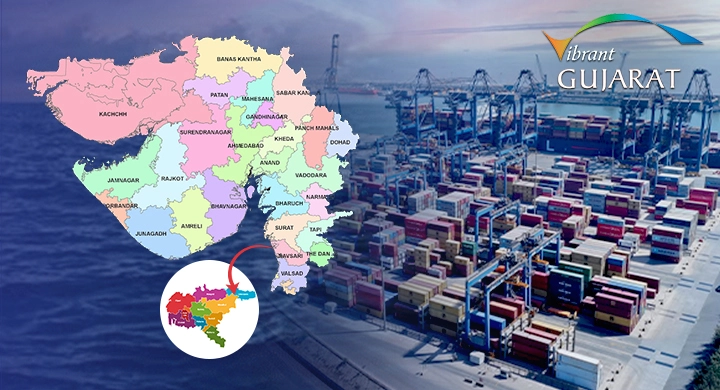
Surat’s Historic Trade Legacy Meets Modern Textile Growth
VGRC Surat 2026: Surat, once known as one of India’s most powerful trading ports during the Mughal era, has now transformed into the world-famous “Silk City” with a strong global identity in textile manufacturing and exports. The upcoming Vibrant Gujarat Regional Conference (VGRC) 2026, scheduled on May 1 and 2 at Auro University, Surat, is expected to further accelerate industrial growth across South Gujarat.
The conference will serve as a major platform for investment, innovation, and international buyer-seller networking, especially for the textile sector, which remains the backbone of Surat’s economy.
VGRC Surat 2026 to Attract Major Textile Investments
The Regional Vibrant Gujarat Conference (VGRC) aims to create new opportunities for textile manufacturers, exporters, and investors by bringing together global buyers, industrial leaders, and local producers under one roof.
The summit is expected to attract large-scale Foreign Direct Investment (FDI), improve business partnerships, and introduce advanced textile technologies that will help Surat compete more strongly in international markets.
With projects like the Bullet Train, Coastal Road, and PM MITRA Park in Navsari, along with government support for technology upgrades, the textile industry is preparing for its next phase of expansion.
Why Surat is Known as the Silk City of India
Surat earned the title of “Silk City” because of its long history in silk and textile trade. Centuries ago, silk fabrics were exported from Surat Port to Arab nations and European countries. Over time, the city mastered both real silk and Man-Made Fiber (MMF), especially artificial silk.
Today, Surat alone produces nearly 90% of India’s artificial silk and dominates the MMF textile segment. What started as small zari and cotton units in narrow city lanes has grown into one of the world’s largest textile ecosystems. This transformation has made Surat a globally recognized textile hub.
Surat Textile Industry Generates Rs 1.5 Lakh Crore Turnover
The textile industry in Surat began taking shape during the 19th century, with mills and ginning factories established between 1866 and 1881. After the first textile accessories factory started in 1925, the city witnessed massive industrial growth.
Today, Surat has over 240 textile markets and more than 70,000 traders operating across the sector. The industry now generates an annual turnover of approximately Rs 1.5 lakh crore and provides direct and indirect employment to nearly 18 to 20 lakh people.
This makes Surat one of the strongest textile investment destinations in India.
South Gujarat Textile Industry Drives Gujarat’s GDP
The textile sector of Surat and South Gujarat contributes more than 25% to Gujarat’s total GDP, making it one of the biggest engines of industrial growth in the state.
Surat accounts for nearly 30% of the world’s total fabric production and contributes 65% of India’s man-made fiber textile output. The city produces nearly 6 crore meters of fabric every day enough to circle the Earth twice.
More than 600 processing houses and lakhs of power looms help Surat manufacture everything from sarees and fashion garments to the Indian national flag and high-end technical textiles.
Its strong supply chain is supported by over 500 transport operators who dispatch lakhs of textile parcels daily through road, railway, and air cargo networks.
Surat’s Knitted Fabric Gains Global Recognition
Surat’s knitted fabric and technical textiles are now gaining strong international demand. Developed countries such as the United States, Israel, and New Zealand have become major buyers of Surat-made knitted fabrics.
Additionally, sports jerseys manufactured in Surat are widely used in major global sporting events including the Olympics and IPL, further proving the city’s manufacturing strength.
The city’s expertise in spinning, weaving, knitting, and finishing has made it one of the most complete textile value chains in Asia.
Government Textile Policies Driving Future Growth
Under the Gujarat Textile Policy 2019, industries in Surat district have received subsidies worth Rs 2,325.87 crore. The policy offers interest subsidies up to 6%, electricity bill relief for weaving and knitting units, and capital support for technical textiles.
Infrastructure development for textile parks and CETP plants has also improved sustainability and environmental protection.
The newly implemented Gujarat Textile Policy 2024 is expected to take this growth further by offering 10% to 35% capital subsidies for new units and supporting value-added textile chains even in rural areas.
Government efforts such as Free Trade Agreements (FTA) with Europe and tariff reductions in the US market are opening fresh export opportunities for Surat’s garment sector.
Surat Strengthens Position as a Global Textile Hub
With its powerful mix of historical trade heritage and modern industrial excellence, Surat continues to lead India’s textile revolution. The upcoming VGRC Surat 2026 is expected to become a turning point for the city’s textile sector by attracting investments, improving global partnerships, and strengthening its position as one of the world’s leading textile hubs.
From a 16th-century trading port to a 21st-century Silk City, Surat remains a shining example of how tradition and innovation can create global success.
For more details visit the VGRC Website
Also read, Virji Vora – Merchant Prince Who Financed the British in 17th Century
Watch Latest News Videos on KRH News: Click Here