


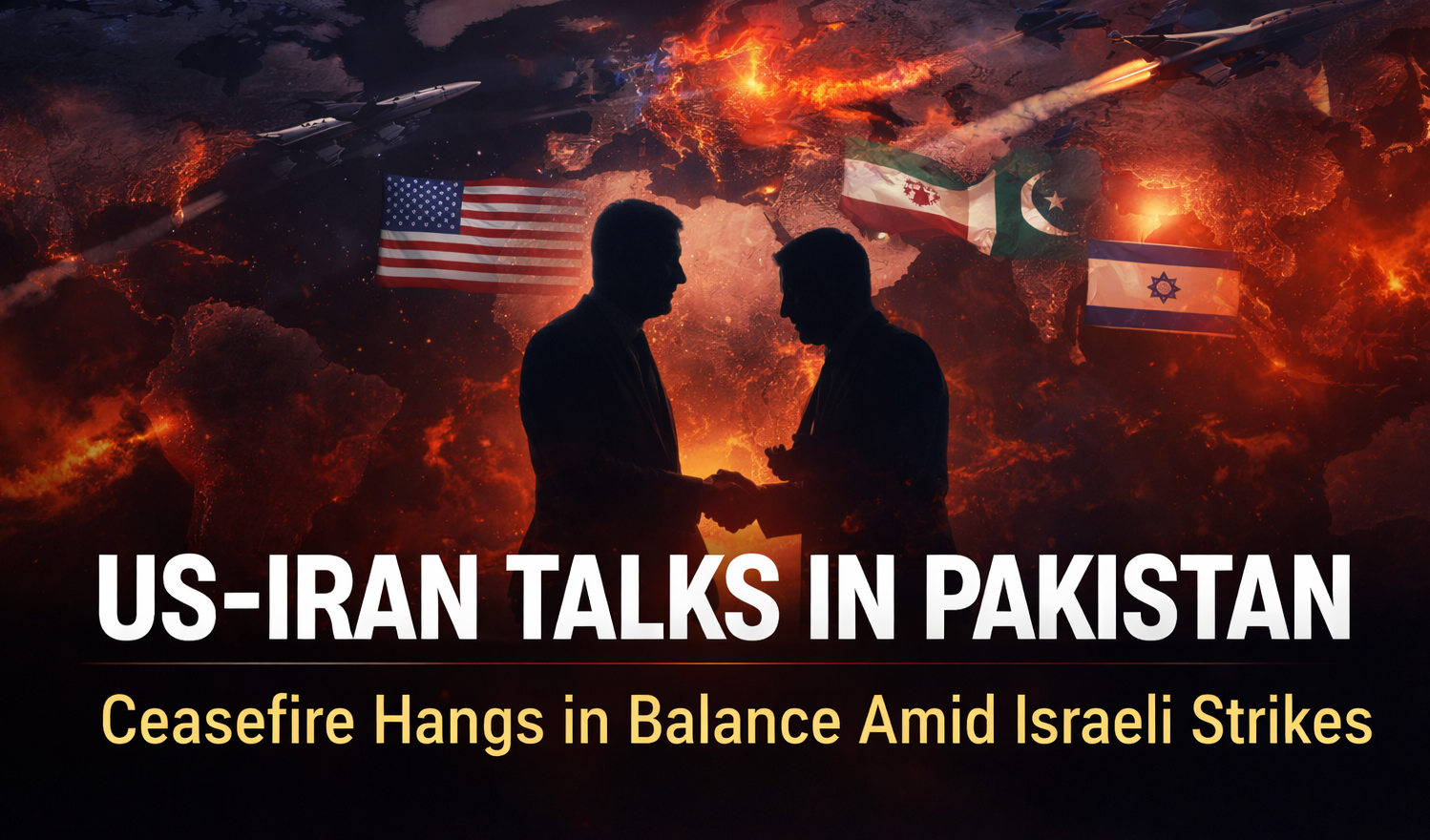
Pakistan Hosts Key US-Iran Talks as Regional Conflict Escalates
In a significant geopolitical development, high-level talks between the United States and Iran are underway in Pakistan, aiming to preserve a fragile ceasefire and prevent further escalation in the Middle East. The negotiations come at a time when ongoing Israeli strikes in the region threaten to derail diplomatic efforts and push tensions toward a wider conflict.
The meeting, hosted in Islamabad, marks a crucial diplomatic intervention by Pakistan, positioning itself as a mediator between two long-standing adversaries. With global attention focused on the outcome, the talks are expected to determine whether the temporary ceasefire can evolve into a long-term peace agreement or collapse under mounting pressure.
Background of the Conflict
The recent tensions stem from a broader regional conflict involving Iran, Israel, and allied forces, which has seen a surge in military actions over the past few weeks. A temporary ceasefire was brokered earlier to halt direct confrontations, but violations and indirect attacks have kept the situation volatile.
Israel’s continued military operations, particularly in areas linked to Iranian influence, have emerged as a major sticking point in the ongoing discussions. Iran has strongly objected to these strikes, arguing that any meaningful ceasefire must include a halt to Israeli military actions.
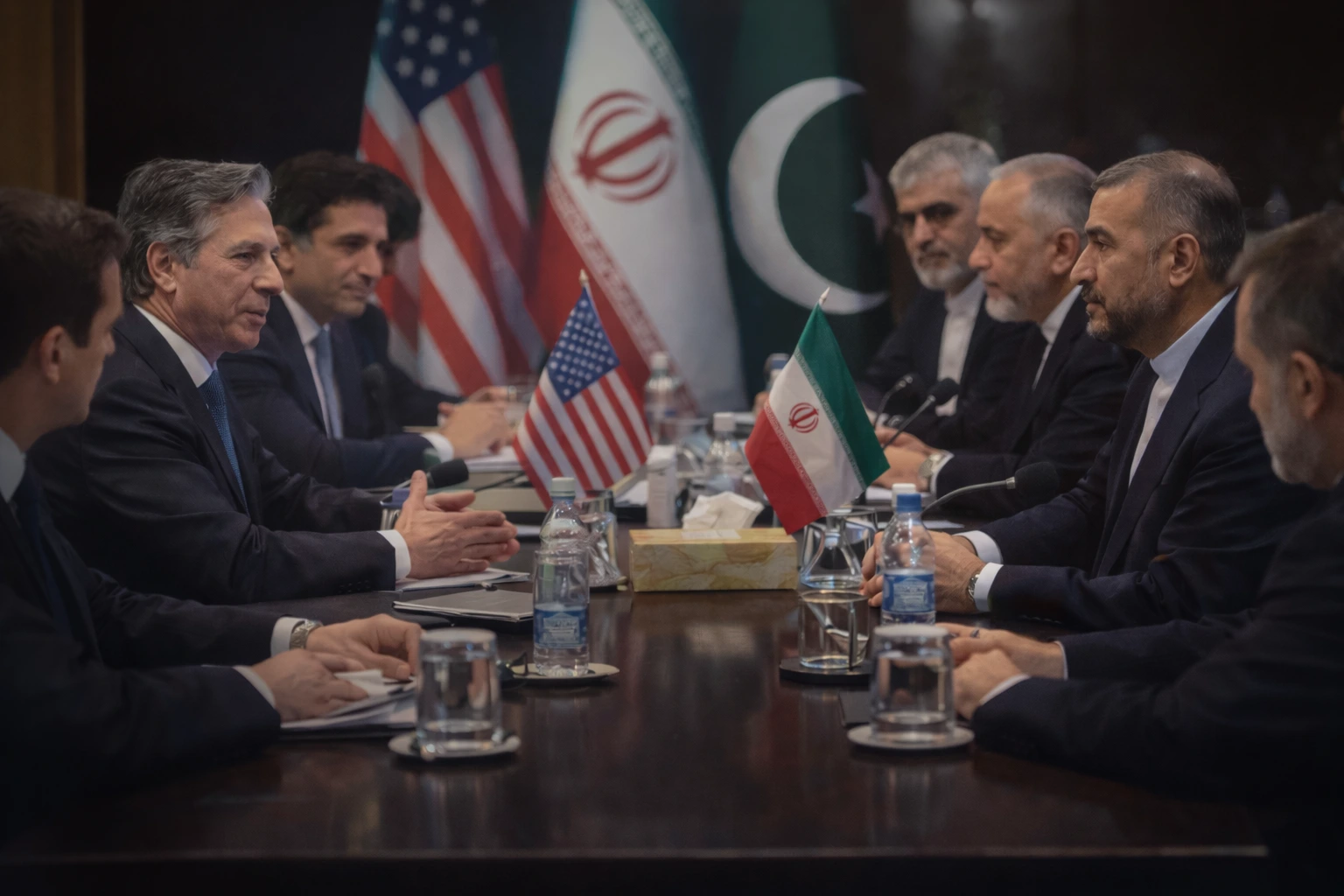
Key Issues in US-Iran Talks
One of the central challenges in the negotiations is the disagreement over the scope of the ceasefire. While the United States is focused on preventing direct conflict between itself and Iran, Tehran insists that the ceasefire must address broader regional hostilities, including Israeli operations.
Iran has laid out several conditions for a more permanent agreement. These include the lifting of economic sanctions imposed by the US, access to its frozen financial assets, and assurances regarding regional security concerns. Without these concessions, Iranian officials have indicated that a long-term ceasefire may not be feasible.
On the other hand, the United States remains cautious about making immediate commitments, particularly regarding sanctions relief. Washington’s position reflects both strategic considerations and domestic political pressures, making the negotiations more complex.
Pakistan’s Strategic Role
Pakistan’s involvement as a mediator has added a new dimension to the diplomatic process. By hosting the talks in Islamabad, Pakistan is attempting to strengthen its position as a key player in regional diplomacy.
The country has historically maintained relations with both the US and Iran, allowing it to act as a neutral ground for negotiations. Analysts believe that Pakistan’s role could be pivotal in bridging gaps and facilitating communication between the two sides.
Impact of Israeli Strikes
The ongoing Israeli strikes have significantly complicated the situation. While Israel is not directly part of the talks, its actions are influencing the negotiations in a major way.
Iran has made it clear that continued Israeli military operations undermine the credibility of the ceasefire. This has created a scenario where even if the US and Iran reach an understanding, external factors could still destabilize the agreement.
Global Economic Concerns
Beyond the immediate geopolitical implications, the conflict has also raised concerns about global economic stability. One of the most critical factors is the Strait of Hormuz, a vital route for global oil shipments.
Any disruption in this region could lead to a spike in oil prices and impact economies worldwide. Iran’s strategic position near the strait gives it significant leverage, further increasing the stakes of the negotiations.
Diplomatic Challenges Ahead
Despite the urgency of the situation, reaching a consensus remains a daunting task. The deep-rooted mistrust between the United States and Iran continues to be a major obstacle.
Both sides have conflicting priorities and expectations, making it difficult to find common ground. Additionally, the involvement of multiple regional actors adds layers of complexity to the negotiations.
What Lies Ahead?
As the talks continue in Islamabad, the world watches closely. The outcome will not only determine the future of US-Iran relations but also have far-reaching implications for the stability of the Middle East.
A successful agreement could pave the way for reduced tensions and renewed diplomatic engagement. On the other hand, failure to reach a consensus could lead to a resurgence of hostilities, with potentially severe consequences.
For now, the ceasefire remains fragile, and the path to peace uncertain. The coming days will be crucial in shaping the trajectory of this complex and high-stakes situation.
Watch Latest News Videos on KRH News: Click Here