


Surat: Surat’s upcoming metro rail network is not just being built as a new mode of public transport. The project is also being designed to reflect the identity of the city, known globally as the Diamond City, while incorporating several advanced engineering solutions to deal with the city’s congested areas and challenging construction conditions.
From diamond-inspired metro interiors and train designs to underground stacked stations nearly 110 feet deep, the Surat Metro project is emerging as one of the city’s most significant infrastructure developments.
The project also includes a route modification to protect a more than 700-year-old tree, extensive plantation at the Dream City depot, a modern third-rail power system and an 85-metre-long open-web girder requiring around 810 tonnes of steel.
Surat Metro to Showcase the Identity of the Diamond City
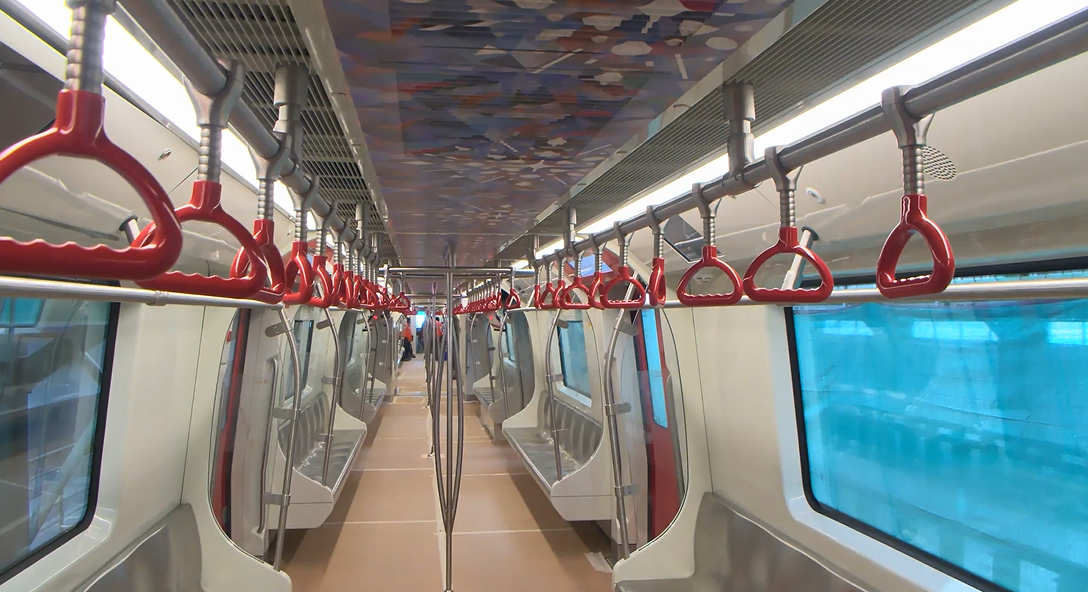
The Surat Metro is being given a distinctive visual identity inspired by Surat’s global reputation as the Diamond City.
According to the latest project details, designs inspired by different diamond cuts have been developed for the ceilings and exterior elevations of metro trains.
The interiors are also being designed to give passengers a sense of Surat’s identity as soon as they enter the metro. This approach aims to make the metro more than just a transportation system by connecting its design with the city’s economic and cultural character.
Surat Metro’s Stacked Stations Will Go Around 110 Feet Underground
One of the most notable engineering features of the Surat Metro project is the construction of stacked underground metro stations. Two such stations are being developed in congested parts of the city, where acquiring additional land would be difficult.
Unlike conventional metro stations where tracks for opposite directions generally run side-by-side, a stacked station places one direction above the other. This allows both directions to operate within a much narrower footprint.
The underground stations in the Bhagal and Kapodra areas are being constructed at a depth of approximately 110 feet, according to the project details. The technology is particularly important in Surat’s Old City areas, where land availability is limited and surrounding properties and heritage structures need to be considered.
How Will Stacked Metro Stations Work?
In a stacked station:
- One track is positioned above the other.
- Tunnels are constructed vertically instead of side-by-side.
- The arrangement reduces the amount of horizontal space required.
- It is suitable for congested urban areas.
- Tunnel Boring Machines are being used for underground construction.
- Diaphragm walls and top-down construction methods are being used as part of the engineering solution.
GMRC’s official technology information confirms the use of Tunnel Boring Machines with Earth Pressure Balancing technology for underground tunnelling, along with top-down methodology for underground station construction.
Surat Metro Alignment Changed to Save 700-Year-Old Tree
The metro project has also incorporated an environmental conservation decision. The alignment was modified to protect the historic Chor Aamli tree, believed to be more than 700 years old, in the Adajan village area.
Instead of allowing the infrastructure alignment to affect the heritage tree, the route was changed. The decision highlights an attempt to balance major urban infrastructure development with the protection of Surat’s natural and heritage assets.
More Than 3,000 Trees Planted at Dream City Metro Depot
The Dream City Metro Depot at Khajod is another important part of the project.
Spread across approximately 20 hectares, the depot will include a stabling yard capable of accommodating 24 metro trains at the same time.
It will also have:
- Train maintenance facilities
- Washing plants
- Technical facilities
- Administrative infrastructure
- Sewage treatment facilities
- Effluent treatment and water-recycling systems
More than 3,000 trees have been planted within the depot premises, adding an environmental component to the large infrastructure facility.
Surat Metro to Use 750V DC Third-Rail Technology
Another major feature of the Surat Metro is its electricity supply system. Instead of relying on conventional overhead electrical wires and poles, the metro will use a 750-volt DC third-rail system. This means trains can receive electrical power through a third rail rather than overhead equipment.
The system eliminates the need for traditional overhead electricity poles along the metro alignment and is also expected to reduce certain risks associated with power infrastructure during extreme weather conditions such as strong winds and cyclones.
Majuragate to Become Surat’s First Metro Interchange Hub
Majuragate Metro Station will have a particularly important role in Surat’s future public transport network. The station will connect the two metro corridors and is expected to become Surat’s first interchange hub.
Passengers will be able to change from one metro corridor to another at Majuragate. The location is also being developed with a broader multi-modal transport connection, linking the metro with the railway station, city bus services and the GSRTC depot. This could make Majuragate an important point for passengers transferring between different modes of public transportation.
85-Metre Girder Becomes Major Engineering Highlight
One of the most striking engineering achievements of the Surat Metro project is the launching of an 85-metre-long open-web girder between Saroli and Raghukul Textile Market.
The structure required approximately:
- 810 tonnes of steel
- 47,000+ nuts and bolts
- An 85-metre-long structural span
Launching such a large steel structure within a densely populated urban environment presents significant engineering and construction challenges.
The achievement adds another major engineering milestone to Surat’s metro project.
Surat Metro Phase 1: Major Project for the City
The Surat Metro is being developed under Surat Metro Phase 1, which includes two corridors covering approximately 40.35 km with 38 stations, according to Gujarat Metro Rail Corporation’s current project overview.
The project combines elevated and underground sections and incorporates several modern construction technologies. GMRC’s official technology information lists advanced construction methods including precast pre-stressed concrete technology for stations, TBM-based underground tunnelling, NATM in selected portions and top-down construction methodology.
Why Surat Metro Is Different
The latest details show that Surat Metro is being designed around the specific needs and identity of the city. Some of its key features include:
Diamond-inspired design: Metro interiors and train exteriors will reflect Surat’s identity as the Diamond City.
Stacked underground stations: Two stations will use a vertical track arrangement to overcome severe land constraints.
Deep underground construction: Some stations are being constructed approximately 110 feet below ground level.
Environmental protection: The alignment was modified to protect a centuries-old tree.
Green depot: More than 3,000 trees have been planted at the Dream City depot.
Third-rail electricity: The metro will use a 750V DC third-rail power system.
Interchange connectivity: Majuragate will connect the two metro corridors and integrate with other transport modes.
Large-scale engineering: An 85-metre open-web girder weighing around 810 tonnes of steel has been launched.
A New Identity for Surat’s Public Transport
With its diamond-inspired design, advanced underground construction and large-scale engineering solutions, the Surat Metro is shaping up to be more than a conventional urban transport project.
For a city that has rapidly expanded as a global centre for diamonds, textiles, trade and industry, the metro is being designed to reflect both Surat’s modern ambitions and its unique identity.
As construction progresses, features such as the stacked stations, third-rail technology, environmental conservation measures and multi-modal interchange facilities are expected to make the project a significant milestone in Surat’s infrastructure development.
Surat Metro 2026: Key Highlights
| Feature | Details |
|---|---|
| Project | Surat Metro Phase 1 |
| Network | Around 40.35 km |
| Stations | 38 |
| Underground Stations | 6 |
| Stacked Stations | 2 |
| Stacked Station Depth | Around 110 feet |
| Power System | 750V DC Third Rail |
| First Interchange | Majuragate |
| Major Depot | Dream City, Khajod |
| Depot Area | Around 20 hectares |
| Depot Capacity | 24 trains |
| Trees at Depot | 3,000+ |
| Historic Tree Protected | 700+ year-old Chor Aamli |
| Major Girder | 85 metres |
| Steel Used in Girder | Around 810 tonnes |
| Nuts & Bolts | 47,000+ |
Also read, Surat Navratri Festival Shopping Guide 2026: Best Places to Shop and Tips Before Garba Begins
Watch Latest News Videos on KRH News: Click Here