


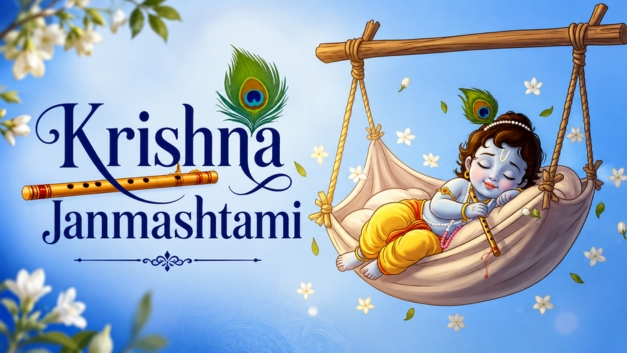
Krishna Janmashtami 2026: One of India’s most widely celebrated Hindu festivals, Krishna Janmashtami will be observed on Friday, September 4, 2026. The festival marks the birth of Lord Krishna, who is revered in Hindu tradition as the eighth avatar of Lord Vishnu.
The date is officially listed as September 4, 2026, in the Government of India’s 2026 holiday information and on the Supreme Court of India’s 2026 calendar. From midnight prayers in Mathura and Vrindavan to spectacular Dahi Handi celebrations in Maharashtra, Janmashtami brings together devotion, music, dance, fasting, temple rituals and traditional food.
But why is Krishna Janmashtami celebrated? What happened on the night Krishna was born? How is the festival celebrated in different Indian states and even outside India? Here’s everything you need to know about Krishna Janmashtami 2026.
Krishna Janmashtami 2026 Date and Day
Krishna Janmashtami 2026 will be celebrated on Friday, September 4.
According to the Hindu lunar calendar, Janmashtami falls on the eighth day (Ashtami) of Krishna Paksha, the dark fortnight of the month of Bhadrapada. Because Hindu festivals follow the lunar calendar, the Gregorian date changes from year to year. The official 2026 holiday lists from the Government of India and other government institutions also list Janmashtami on September 4, Friday.
Janmashtami 2026: Important Timings
For Ahmedabad, the Nishita or midnight worship period falls approximately from 12:16 AM to 1:02 AM on September 5, according to the city-specific Panchang calculation. The Ashtami Tithi begins at 2:25 AM on September 4 and ends at 12:13 AM on September 5.
Note: Timings can vary by location and tradition, so devotees should check their local Panchang before observing a fast or performing rituals.
What Is Krishna Janmashtami?
Krishna Janmashtami is the festival celebrating the birth or divine appearance of Lord Krishna.
According to Hindu tradition, Krishna was born at midnight in Mathura to Devaki and Vasudeva, when Mathura was ruled by the tyrannical king Kansa. The festival is especially important within the Vaishnava tradition, although Janmashtami is celebrated by Hindu communities across India and in many parts of the world.
The District Administration of Mathura describes Krishna’s birthplace as the prison where he manifested himself during Kansa’s rule. Krishna’s life and teachings, including the teachings associated with the Bhagavad Gita, have played a major role in Hindu religious and philosophical traditions.
Why Do We Celebrate Krishna Janmashtami?
At its heart, Janmashtami celebrates the birth of Krishna and the victory of dharma over adharma. According to the traditional story, Krishna’s birth was connected with the prophecy that Kansa would be destroyed by Devaki’s eighth child. Fearing the prophecy, Kansa imprisoned Devaki and Vasudeva.
When Krishna was born at midnight, Vasudeva carried the newborn Krishna across the Yamuna to Gokul, where he was raised in the household of Nanda and Yashoda. Krishna’s childhood stories from his playful acts in Gokul and Vrindavan to his later role in the Mahabharata, form the cultural and devotional foundation of Janmashtami celebrations.
The Mathura district administration notes that Krishna’s traditional purpose was associated with destroying evil, protecting the virtuous and establishing righteousness.
Krishna Janmashtami History
Janmashtami has been observed for centuries as part of the Hindu religious calendar. The festival is traditionally associated with the Bhagavata Purana and other Hindu scriptures that narrate Krishna’s life and divine pastimes.
The District Administration of Mathura describes Janmashtami as an annual Hindu festival marking Krishna’s birth and notes its importance particularly within Vaishnavism. Celebrations include fasting, midnight devotional singing, night vigils, Krishna-themed performances and festivities on the following day. The festival has also developed different regional traditions over time, making Janmashtami one of India’s most culturally diverse religious celebrations.
10 Interesting Facts About Krishna Janmashtami
1. Janmashtami falls on Ashtami
The name refers to the eighth lunar day, or Ashtami, of the dark fortnight.
2. Krishna’s birth is celebrated at midnight
Devotees traditionally wait until midnight because Krishna is believed to have been born at that time.
3. The festival has different names
It is also known as Gokulashtami, Krishnashtami, Srikrishna Jayanti, Gokul Ashtami and other regional names.
4. Dahi Handi is linked to Krishna’s childhood
The famous Dahi Handi tradition recreates stories associated with young Krishna’s love for butter and curd.
5. Mathura is central to Janmashtami
Mathura is traditionally regarded as Krishna’s birthplace, while the wider Braj region including Vrindavan and Gokul is deeply associated with his childhood.
6. Devotees may observe a fast
Many devotees fast during the day and break their fast according to their religious tradition after the midnight celebrations.
7. Baby Krishna idols are commonly worshipped
Homes and temples often feature images or idols of Bal Gopal, the child form of Krishna.
8. Jhankis depict Krishna’s life
Tableaux and decorative displays often portray scenes from Krishna’s birth and childhood.
9. Music and dance are an important part of the festival
Bhajans, kirtans, devotional singing, Ras Leela and Krishna-themed performances are common during Janmashtami.
10. Janmashtami is celebrated internationally
Krishna Janmashtami is now celebrated at ISKCON centres and Krishna temples around the world, including in cities outside India.
How Is Janmashtami Celebrated in India?
Although the central theme remains Krishna’s birth, the way people celebrate differs significantly from one region to another.
Uttar Pradesh: Mathura, Vrindavan and Gokul
For the most immersive Krishna Janmashtami experience, Mathura and Vrindavan remain at the heart of the celebrations. In 2026, the Ministry of Tourism’s Incredible India programme is promoting Krishnotsav 2026 in Mathura and the Braj region on September 4.
Temples are decorated with flowers and lights, while devotees participate in bhajans, kirtans, Ras Leela performances, prayers, Jhankis and processions. The celebrations culminate around midnight, when devotees mark Krishna’s birth. Mathura’s Krishna Janmabhoomi is particularly significant because it is traditionally regarded as Krishna’s birthplace.
Maharashtra: Dahi Handi and Govinda Teams
In Maharashtra, Janmashtami is famous for Dahi Handi. Groups known as Govindas form human pyramids to reach and break a pot filled with curd and other items suspended high above the ground.
The Maharashtra Tourism Department says Dahi Handi represents teamwork, perseverance, devotion and community spirit. Mumbai, Thane and Pune are among the places known for particularly large celebrations.
Gujarat: Dwarka and Krishna Devotion
Gujarat has a particularly strong connection with Krishna because of Dwarka, traditionally regarded as Krishna’s kingdom. Janmashtami is celebrated across the state with temple prayers, devotional programmes, decorations, music and cultural events.
The Ministry of Tourism notes that Krishna established his kingdom in Dwarka and describes Janmashtami celebrations across Gujarat as major festive occasions. In 2026, the official Incredible India festival listings include Shamlaji Janmashtami, Rajkot Janmashtami Lok Mela, Porbandar Janmashtami Lok Mela and ISKCON Janmashtami in Vadodara on September 4.
Odisha
Odisha celebrates Krishna’s traditions through temple worship, devotional activities and food offerings. The Incredible India tourism portal highlights the tradition of Chhapan Bhog, the offering of 56 varieties of food, associated with Krishna worship and prominently experienced at the Jagannath Temple in Puri.
Manipur and Assam
Krishna’s stories are deeply connected with the performing arts of northeastern India. Rasa Leela, depicting Krishna’s divine play, is particularly associated with the Mathura region as well as Manipur and Assam, along with parts of Rajasthan and Gujarat.
Karnataka and South India
In southern India, Janmashtami is celebrated through devotional singing, temple rituals, decorations and special food offerings. Different regions use names such as Gokulashtami, Krishnashtami and Srikrishna Jayanti. ISKCON Bangalore’s 2026 programme, for example, includes special darshan, kirtans, cultural programmes, abhisheka, midnight arati and prasadam.
Janmashtami Celebration Outside India
Krishna Janmashtami is no longer limited to India. ISKCON centres and Krishna communities celebrate the festival in countries across the world, bringing together Indian-origin communities as well as people interested in Krishna bhakti.
ISKCON reports Janmashtami celebrations at centres ranging from London and Dublin to Melbourne, Washington, New York, South Africa and Brazil, illustrating the festival’s international reach.
United Kingdom
In London, Janmashtami celebrations include devotional singing, kirtan, drama, abhisheka, midnight darshan and vegetarian prasadam. ISKCON South London’s 2026 programme is scheduled for September 4, with daytime and evening celebrations.
United States
ISKCON centres in the United States also organise large Janmashtami gatherings. For example, ISKCON of Washington, D.C. has announced a 2026 Janmashtami programme featuring darshan, kirtan, abhisheka, prasadam and family activities on September 4.
Nepal
Nepal has a particularly strong Krishna Janmashtami tradition. The Nepal Tourism Board highlights celebrations at Krishna temples throughout the country, with Krishna Mandir in Patan Durbar Square serving as a major centre of the festival. Devotees gather through the night, sing praises of Krishna, light oil lamps and participate in processions.
What Do People Do on Krishna Janmashtami?
A typical Janmashtami celebration may include:
- Waking early and taking a bath
- Cleaning and decorating the home
- Setting up a Krishna shrine
- Decorating a Bal Gopal idol
- Observing a fast
- Chanting Krishna mantras
- Reading or listening to Krishna stories
- Singing bhajans and kirtans
- Visiting temples
- Participating in Jhanki displays
- Performing Krishna-themed dances
- Watching Ras Leela
- Performing Krishna Abhishekam
- Attending midnight prayers
- Offering bhog or prasadam
- Breaking the fast according to one’s tradition
The exact practices vary between families, regions and religious traditions.
How to Celebrate Krishna Janmashtami at Home
You don’t need to visit a large temple or attend a public event to celebrate Janmashtami.
Step 1: Clean Your Puja Space
Clean the area where you plan to place the Krishna idol or image.
Step 2: Decorate the Shrine
Use flowers, diyas, lights and colourful decorations to create a festive atmosphere.
Step 3: Place Bal Gopal
Dress the child Krishna idol in clean clothes and decorate it with flowers or jewellery if desired.
Step 4: Observe a Fast If You Choose
Fasting is a common Janmashtami practice, but the method differs between traditions. Some people observe a strict fast, while others consume fruits, milk or permitted fasting foods.
Step 5: Spend Time in Bhakti
Read Krishna’s stories, listen to bhajans or chant the Hare Krishna mantra.
Step 6: Perform Midnight Puja
The central moment of Janmashtami is traditionally celebrated around midnight, when devotees perform prayers and rituals marking Krishna’s birth.
Step 7: Offer Bhog
Prepare vegetarian food and sweets as an offering.
Step 8: Share Prasadam
After the offering, share the food with family members and others as prasadam.
What to Eat on Krishna Janmashtami?
Food is an important part of Janmashtami, particularly after the fasting period. The exact menu depends on regional traditions and the type of fast being observed.
Popular Janmashtami Foods
Makhan Mishri:
A simple combination associated with Krishna’s childhood love for butter.
Makhana:
Roasted or cooked fox nuts are commonly used in fasting-friendly preparations.
Sabudana Khichdi:
A popular fasting dish made with tapioca pearls, potatoes and permitted ingredients.
Sabudana Vada:
A crispy fasting snack made from soaked sabudana and potatoes.
Rajgira Rotis:
Flatbreads made using amaranth flour and commonly eaten during fasting.
Kuttu Puri:
A popular fasting preparation made using buckwheat flour.
Singhare Atta Dishes:
Water-chestnut flour is used in various fasting recipes.
Fruit Chaat:
A simple option for people observing a lighter fast.
Milk and Milk-Based Sweets:
Milk, yoghurt, paneer and traditional sweets are often part of Krishna offerings.
Mathura Peda:
A famous sweet associated with Mathura and highlighted among the traditional foods experienced during Janmashtami in Braj.
Chhapan Bhog:
One of the most famous Krishna food traditions is Chhapan Bhog, an offering of 56 varieties of food. The Incredible India tourism portal specifically highlights the tradition in connection with Krishna worship and Puri’s Jagannath Temple.
What Should You Avoid During a Janmashtami Fast?
Fasting rules differ significantly according to family and religious tradition, so there is no single universal menu.
People following a traditional vrat may avoid:
- Grains
- Regular flour
- Rice
- Pulses
- Meat and fish
- Eggs
- Alcohol
Some fasting traditions also restrict onion and garlic.
Important: People with medical conditions, children, older adults and pregnant or breastfeeding women should not undertake restrictive fasting without appropriate professional advice.
Why Is Midnight So Important?
Midnight is the central moment of Janmashtami because Krishna’s birth is traditionally believed to have taken place at midnight. As the hour approaches, temples become increasingly devotional, with chanting, bells, conches, prayers and special rituals.
At the birth moment, devotees often perform abhisheka, swing the baby Krishna idol in a cradle and distribute prasadam. The symbolism is simple: darkness gives way to the arrival of Krishna and the triumph of righteousness.
Krishna Janmashtami and Dahi Handi: Are They the Same?
They are closely connected but are not exactly the same celebration. Janmashtami marks Krishna’s birth.
Dahi Handi is a popular celebration associated with Krishna’s childhood and his playful attempts to reach butter and curd kept in hanging pots. In Maharashtra, Dahi Handi has become a major public event involving Govinda teams, human pyramids and competitions.
Krishna Janmashtami 2026: Key Facts at a Glance
| Detail | Information |
|---|---|
| Festival | Krishna Janmashtami |
| Year | 2026 |
| Date | Friday, September 4 |
| What it celebrates | Birth of Lord Krishna |
| Lunar occasion | Krishna Paksha Ashtami |
| Traditional birth time | Midnight |
| Birthplace in tradition | Mathura |
| Childhood region | Gokul and Vrindavan/Braj |
| Kingdom associated with Krishna | Dwarka |
| Major Indian celebration | Mathura-Vrindavan, Maharashtra, Gujarat and many other regions |
| Famous tradition | Dahi Handi |
| Common practices | Fasting, puja, bhajans, kirtan, midnight prayers |
| Popular foods | Makhan Mishri, sabudana dishes, makhana, fruits, milk sweets |
| Following day | Nandotsav/Dahi Handi traditions vary by region |
The 2026 date is supported by Government of India holiday information and official calendars.
Why Krishna Janmashtami Remains Relevant Today
For millions of devotees, Janmashtami is more than a religious holiday. It is an opportunity for families to come together, children to learn stories from Krishna’s life, communities to organise cultural programmes and devotees to spend time in prayer and reflection.
The festival also demonstrates India’s extraordinary cultural diversity. The same occasion can look completely different depending on where you are—from a quiet midnight puja at home to a massive Dahi Handi event in Mumbai or thousands of devotees gathering in Mathura and Vrindavan.
That ability to combine devotion, culture, food, music and community participation is one of the reasons Janmashtami remains one of India’s most important festivals.
Final Takeaway
Krishna Janmashtami 2026 will be celebrated on Friday, September 4, marking the traditional birth of Lord Krishna.
From the temples of Mathura and Vrindavan to the Dahi Handi celebrations of Maharashtra, the Krishna traditions of Gujarat, the cultural performances of northeastern India and celebrations at temples overseas, Janmashtami takes many forms while retaining the same central theme.
Whether you celebrate by fasting, visiting a temple, decorating a Bal Gopal idol, preparing traditional food, singing bhajans or simply spending time with family, the festival offers an opportunity to reconnect with India’s rich spiritual and cultural traditions.
Jai Shri Krishna!
Also read, September 2026 Calendar: Indian Festivals, National & International Days
Watch Latest News Videos on KRH News: Click Here