


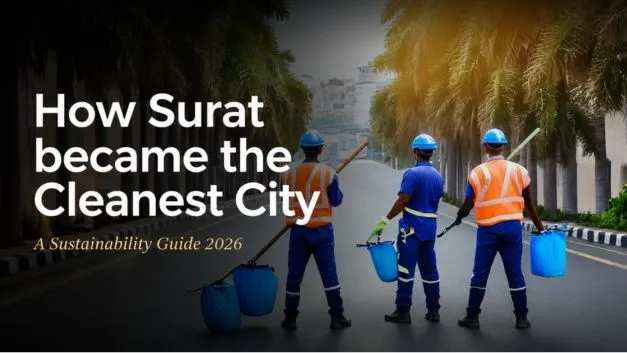
Surat’s Journey from Crisis to Clean City
Surat became the Cleanest City in India in 2026. Surat, once remembered for sanitation challenges during the 1990s, has now transformed into one of India’s cleanest and most sustainable cities. Over the past decade, the city has become a national example of urban cleanliness, smart waste management, and sustainable development.
Today, Surat consistently ranks among the top clean cities in the Swachh Survekshan rankings and is recognized for its strong municipal governance, modern sanitation systems, and citizen participation. The city’s transformation did not happen overnight. It required years of planning, technology adoption, strict monitoring, public awareness campaigns, and continuous efforts by the Surat Municipal Corporation (SMC).
This sustainability guide explains how Surat became one of India’s cleanest cities and what other cities can learn from its success story.
Surat’s Journey from Crisis to Clean City
The Turning Point After the 1994 Plague Crisis
Surat’s modern cleanliness journey began after the devastating plague outbreak of 1994, which exposed major sanitation and waste management problems in the city.
Following the crisis, the Surat Municipal Corporation introduced strict reforms related to:
- Garbage collection
- Drainage systems
- Public hygiene
- Urban sanitation
- Health monitoring
Experts often describe this period as the turning point that changed Surat’s urban governance forever.
Strong Waste Management Systems Changed the City
Door to Door Garbage Collection
One of Surat’s biggest achievements has been its highly organized door-to-door waste collection system. Today, waste collection vehicles operate daily across residential and commercial areas, ensuring that garbage does not accumulate on roadsides.
According to Surat Municipal Corporation initiatives, the city has continuously improved solid waste processing and waste segregation systems.
Waste Segregation at Source
Surat actively promotes wet and dry waste segregation at household and commercial levels.
Citizens are encouraged to separate:
- Organic waste
- Plastic waste
- E-waste
- Industrial waste
- Construction waste
This has significantly improved recycling and waste processing efficiency.
Recycling and Sustainable Waste Processing
Surat has also invested heavily in recycling infrastructure. The city recently announced plans to recycle 100% of construction and demolition waste within the next two years through advanced recycling facilities. Recycled waste materials are now being reused in construction activities such as paver blocks and urban infrastructure development.
Technology and Smart City Initiatives Played a Big Role
Smart Underground Waste Collection Systems
Surat introduced smart underground waste collection systems that improved waste storage and transportation efficiency. The innovation helped the city win national recognition for solid waste management practices.
Digital Monitoring and Real-Time Tracking
The city uses digital systems to monitor sanitation activities, garbage collection routes, and cleanliness operations. Smart governance tools help municipal authorities respond quickly to complaints and improve accountability. Experts believe Surat’s technology-driven municipal management is one of the key reasons behind its consistent cleanliness rankings.
Citizen Participation Became the Backbone of Success
Public Awareness Campaigns
Cleanliness campaigns, awareness drives, and public participation programs have become common across Surat.
Citizens are regularly encouraged to:
- Avoid littering
- Use dustbins
- Reduce plastic waste
- Participate in cleanliness drives
- Report sanitation issues
Swachh Bharat Mission campaigns also played a major role in increasing public awareness.
Community Responsibility Improved Over Time
Many residents believe civic responsibility in Surat has improved significantly over the years. Discussions on local online forums and social media often highlight the role of daily municipal cleaning and active public involvement in maintaining city cleanliness.
However, some residents also point out ongoing challenges like gutka stains, littering, and construction dust in certain areas.
Strict Municipal Governance Helped Maintain Standards
Regular Cleaning and Monitoring
The Surat Municipal Corporation maintains strict cleanliness schedules across roads, markets, residential zones, and public spaces. Municipal workers and supervisors conduct regular inspections to ensure sanitation standards are maintained. Heavy fines and strict action against illegal dumping have also helped improve public discipline in many areas.
Focus on Air Quality and Sustainability
Apart from cleanliness, Surat has also focused on environmental sustainability and air quality improvement. The city participates in Swachh Vayu Survekshan initiatives aimed at improving urban air quality and reducing pollution levels.
Efforts include:
- Road dust control
- Waste burning reduction
- Green initiatives
- EV promotion policies
- Pollution monitoring
Green Mobility and Sustainable Urban Planning
Surat’s Green Vehicle Policy
In 2025, Surat launched India’s first Green Vehicle Policy to encourage electric vehicle adoption and sustainable transportation.
The policy includes:
- EV incentives
- Charging station expansion
- Parking benefits
- Environmental charge exemptions
Experts say sustainable transportation policies are helping Surat reduce pollution while improving urban sustainability.
Surat Continues Ranking Among India’s Cleanest Cities
Surat has consistently secured top rankings in Swachh Survekshan cleanliness surveys over the years.
The city has repeatedly been recognized among India’s cleanest cities due to:
- Efficient waste management
- Citizen feedback
- Open Defecation Free status
- Recycling systems
- Smart sanitation infrastructure
Recent reports continue placing Surat among India’s top clean cities alongside Indore and Navi Mumbai.
Musr read, Cost Of Living In Surat – Everything You Need To Know (Updated Prices 2026)
Challenges Surat Still Needs to Address
Rapid Urban Growth Creates Pressure
As one of India’s fastest-growing cities, Surat still faces several challenges including:
- Population growth
- Construction waste
- Traffic congestion
- Plastic pollution
- Air quality concerns
Experts believe maintaining cleanliness standards will require continuous innovation and stronger public participation.
Civic Sense Remains Important
While municipal efforts are strong, long-term cleanliness depends heavily on citizen behavior. Public littering, spitting, and improper waste disposal remain concerns in some parts of the city.
Final Thought
Surat’s transformation into one of India’s cleanest cities is the result of strong governance, smart waste management systems, technology adoption, environmental planning, and active citizen participation.
From overcoming sanitation crises in the 1990s to becoming a national sustainability model in 2026, Surat’s journey offers valuable lessons for cities across India.
As urban populations continue growing, Surat’s focus on cleanliness, recycling, smart infrastructure, and sustainable development may continue shaping the future of modern Indian cities.
Also read, Different Areas of Surat: Complete Local Guide
Watch Latest News Videos on KRH News: Click Here