


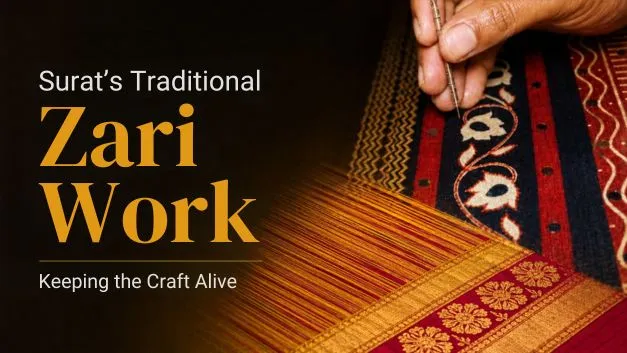
How Surat Traditional Zari Work Is Preserving India’s Textile Heritage in 2026
Surat has long been recognized as India’s textile powerhouse, but beyond its modern fabric markets and diamond industry lies a centuries-old art form that continues to define the city’s cultural identity – traditional Zari work.
Known for its intricate gold and silver thread embroidery, Surat’s Zari craftsmanship remains deeply connected with Indian ethnic fashion, bridal wear, sarees, lehengas, sherwanis, and luxury garments. Even in the age of automation and fast fashion, thousands of artisans in Surat are working tirelessly to preserve this heritage craft.
Today, the city’s Zari industry stands as a symbol of tradition, artistry, and economic importance, while also adapting to changing fashion trends and global demand.
What is Traditional Zari Work?
Zari is a form of decorative embroidery created using fine metallic threads, traditionally made from gold or silver-coated yarns. The craft is widely used in Indian wedding wear, festive outfits, designer fabrics, and royal-style garments.
Key Features of Zari Embroidery
- Intricate handwork designs
- Metallic thread detailing
- Traditional Indian motifs
- Luxury finishing for ethnic wear
- Usage in bridal and festive fashion
Surat became one of India’s major Zari manufacturing hubs due to its strong textile ecosystem and skilled artisan communities.
Surat’s Historical Connection with Zari Craftsmanship
The roots of Zari work in Surat date back several centuries, when the city was an important trading port during the Mughal era.
How Surat Became a Zari Hub
1. Textile Trade Growth
Surat’s booming textile business created strong demand for decorative embroidery and premium fabrics.
2. Skilled Artisan Communities
Generations of craftsmen passed down embroidery techniques within families.
3. Royal and Wedding Fashion Demand
Traditional Indian royal attire and wedding garments heavily relied on Zari embellishments.
4. Export Opportunities
Surat’s textile exports helped Zari products reach national and international markets. Today, the city remains one of the country’s largest centers for Zari thread production and embroidery work.
How Zari Work is Made
Traditional Zari embroidery involves detailed craftsmanship and patience.
The Basic Process
- Preparation of metallic threads
- Designing patterns on fabric
- Hand embroidery or machine embroidery
- Finishing and polishing work
- Integration into garments and textiles
While modern machines are now widely used for bulk production, handmade Zari work still holds premium value in designer and bridal fashion markets.
Modern Fashion Keeps Zari Relevant
Despite changing fashion trends, Zari embroidery continues to remain popular across India.
Where Zari is Commonly Used Today
- Bridal lehengas
- Sarees and dupattas
- Sherwanis and ethnic jackets
- Designer couture collections
- Festival wear
- Luxury home décor fabrics
Fashion designers frequently combine traditional Zari with modern styles to attract younger buyers.
Challenges Faced by Surat’s Zari Industry
Although the industry continues to survive, artisans and manufacturers face multiple challenges.
Rising Production Costs
Raw materials, labour, and electricity expenses have increased significantly in recent years.
Competition from Machine Production
Mass-produced embroidery often reduces demand for handmade craftsmanship.
Declining Interest Among Younger Generations
Many young workers prefer modern jobs instead of traditional embroidery professions.
Cheap Imported Alternatives
Low-cost imported decorative materials create pricing pressure in local markets. Industry experts believe stronger branding and government support are necessary to preserve traditional craftsmanship.
Efforts to Preserve Surat’s Traditional Craft
Several local businesses, designers, and artisan groups are now working to keep the Zari tradition alive.
Key Preservation Efforts
Training New Artisans
Skill development programs are encouraging young workers to learn traditional embroidery techniques.
Digital and Online Sales
Many Surat textile businesses are now promoting Zari products through e-commerce platforms and social media.
Designer Collaborations
Fashion designers are increasingly using handcrafted Zari in premium collections.
Cultural Promotion
Exhibitions, fashion shows, and textile events help showcase Surat’s embroidery heritage.
Economic Importance of the Zari Industry
The Zari sector supports thousands of families connected with embroidery, thread manufacturing, textile trading, and garment production.
Industry Impact
- Employment generation
- Support for small businesses
- Export revenue contribution
- Growth of Surat’s textile economy
- Preservation of traditional Indian crafts
Experts believe the industry remains an important part of Surat’s economic and cultural identity.
Future of Zari Work in Surat
The future of Surat’s Zari industry may depend on balancing tradition with innovation.
As global interest in handcrafted and sustainable fashion increases, traditional embroidery could regain stronger international demand. Industry leaders believe branding Surat as a heritage textile city can further boost the craft’s recognition worldwide. Digital marketing, tourism, designer collaborations, and export expansion may help revive interest among younger generations.
Surat Traditional Zari Work Continues to Shine in India’s Fashion Industry
Surat Traditional Zari Work remains one of the most respected embroidery crafts in India’s textile industry. From bridal lehengas and designer sarees to luxury ethnic fashion, Surat’s skilled artisans continue preserving this heritage craft in 2026. Experts believe the growing demand for handmade embroidery, sustainable fashion, and traditional Indian textiles can help Surat Traditional Zari Work gain stronger recognition in both domestic and international markets. Textile businesses are also using digital platforms and fashion exhibitions to promote Surat’s historic embroidery craftsmanship globally.
Conclusion
Surat’s traditional Zari work is more than just embroidery — it is a living heritage deeply woven into India’s cultural and fashion history. Despite modern challenges, artisans and textile businesses continue working to preserve the craft and pass it on to future generations.
As fashion trends evolve, Surat’s timeless Zari craftsmanship remains a proud symbol of creativity, luxury, and cultural identity.
Also read, How to Start a Business from Surat: 2026 Startup Guide India
Watch Latest News Videos on KRH News: Click Here