


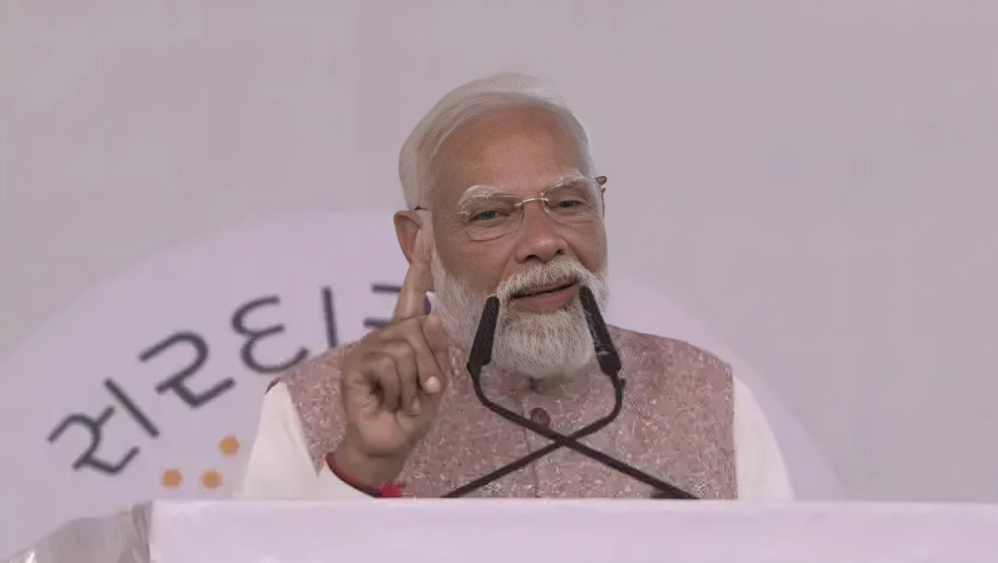
India is set to witness a historic milestone in its democratic journey as Prime Minister Narendra Modi becomes the country’s longest-serving elected Prime Minister. On June 10, 2026, Modi will complete 4,399 consecutive days in office after being elected through successive general election victories, surpassing the previous record held by India’s first Prime Minister, Jawaharlal Nehru.
The achievement marks a significant moment in modern Indian political history and highlights Modi’s sustained electoral success over more than a decade. Having first assumed office on May 26, 2014, Modi has led the country through three consecutive Lok Sabha election victories and remains one of the most influential political leaders in contemporary India.
Narendra Modi’s Political Journey
From Gujarat Chief Minister to Prime Minister
Narendra Modi began his tenure as Prime Minister after leading the Bharatiya Janata Party (BJP) to a historic majority in the 2014 General Election. Prior to becoming Prime Minister, he served as the Chief Minister of Gujarat for more than 12 years, gaining national recognition for governance and economic development initiatives.
His leadership in the 2014 election campaign helped the BJP secure a majority on its own in the Lok Sabha, ending an era of coalition governments at the Centre. Following the 2014 victory, Modi was re-elected with an even larger mandate in 2019 and subsequently secured a third consecutive term after the 2024 General Election, reinforcing his position as one of India’s most successful electoral leaders.
Historic Record to Be Broken
Surpassing Jawaharlal Nehru’s Elected Tenure
Until now, the record for the longest-serving elected Prime Minister belonged to Jawaharlal Nehru, who served continuously after winning India’s first general elections and remained in office for 4,398 days following electoral victories.
On June 10, Narendra Modi is expected to complete 4,399 consecutive days as an elected Prime Minister, moving ahead of Nehru’s long-standing record. Political analysts describe this milestone as particularly significant because it reflects repeated electoral endorsement from voters across multiple election cycles in the world’s largest democracy.
Difference Between Total Tenure and Elected Tenure
Experts note that the record specifically relates to continuous service as an elected Prime Minister following democratic electoral victories.
India’s political history includes leaders who served in acting or interim capacities. However, Modi’s record is based on consecutive electoral mandates received directly through parliamentary elections. This distinction makes the milestone especially notable within the framework of democratic governance.
Key Milestones During Modi’s Tenure
Major Policy and Governance Initiatives
Over the past twelve years, the Modi government has overseen several significant policy initiatives and reforms.
Some major developments during his tenure include:
- Goods and Services Tax (GST) implementation
- Digital India campaign
- Expansion of infrastructure projects
- Make in India initiative
- Ayushman Bharat healthcare scheme
- UPI digital payments revolution
- G20 Presidency leadership
- Expansion of railway and highway networks
The government has also focused on technology-driven governance, digital public services, and large-scale infrastructure investments across the country.
Global Recognition
Under Modi’s leadership, India has expanded its global diplomatic engagement and strengthened its position in international forums.
The country has played an increasingly prominent role in discussions related to climate change, global trade, technology, security cooperation, and economic development. India’s rise as one of the world’s fastest-growing major economies has also contributed to greater international attention during this period.
Political Significance of the Achievement
A Landmark in Democratic History
Political observers view Modi’s record as a reflection of sustained voter support over multiple election cycles. Winning three consecutive general elections is itself a rare achievement in Indian politics, where electoral competition remains intense and voter expectations continue to evolve.
The milestone demonstrates the ability of a leader to maintain national relevance and electoral appeal over an extended period.
Impact on BJP’s Political Legacy
The achievement is also expected to strengthen the Bharatiya Janata Party’s political narrative and reinforce its position as one of India’s dominant political forces. Party leaders have frequently highlighted the government’s development agenda, welfare programs, and infrastructure projects as key factors behind continued public support. Supporters see the record as validation of long-term political stability and governance continuity.
India’s Democratic Evolution
World’s Largest Democracy Continues to Set Records
India remains the world’s largest democracy, with hundreds of millions of voters participating in national elections. The country’s democratic institutions have enabled leaders from diverse political backgrounds to rise to national prominence through electoral processes.
Modi’s upcoming record adds another chapter to India’s democratic journey and highlights the importance of voter participation in shaping the nation’s leadership.
Conclusion
Prime Minister Narendra Modi is set to create history on June 10, 2026, by becoming India’s longest-serving elected Prime Minister. Completing 4,399 consecutive days in office, he will surpass the record held by Jawaharlal Nehru and achieve a significant milestone in Indian political history.
As the leader of the world’s largest democracy, Modi’s tenure has been marked by major policy initiatives, electoral victories, and global engagement. Regardless of political viewpoints, the record represents a historic moment that will be remembered as an important milestone in India’s democratic evolution.
Must read, Abhijeet Dipke Leads CJP Protest at Jantar Mantar, Raising Education and Employment Concerns
Watch Latest News Videos on KRH News: Click Here