


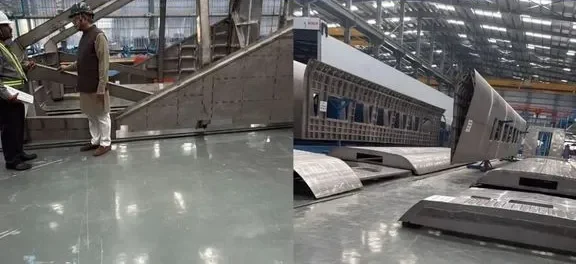
India’s long-awaited bullet train dream is moving closer to reality. The first look at the country’s indigenous high-speed train has created excitement, especially in Gujarat, where the Mumbai–Ahmedabad Bullet Train Corridor is taking shape.
Union Railway Minister Ashwini Vaishnaw recently shared a glimpse of the train’s manufacturing progress on social media, asking people, “Are you ready?” The update has brought India’s first domestically developed bullet train back into the spotlight.
But there is more to this development than just the first look. The train’s body is undergoing an important structural safety test, track testing is targeted for 2027, and the first proposed passenger service is expected to operate on the Surat–Vapi section of Gujarat.
Here is everything you need to know about India’s first bullet train, its manufacturing, testing schedule and what it could mean for Gujarat.
India’s First Bullet Train: What Has Been Revealed?
India’s first indigenous bullet train is being developed under the B28 project and is being manufactured at BEML’s Aditya facility in Bengaluru.
On November 1, 2026, Railway Minister Ashwini Vaishnaw shared a video showing the manufacturing process and progress of the train. The announcement offered a closer look at India’s efforts to develop its own high-speed train technology.
The first train’s body frame has already been manufactured and has entered an important testing stage. The project is part of India’s broader push towards developing domestic railway technology and reducing dependence on imported high-speed trainsets.
The first two indigenous trainsets are being manufactured by BEML, with each train planned to have eight coaches.
What Is the ‘Squeeze Test’ and Why Is It Important?
One of the biggest developments in the bullet train project is the ongoing squeeze test of its first coach body. A squeeze test is a structural safety assessment in which controlled forces are applied to the train’s body to check its strength, rigidity and ability to withstand pressure.
This test helps engineers assess whether the train’s structure can maintain its integrity under demanding conditions. According to the latest update, the squeeze test is in its final stage and is expected to be completed shortly. After this process, the train will undergo further manufacturing and testing work.
The next stages include:
- Installation of the propulsion system.
- Fitting of electronic and other onboard systems.
- Climatic testing under extreme weather conditions.
- Testing in high temperatures, cold conditions, dust and heavy rain.
- Track trials and other safety assessments before passenger operations.
This means the first body frame being ready does not mean the complete train is ready for passenger service. Several important technical and safety stages remain.
When Will India’s First Bullet Train Start Testing?
Railway Minister Ashwini Vaishnaw had earlier announced that India’s indigenous bullet train was expected to reach the tracks for testing by May or June 2027.
He also indicated that the testing period could continue for around two to four months before the train is considered for inauguration. However, a November 2 update indicates that the testing programme is planned for the first quarter of the 2027–28 financial year on the Surat–Vapi section.
The final testing and passenger-service schedule will depend on manufacturing progress, trial results and the necessary safety clearances.
Surat–Vapi: Gujarat Could Get India’s First Bullet Train Service
For people in Gujarat, the most exciting part of the project is the proposed Surat–Vapi section. The Ministry of Railways is targeting the first operational service on a roughly 97-km stretch between Surat and Vapi. This section forms part of the larger Mumbai–Ahmedabad High-Speed Rail Corridor.
According to the latest reported schedule, commercial operations on this stretch are targeted for August 2027. The trainsets will undergo testing and trial runs before receiving approval for passenger operations.
For Surat, this project could mark a major change in regional connectivity. Once operational, the high-speed rail service is expected to make travel between important cities in Gujarat and Maharashtra significantly faster.
India’s Indigenous Bullet Train: Key Features
The B28 train is being developed as India’s domestically manufactured high-speed trainset.
Here are some of the key details reported about the project:
| Feature | Details |
|---|---|
| Train project | B28 |
| Manufacturer | BEML |
| Manufacturing location | Bengaluru |
| Number of initial trainsets | 2 |
| Coaches per train | 8 |
| Passenger capacity | Around 557 passengers per eight-coach train |
| Design speed | Up to 280 kmph |
| Proposed first service section | Surat–Vapi |
| Track testing target | 2027 |
| Commercial service target | August 2027 |
The eight-coach train is designed to carry approximately 557 passengers. The train design also allows additional coaches to be added in the future.
These specifications are based on currently reported project details. Final operating specifications and passenger arrangements will depend on testing and railway approvals.
Is India’s Bullet Train Made Using Japanese Technology?
There is an important difference between the train being manufactured in India and the technology used to build the high-speed rail corridor. The Mumbai–Ahmedabad High-Speed Rail project is being developed with Japanese technical cooperation and Shinkansen-related technology.
However, the B28 trainset is being developed and manufactured domestically by BEML.
India had originally planned to procure Japanese Shinkansen trainsets for the project. The indigenous train development is an important step towards building domestic capability in high-speed railway manufacturing. Japan is still expected to provide Shinkansen trainsets for testing purposes, according to reports.
Mumbai–Ahmedabad Bullet Train Corridor: Important Details
The Mumbai–Ahmedabad High-Speed Rail Corridor is one of India’s biggest railway infrastructure projects.
The approximately 508-km corridor is designed to connect major economic centres in Maharashtra and Gujarat.
The route will include important locations such as:
- Mumbai
- Thane
- Virar
- Boisar
- Vapi
- Bilimora
- Surat
- Bharuch
- Vadodara
- Anand
- Ahmedabad
The corridor is expected to reduce travel time significantly between Mumbai, Surat, Vadodara and Ahmedabad once the relevant sections become operational.
The entire corridor is being developed in phases, and the completion timeline for the full route is different from the proposed opening schedule of the first Surat–Vapi section.
What Does the Bullet Train Project Mean for Surat?
Surat is expected to play an important role in India’s first high-speed rail service.
The city is one of Gujarat’s major commercial and industrial centres, with strong connections to Mumbai, Ahmedabad and other business destinations.
The proposed bullet train service could offer several benefits:
- Faster business travel: Business owners and professionals could save considerable travel time between major cities.
- Better connectivity: Surat could become more closely connected with other important economic centres.
- Tourism opportunities: Faster travel could encourage more visitors to explore Surat and nearby destinations.
- Business development: Improved connectivity could support investment and commercial activity.
- Infrastructure growth: The high-speed rail project could contribute to the development of surrounding areas.
However, the actual benefits will depend on the final timetable, ticket prices, station access and passenger demand.
Bullet Train India: Important Upcoming Milestones
Here is the expected timeline based on the latest available announcements and reports:
| Milestone | Expected Timeline |
|---|---|
| First train body frame completed | 2026 |
| Squeeze test of first coach | November 2026 |
| Further system and climatic testing | After structural testing |
| Track testing | 2027 |
| Proposed Surat–Vapi commercial service | August 2027 |
| Full Mumbai–Ahmedabad corridor | Later phase; targeted around 2029–30 |
These are projected timelines and may change depending on construction, manufacturing, testing and safety approvals.
Frequently Asked Questions (FAQs)
1. What is the name of India’s first indigenous bullet train?
India’s first domestically developed high-speed trainset is being developed under the B28 project and manufactured by BEML.
2. Who is manufacturing India’s first bullet train?
BEML is manufacturing the first two indigenous high-speed trainsets at its facility in Bengaluru.
3. When will India’s first bullet train start testing?
Track testing is targeted for 2027. Railway Minister Ashwini Vaishnaw had earlier indicated May–June 2027 as the expected period.
4. When will the first bullet train service start in Gujarat?
Commercial operations on the proposed Surat–Vapi section are targeted for August 2027, subject to testing and required approvals.
5. How many passengers can India’s indigenous bullet train carry?
The planned eight-coach trainset is reported to have a passenger capacity of approximately 557.
6. What is the route of India’s first bullet train?
The first high-speed rail corridor is the Mumbai–Ahmedabad route, covering approximately 508 km across Maharashtra and Gujarat.
7. Is the bullet train being manufactured in India?
Yes. The B28 trainsets are being manufactured by BEML in Bengaluru as part of India’s indigenous high-speed rail development programme.
Conclusion
India’s first indigenous bullet train is moving from the manufacturing stage towards technical testing, bringing the country closer to its high-speed rail ambitions.
With the first train body undergoing structural testing, further system checks planned and track trials targeted for 2027, the project has reached an important stage.
For Gujarat, the biggest development is the proposed Surat–Vapi service, which could become the first operational section of the Mumbai–Ahmedabad Bullet Train Corridor.
The coming months will be crucial as India prepares to take its first domestically developed high-speed train from the factory floor to the tracks.
Stay connected with KRH News for the latest updates on the Surat Bullet Train, Mumbai–Ahmedabad High-Speed Rail Corridor and major developments across Gujarat.
.Also read, Good News for Ahmedabad-Mumbai Bullet Train Project: First Major Substation Nears Completion in Gujarat
Watch Latest News Videos on KRH News: Click Here