


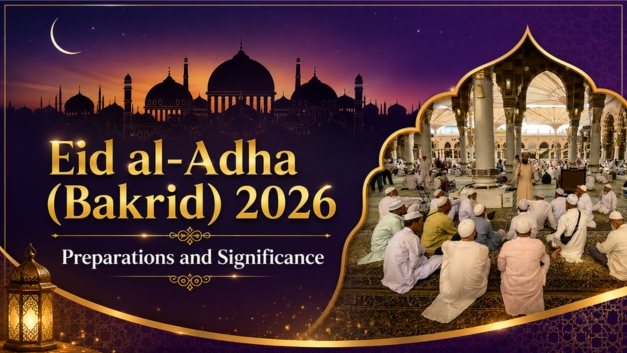
As the holy month of Dhul Hijjah begins, millions of Muslims across the globe are gearing up for one of the most sacred festivals in the Islamic calendar: Eid al-Adha, also widely known as Bakrid or the “Festival of Sacrifice.“
This major religious event honors the spiritual virtues of obedience, deep devotion, selflessness, and community welfare. Depending on regional crescent moon sightings, Eid al-Adha 2026 will begin on the evening of Wednesday, May 27, 2026 in regions like Saudi Arabia and the UAE, and on Thursday, May 28, 2026 across India, Pakistan, and South Asia.
Understanding the Deep Spiritual Significance of Bakrid
At its core, Eid al-Adha commemorates the historical trial of faith endured by Prophet Ibrahim (Abraham). According to Islamic tradition, Ibrahim was commanded by Allah (God) in a dream to sacrifice his most beloved possession his son, Ismail.
Demonstrating unwavering obedience and absolute trust in the Divine command, Ibrahim prepared for the sacrifice. Seeing his absolute submission, Allah intervened at the final moment, replacing Ismail with a ram.
This historic milestone is not a celebration of ritual slaughter; rather, it serves as a powerful metaphor for human transformation. It reminds believers to be willing to sacrifice their own desires, ego, and worldly greed for the greater moral good and in devotion to the Almighty.
Connecting to the Global Hajj Pilgrimage
Eid al-Adha also marks the spiritual conclusion of Hajj, the annual pilgrimage to Mecca, Saudi Arabia, which is a mandatory religious duty for all financially and physically able Muslims. The day immediately preceding the festival known as the Day of Arafah, marks the pinnacle of Hajj, where millions of pilgrims stand on Mount Arafah in deep supplication. For those not performing the pilgrimage, fasting on the Day of Arafah is a highly recommended practice believed to bring spiritual cleansing and renewal.
Key Traditions and Cultural Celebrations
The festivities of Eid al-Adha span over three consecutive days, centered around several foundational practices:
1. Salat al-Eid (The Morning Prayer)
The morning of Eid commences with a festive atmosphere. After performing ceremonial ablutions (Ghusl) and dressing in their finest new traditional attire, families head out in large numbers to local mosques or open prayer grounds, known as Eidgahs. A special congregational prayer is offered, followed by a sermon emphasizing themes of unity, brotherhood, and human charity.
2. The Act of Qurbani (Sacrifice)
Following the morning prayers, families perform the traditional ritual of Qurbani, the ritual sacrifice of a livestock animal, typically a goat, sheep, cow, or camel. This act is bound by strict, compassionate guidelines emphasizing ethical treatment and cleanly handled processing.
3. The Rules of Distribution
The real beauty of Bakrid lies in the mandatory distribution structure of the meat, which is strictly broken into three equal shares:
- One-Third is reserved for the immediate household.
- One-Third is shared lovingly with relatives, neighbors, and friends.
- One-Third must be distributed directly to the underprivileged, needy, and destitute.
This layout ensures that no member of society, regardless of their economic standing, goes hungry during the joyous festival.
Active Preparations Leading Up to Eid al-Adha 2026
As the mid-year summer heat peaks across many parts of the world, preparing for the festival involves a careful blend of early planning and community engagement.
- Arranging the Qurbani Early: Local livestock markets are already buzzing with activity. Families look to book healthy animals well in advance. Concurrently, many urban commuters prefer utilizing reputable non-profit charitable organizations or online platforms to book their Qurbani digitally. This route streamlines direct meat packaging and cold-chain distribution to starving or remote rural communities globally.
- Home Decor and Wardrobe Planning: Cleaning and brightening up living spaces is a universal tradition. Tailors and ethnic clothing markets witness massive rushes as people prepare matching festive apparel for their extended family gatherings.
- Culinary Mastery: Kitchens are organized to execute extensive multi-course feasts. Signature savory and sweet dishes, such as rich Mutton Biryani, Kebab platters, Sheer Khurma, and traditional sweets take center stage, paving the way for large-scale family lunches.
A Time for Unity and Reflection
Beyond the material feast and new clothes, Eid al-Adha 2026 remains a profound canvas for collective empathy. It is a golden window to patch up strained relationships, forgive past grievances, and reach out to the marginalized segments of society. Through sharing food, exchanging hearty Eid Mubarak greetings, and extending monetary charity (Sadakah), the global community reaffirms its commitment to compassion, humility, and unconditional kindness.
Also read, Adhik Maas 2026: What Is Mal Maas & What Should You Do? Guide
Watch Latest News Videos on KRH News: Click Here