


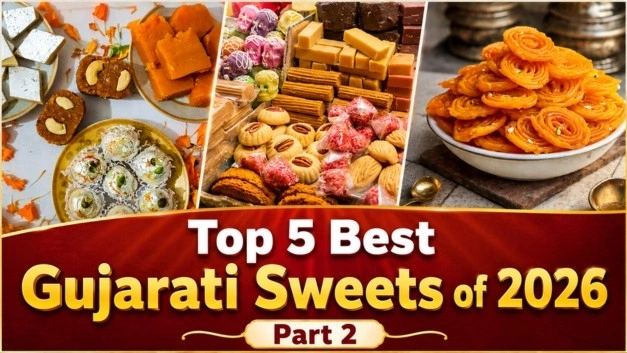
When it comes to culinary heritage, Gujarat is widely celebrated for its masterly balance of sweet, salty, and tangy profiles. In our previous exploration of the Top 5 Best Gujarati Sweets of 2026.
From regional festive staples to winter-special health boosters, the state boasts a diverse assortment of desserts made from slow-roasted flours, clarified butter (ghee), indigenous jaggery, and dense dairy bases. If you want to dive deeper into authentic flavors, here is Part 2 of the top 5 best Gujarati sweets you must experience.
1. Sutarfeni: The Elegant, Threaded King of Confections
When it comes to sheer artisanal skill, Sutarfeni stands out as one of the most unique and visually captivating sweets in Gujarat’s culinary catalog.
The Art of Spun Sugar and Flour
The name directly reveals its structure: Sutar means thread, and Feni means fine. Making Sutarfeni is a highly specialised, laborious task traditionally passed down through generations of local halwais (confectioners). It is made from a blend of fine rice flour and all-purpose flour, kneaded into dough, and then painstakingly pulled, stretched, and folded in warm ghee hundreds of times until it forms ultra-fine, cotton-candy-like threads.
Flavor and Presentation
Unlike heavily dense milk sweets, Sutarfeni is light, airy, and delicately crisp. The fine white or saffron-tinted threads are gently sweetened with a light sugar syrup glaze and heavily topped with aromatic cardamom powder, shredded pistachios, and slivered almonds. It provides a unique melt-in-your-mouth texture that makes it a premium gifting favorite during Diwali and weddings.
2. Sukhdi (Golpapdi): The Comfort Sweets of Gujarati Households
Known universally as Sukhdi in Gujarat and often referred to as Golpapdi or Gur Papdi in neighboring regions, this sweet represents the ultimate comfort food.
Simplicity at Its Best
Unlike elaborate festival sweets, Sukhdi relies on just three basic kitchen ingredients: whole wheat flour (atta), pure ghee, and grated jaggery (gur). The magic lies entirely in the timing. The wheat flour is slow-roasted in hot ghee until it turns deeply golden brown and aromatic. Once taken off the heat, the jaggery is quickly folded in, melting instantly into the mixture before it is pressed into a flat tray and sliced into diamonds.
Auspicious Significance
Sukhdi carries deep roots in local traditions, symbolizing the joy of harvest, simplicity, and warmth. In fact, the famous Mahudi Jain Temple in Gujarat serves warm Sukhdi as prasad to thousands of devotees daily, where it is a strict tradition to consume it entirely within the temple premises.
3. Fada Lapsi: The Symbol of New Beginnings
No auspicious occasion, housewarming party (Vastu Puja), or traditional Gujarati wedding is considered complete without the preparation of Fada Lapsi.
The Anatomy of Lapsi
Lapsi is a coarse, grain-based dessert made primarily from broken wheat (dalia). The broken wheat is roasted patiently in a generous pool of ghee until it cracks and turns nutty. It is then simmered with hot water and sweetened traditionally with jaggery or organic sugar, flavored gently with green cardamom powder.
Why it Ranks High in Heritage
It holds immense spiritual value across West India. Cooking Lapsi is viewed as a good omen to welcome prosperity. Because it uses unrefined broken wheat, it offers an earthy, rustic texture that feels wholesome and deeply comforting.
Must read, Top 5 Best Gujarati Foods You Must Try in 2026
4. Doodh Pak: The Ultimate Creamy Dairy Elite
While Northern India swears by kheer and Southern states celebrate payasam, Gujarat puts its own distinct, luxurious twist on milk pudding with Doodh Pak.
What Makes it Different?
Doodh Pak is a semi-thick dessert made by simmering high-fat milk for hours until it reduces significantly in volume. A remarkably small amount of rice is added compared to traditional kheer, allowing the dairy consistency to remain the main hero.
The Finishing Touches
It is heavily infused with premium saffron strands, nutmeg, and cardamom. What truly sets Doodh Pak apart is the generous inclusion of charoli (chironji seeds) alongside slivered almonds and pistachios. In Gujarati households, it is traditionally served chilled alongside warm, fluffy puris during festivals like Sharad Poornima.
5. Churma Ladoo: The Heart of Festive Banquets
No grand celebratory Gujarati thali or traditional festival, especially Ganesh Chaturthi and family weddings is considered complete without the inclusion of rustic, golden Churma Ladoo.
A Masterclass in Texture
Unlike soft, smooth flour laddoos, Churma Ladoo thrives on its distinct, coarse, and grainy bite. To prepare it, a stiff dough of coarse whole wheat flour (bhakhri atta) and ghee is shaped into fist-sized dumplings called muthiyas. These are deep-fried slow and deep in pure ghee until golden-brown and crisp to the core, then crushed and ground down into a fine, sandy powder known as churma.
The Sweet Binding
This golden churma powder is then combined with warm, melted organic jaggery (gur), spiced elegantly with nutmeg and green cardamom, and rolled firmly into tight spheres. To finish, each ladoo is rolled generously in tiny white poppy seeds (khus-khus), adding a delightful crunch to an incredibly rich, energy-packed traditional dessert.
Also read, Surat’s Street Food: Dishes You Must Try in 2026
Watch Latest News Videos on KRH News: Click Here