


South Gujarat Mobilizes: 5,000 Tribal Delegates Head to the Capital
Red Fort Tribal Cultural Meet Program: In a massive nationwide mobilization to protect and conserve indigenous traditions, thousands of tribal community members from across India are converging on the national capital. Under the resounding clarion call of ‘Chalo Delhi’, the historic Red Fort in New Delhi is set to host the high-profile Janjatiya Cultural Samagam on May 24, 2026.
The event is designed to showcase the vibrant heritage of India’s indigenous clans. However, beneath the cultural showcase lies a deep political undercurrent, as delegates prepare to submit a high-stakes constitutional memorandum targeting religious conversions within Scheduled Tribe communities.
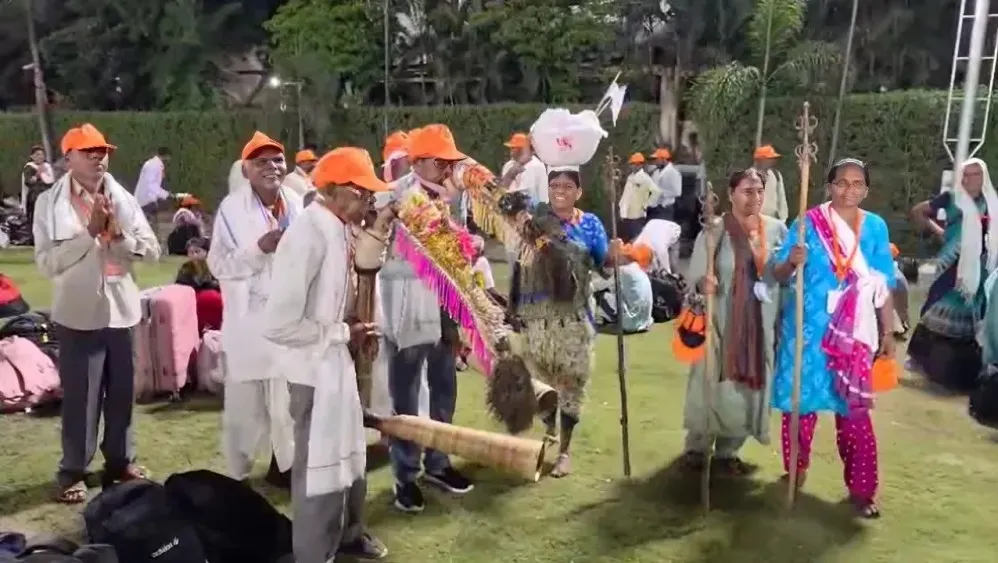
South Gujarat, home to a significant population of indigenous communities, has emerged as a major nerve center for this national movement. Over 5,000 tribal members from the southern districts of the state are traveling to New Delhi to represent their unique customs, ethnic attire, ancestral dances, and traditional culinary arts.
Navsari Sends a Dedicated Special Train
The mobilization reached a crescendo at the Navsari railway station, where a special passenger train carrying over 1,500 tribal delegates was officially commissioned. The train was flagged off amidst loud traditional music and cultural slogans.
Key local dignitaries attended the send-off ceremony to show solidarity with the departing delegation, including:
- Bhuralal Shah, Navsari District BJP President
- Rakesh Desai, Member of the Legislative Assembly (MLA)
The leaders interacted with the tribal elders, wishing them a safe journey and commending their proactive dedication to preserving their ancestral roots on a national platform.
The Core Demand: The Crucial ‘De-Listing’ Memorandum
While the Janjatiya Cultural Samagam will feature extensive traditional dance forms, indigenous musical instruments, and traditional attire, the assembly’s primary objective is legislative and constitutional.
Seeking Intervention from the Highest Offices
A senior committee representing the tribal front has confirmed that a formal memorandum will be submitted directly to President Droupadi Murmu, Prime Minister Narendra Modi, and Union Home Minister Amit Shah.
The central petition demands the immediate formal ‘De-Listing’ of individuals who have converted to other religions while continuing to claim Scheduled Tribe (ST) benefits.
The Tribal De-Listing Argument at a Glance:
• Core Request: Exclude converted individuals from official Scheduled Tribe (ST) lists.
• Cultural Basis: Conversion often leads to a break from ancestral tribal customs, rituals, and deities.
• Resource Allocation: Reservation benefits should be preserved exclusively for those adhering to original indigenous faiths.
The organizers argue that when a tribal individual converts to a mainstream institutionalized religion, they often distance themselves from the ancestral customs, rituals, animistic traditions, and nature-worshipping deities that define the legal status of a Scheduled Tribe. Consequently, the delegation maintains that retaining reservation privileges for converted individuals dilutes the resources meant for marginalized groups who continue to practice and preserve their original indigenous lifestyle.
Reviving and Shielding India’s Indigenous Identity
Beyond the legislative friction, the convention at the Red Fort serves as an essential framework to pass down heritage to younger generations. In an increasingly urbanized world, community leaders believe that regular national conventions are necessary to maintain the integrity of tribal dialects, survival skills, and distinct clothing styles.
A Diverse Visual Spectacle at Red Fort
The event will see convergence from different corners of India:
- North-East India: Traditional bamboo dancers and warriors representing various hill clans.
- Central India: Gond and Baiga artists showcasing intricate wall art and community group dances.
- Western India: Dangi and Warli dancers from Gujarat and Maharashtra performing complex human-pyramid musical routines.
Public policy experts emphasize that this dual focus celebrating vibrant art while demanding strict constitutional boundaries, reflects a growing awareness among India’s indigenous populations regarding their long-term identity and political rights.
Also read, Valsad Water Crisis: Kaprada Women Risk Lives for Water
Watch Latest News Videos on KRH News: Click Here