


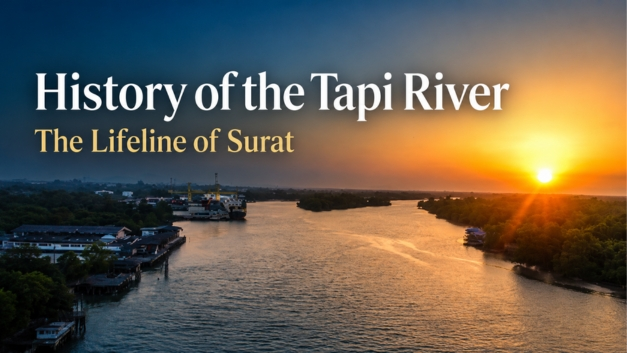
Discover the Ancient Journey of the Tapi River and Its Role in Building Modern Surat
When people think about Surat, they often think of diamonds, textiles, food, and rapid development. But behind the city’s growth lies one natural resource that has silently shaped Surat’s identity for centuries the Tapi River.
Flowing across central India and entering Gujarat before meeting the Arabian Sea, the Tapi River is much more than a water body. It has influenced Surat’s trade, economy, lifestyle, agriculture, and even its future urban planning.
In this blog, let’s explore the history of the Tapi River and understand why it continues to remain important for Surat in 2026.
The History of Tapi River: One of India’s Ancient Rivers
The Tapi River (also spelled Tapti River) is among the major west-flowing rivers of India.
Originating from Multai in Madhya Pradesh, the river travels approximately 724 kilometers through Madhya Pradesh, Maharashtra, and Gujarat before entering the Arabian Sea near Surat. Historically, the river derives its name from Goddess Tapti, who is considered the daughter of the Sun God in Hindu mythology.
Ancient texts and local folklore describe the river as sacred and closely linked with prosperity and life.
Route of Tapi River
- Origin: Multai, Madhya Pradesh
- Flows through: Maharashtra and Gujarat
- Major cities connected: Burhanpur, Bhusawal, Surat
- Ends at: Arabian Sea near Surat
How Tapi River Helped Surat Become a Historic Trade City
Surat’s Rise Began Near the River
Long before highways and airports existed, rivers were the lifelines of commerce. During the Mughal era and colonial period, Surat became one of India’s most important port cities because of its strategic location near the Tapi River.
Merchants used river access to transport:
- Silk and textiles
- Spices
- Precious stones
- Agricultural goods
- Imported products
Surat’s connection to international trade expanded through maritime routes connected to the river and Arabian Sea. Without the Tapi River, Surat may not have evolved into the commercial powerhouse it is today.
Why Tapi River Is Important for Surat Today
1. Primary Water Source for the City
One of the biggest reasons the Tapi River remains important is water supply. A large portion of Surat’s drinking water comes directly or indirectly from river-based infrastructure and reservoir systems. With Surat’s growing population, reliable water availability has become even more critical.
2. Supports Agriculture Around Surat
Areas surrounding Surat benefit from river-fed agriculture.
Farmers depend on water availability for crops such as:
- Sugarcane
- Vegetables
- Paddy
- Fruits
This contributes significantly to local food supply and rural livelihoods.
3. Protects and Shapes Urban Development
The river has influenced city planning and expansion. Many of Surat’s well-known areas developed along or around the river corridor. Riverfront improvements and flood-control measures have become key parts of Surat’s long-term urban vision.
4. Tourism and Public Spaces
The Tapi riverfront areas increasingly attract visitors and local families.
Activities around the river create:
- Leisure spaces
- Walking zones
- Community events
- Photography spots
These developments contribute to quality of life in the city.
Challenges Facing the Tapi River in 2026
Pollution and Urban Pressure
As Surat grows, environmental challenges also increase.
Key concerns include:
- Water pollution
- Industrial pressure
- Waste management
- Seasonal flood concerns
- Ecological preservation
Sustainable development remains necessary to preserve the river for future generations.
Major Historical Flood Events That Changed Surat
Surat has witnessed multiple flood situations linked to river overflow.
One of the most remembered incidents was the major flooding that impacted the city and highlighted the importance of better water management and planning.
These events led to stronger focus on:
- River monitoring
- Urban drainage
- Emergency response systems
- Infrastructure planning
Tapi River and the Future of Surat
The future of Surat is closely connected to the future of the Tapi River. As the city expands into a smarter and more sustainable urban center, protecting this historic river will remain essential. The Tapi River is not only a geographical feature, it is part of Surat’s identity, economy, culture, and daily life. For residents and visitors alike, understanding the river means understanding Surat itself.
Final Thoughts
From ancient trade routes to modern city development, the Tapi River has played a defining role in Surat’s story. Its history reflects the growth of one of Gujarat’s most dynamic cities, while its future will influence how Surat evolves in the coming decades. Whether you live in Surat or plan to visit, experiencing the city also means understanding the river that helped shape it.
Also read, Surat Metro Exclusive: Over 75% Work Completed Trial Runs Begin on East-West Corridor
Watch Latest News Videos on KRH News: Click Here