


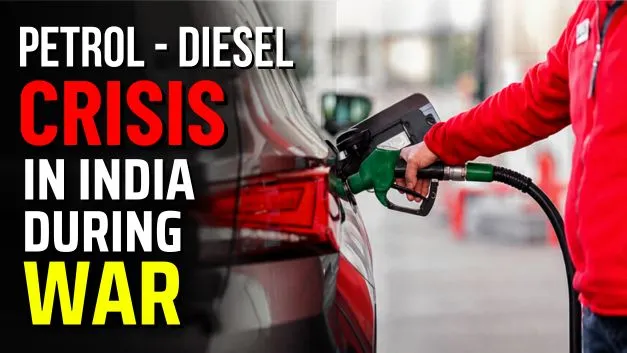
Petrol and Diesel Prices Hiked by ₹3: The Indian energy landscape has been hit by a seismic shift this May. For the first time in over four years, state-owned oil marketing companies (OMCs) have broken their price freeze, passing on the mounting costs of the global energy crisis to the common man. As of May 15, 2026, petrol and diesel prices across India have been hiked by ₹3 per litre, a move triggered by the intensifying conflict in West Asia and the strategic blockade of the Strait of Hormuz.
The Breaking Point: Why Petrol and Diesel Prices Hike Prices Rise
For 11 weeks, the Indian government and OMCs like IOC, BPCL, and HPCL attempted to insulate domestic consumers from the skyrocketing international crude rates. However, with global Brent crude surging past $120 per barrel due to the 2026 Iran War, the financial strain became “unsustainable.”
According to industry sources, OMCs were losing nearly ₹10 billion per day before today’s revision. This ₹3 hike is described as only “one-tenth” of the actual increase needed to offset current import costs, suggesting that more hikes may be on the horizon.
City-Wise Fuel Rates (Updated May 15, 2026)
The impact is felt most acutely in the metros, where logistics and transportation costs are already under pressure.
| City | Petrol Price (per litre) | Diesel Price (per litre) |
| New Delhi | ₹97.77 | ₹90.67 |
| Mumbai | ₹106.68 | ₹93.14 |
| Kolkata | ₹108.74 | ₹95.13 |
| Chennai | ₹103.67 | ₹95.25 |
The Geopolitical Trigger: War in the Strait of Hormuz
The primary driver of this crisis is the closure of the Strait of Hormuz, a critical maritime artery through which 20% of the world’s seaborne oil flows. With Iranian military activity and coordinated strikes in the region, the supply chain has been severed. India, which imports over 80% of its crude oil, is particularly vulnerable.
The International Energy Agency (IEA) has characterized this as the “largest supply disruption in the history of the global oil market.” For India, the risks are multi-pronged:
- Supply Shortfalls: A reduction in imports by nearly 760,000 barrels per day.
- Freight Surges: Insurance and shipping costs for tankers have tripled.
- Resource Rationing: States like Sikkim and Tripura have already implemented fuel cuts for government vehicles.
Government Response: Austerity and Conservation
In response to the crisis, Prime Minister Narendra Modi has issued a nationwide appeal for petroleum conservation. The government is pivoting toward emergency measures to prevent a total dry-out at the pumps.
Austerity Measures Implemented:
- Work-From-Home Mandates: Delhi and several Northeast states have announced 2-day WFH policies for government employees to reduce commuting fuel.
- Odd-Even Returns: The odd-even vehicle rule is being reintroduced in major cities to cut private fuel consumption by 50%.
- Fuel Rationing: Industry-level natural gas usage has been capped, and commercial LPG is being rationed to prioritize domestic supply.
The Shift to Green Energy
The 2026 crisis is accelerating India’s “Electric Revolution.” The government has announced a 100% waiver on registration fees for Electric Vehicles (EVs) purchased during this quarter and is speeding up the rollout of piped natural gas (PNG) to replace domestic LPG.
Economic Impact: Inflation and Logistics
The hike is not just about the fuel tank; it’s about the dinner table. With diesel prices crossing ₹90 in the capital, freight movement costs are expected to rise by 12–15%.
“This is a systemic shock. When diesel goes up, everything from tomatoes to cement follows. We are looking at a projected CPI inflation of 5.6% for the next quarter,” states a recent report from the Observer Research Foundation (ORF).
Conclusion: Is the Worst Yet to Come?
As the BRICS summit in New Delhi approaches, the oil crisis is expected to dominate the agenda. While India has significant strategic reserves, a prolonged war in West Asia could lead to more aggressive price corrections. For now, the Indian consumer must brace for a period of high inflation and adapt to the “new normal” of energy conservation.
Also read, PM Modi Shares 7 Key Appeals Amid Global Crisis and Oil Concerns
Watch Latest News Videos on KRH News: Click Here