


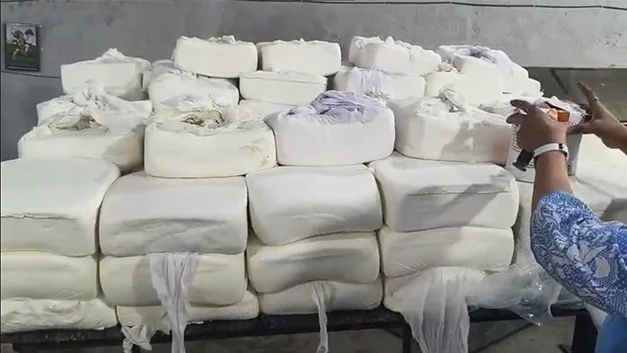
Fake Paneer Scandal in Surat has shocked residents after 1400 kg of paneer failed lab tests, revealing the use of industrial chemicals and adulterated ingredients.
A shocking food safety scandal has come to light in Surat’s Pandesara area, where around 1400 kg of suspected paneer has failed laboratory tests.
The investigation conducted by the Surat Municipal Corporation (SMC) revealed alarming details — the paneer was declared “sub-standard” and found to contain harmful vegetable oil (palmolein) and industrial-grade acid instead of natural milk fat.
This case has raised serious concerns about public health and food safety, as the network had reportedly been active for over two years, supplying nearly 400 kg of fake paneer daily across the city.
Lab Report Findings: What Was Found in the Paneer?
The laboratory analysis confirmed that the seized paneer was not made from pure milk, but instead contained dangerous substitutes and chemicals.
The most critical issue was the absence of proper milk fat, which is essential for genuine paneer.
Key Findings:
- Extremely low milk fat content
- High presence of palmolein oil (vegetable oil)
- Detection of beta-sitosterol, indicating adulteration
- Classified as “sub-standard food”
These findings clearly prove that the product was adulterated and unsafe for consumption.
Use of Industrial Acid: A Serious Health Hazard
One of the most disturbing revelations from the investigation was the use of industrial-grade acetic acid in the production process.
Normally, paneer is prepared using food-grade acids like citric acid or lemon, but to reduce costs, the आरोपी used chemical-based industrial acid.
Health Risks:
- Kidney failure with long-term consumption
- Increased risk of intestinal cancer
- Damage to the digestive system
This makes the product not just fake—but extremely dangerous for human health.
How Fake Paneer Was Manufactured
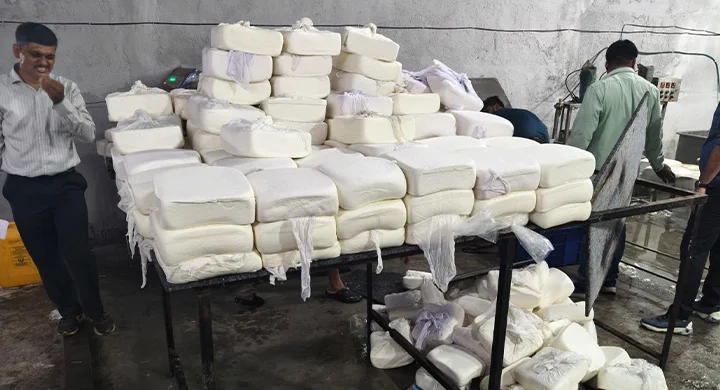
The seized product was identified as “analog paneer”, meaning it was artificially created to look like real paneer.
Instead of milk, a mixture of palmolein oil, milk powder (solids), and water was used. With the help of machines, this mixture was processed into a solid texture resembling paneer.
Manufacturing Process:
- Mixing vegetable oil + powder + water
- Thickening through machinery
- Shaping it into paneer-like blocks
Due to its appearance, it was almost impossible for common consumers to differentiate between real and fake paneer.
Illegal Network & Fake Licensing
The accused, Mahesh Sharma, had an FSSAI license, but it was registered in Vasai, Maharashtra, not Surat.
Using this license as a cover, he was operating an illegal factory in Pandesara, misleading authorities for a long time.
Key Issues:
- License mismatch (registered in another state)
- Illegal production unit in Surat
- Running operations for over 2 years
This highlights serious loopholes in monitoring and enforcement.
Suspicious Pricing: A Major Red Flag
One of the easiest ways to identify this fake paneer was its unusually low price.
While genuine paneer costs around ₹400–₹450 per kg, this network was selling it for just ₹180–₹220 per kg.
Why This Is Suspicious:
- Real paneer requires 6–7 liters of milk per kg
- Cost of production itself exceeds ₹380
- Selling at half price indicates adulteration
This clearly shows that cheap food products can come at a heavy health cost.
Scale of Operation & Daily Supply
The operation was running on a large scale, with high-tech machinery worth over ₹28 lakh seized during the raid.
The network was producing approximately 400 kg of fake paneer daily, which was distributed across:
- Local dairies
- Street vendors (lari-galla)
- Hotels and food outlets
Over two years, thousands of kilograms of this harmful paneer were consumed by unsuspecting citizens.
Impact on Public Health & Food Industry
This incident has deeply impacted both public health safety and the credibility of food businesses in Surat.
Negative Impact (Disadvantages):
- Serious health risks for consumers
- Loss of trust in local food vendors
- Damage to the reputation of the dairy industry
- Potential legal action against hotels and suppliers
Any Positive Outcomes? (Advantages)
While the case is alarming, it has also led to some important positive developments:
Positive Outcomes:
- Increased awareness among consumers
- Stronger food safety inspections
- Authorities taking strict legal action
- Encouragement to check quality and authenticity
What Consumers Should Be Careful About
This case serves as a warning for everyone to be more cautious while purchasing food items.
Precautionary Tips:
- Avoid buying unusually cheap paneer
- Check for texture, smell, and quality
- Prefer trusted brands or verified vendors
- Be aware of food safety standards (FSSAI)
Conclusion: A Wake-Up Call for Food Safety in Surat
The fake paneer scandal in Surat is not just a case of adulteration—it is a serious threat to public health.
With industrial chemicals, fake ingredients, and illegal operations, this network has exposed major gaps in food safety monitoring.
While authorities have now taken action, this incident should act as a wake-up call for both consumers and regulators.
Also read, Valsad’s Mini Atal Bridge: A New Iconic Walkway Boosting Tourism
Watch Latest News Videos on KRH News: Click Here