


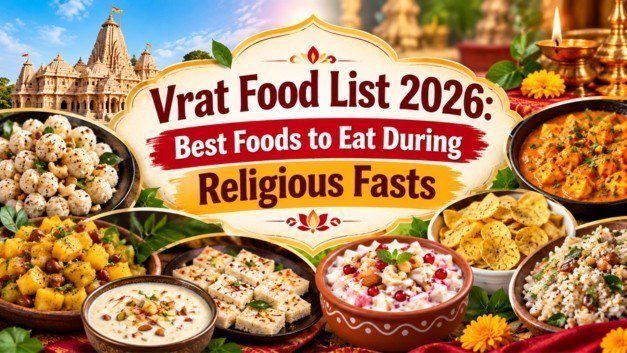
Vrat Food List 2026: Fasting or vrat is an important part of many Hindu festivals and religious observances, including Navratri, Ekadashi, Shravan fasts and Janmashtami. During vrat, devotees generally avoid regular grains, pulses and certain ingredients and choose simple, sattvic and fasting-friendly foods.
The exact rules can vary depending on the festival, region and family tradition.
Vrat Food List 2026
Here are some commonly eaten foods during Hindu fasts:
1. Sabudana
Sabudana is one of the most popular vrat foods. It can be used to prepare sabudana khichdi, sabudana vada and sabudana kheer.
2. Makhana
Makhana or fox nuts can be roasted with ghee and permitted salt or used to make makhana kheer. It is a popular light fasting snack.
3. Kuttu and Singhara Flour
Kuttu (buckwheat) and singhara (water chestnut) flour are commonly used instead of regular wheat flour. They can be used for roti, paratha, cheela and other fasting dishes.
4. Fruits
Fruits are among the simplest fasting foods. Banana, apple, papaya, pomegranate, grapes, coconut and oranges can be consumed where permitted.
5. Potatoes and Sweet Potatoes
Potatoes and shakarkandi are widely used during vrat. They can be boiled, roasted or prepared as simple sabzi or chaat.
6. Dairy Products
Depending on the vrat tradition, milk, curd, buttermilk, paneer and ghee can be included in fasting meals.
7. Nuts and Dry Fruits
Almonds, walnuts, cashews, peanuts, raisins and dates can provide a filling option during fasting.
8. Samak and Rajgira
Samak rice/barnyard millet and rajgira (amaranth) are used in several fasting traditions. However, their acceptability can vary, especially during stricter fasts such as Ekadashi.
What to Avoid During Vrat?
Depending on the fasting tradition, devotees commonly avoid:
- Wheat and regular flour
- Regular rice
- Dal and pulses
- Onion and garlic
- Non-vegetarian food
- Alcohol
- Regular table salt, where sendha namak is traditionally used
- Foods containing prohibited grains or ingredients
Packaged foods should also be checked carefully because some products may contain ingredients that are not permitted during vrat.
Best Vrat Food Combinations
Instead of depending only on fried foods, devotees can choose simple combinations such as:
- Sabudana khichdi + curd
- Kuttu roti + permitted sabzi
- Fruit + nuts
- Roasted makhana + milk
- Sweet potato + peanuts
- Singhara paratha + curd
Vrat Food Rules Can Differ
There is no single food list that applies to every Hindu fast. Navratri, Ekadashi, Shravan and Janmashtami may have different dietary rules.
For example, some devotees follow a fruit-based fast, while others consume one fasting meal or selected vrat ingredients. Therefore, it is best to follow the traditional rules associated with the particular vrat being observed.
Tips for a Healthy Vrat
- Stay hydrated when water is permitted.
- Include fruits, dairy and nuts where allowed.
- Avoid eating excessive fried vrat snacks.
- Check ingredients in packaged foods.
- Do not force a strict fast if your health does not permit it.
- Follow your family’s or religious tradition.
Conclusion
From sabudana and makhana to fruits, kuttu, singhara, potatoes, dairy and nuts, there are many options for devotees observing religious fasts in 2026. The important thing is to remember that fasting rules vary by vrat and tradition. Choose permitted foods according to the specific fast you are observing and your individual dietary needs.
Also read, Radha Ashtami 2026: Date, Vrat, Puja Vidhi, Foods and Significance
Watch Latest News Videos on KRH News: Click Here