


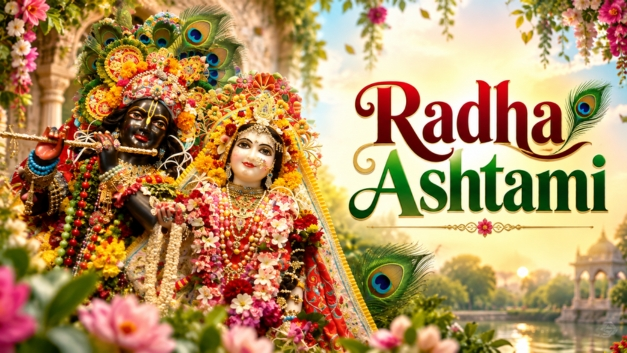
Radha Ashtami 2026 will be celebrated on Saturday, September 19, marking the birth anniversary of Goddess Radha, who is revered as Radha Rani and is closely associated with Lord Krishna in Vaishnav tradition. The festival falls on Shukla Paksha Ashtami of the Bhadrapada month and is also known as Radhashtami and Radha Jayanti.
The festival is especially significant in the Braj region, including Barsana, Vrindavan, Mathura and Nandgaon, where devotees observe fasting, special prayers, abhishekam, bhajans and other devotional rituals.
Radha Ashtami 2026 Date
| Details | Date / Information |
|---|---|
| Festival | Radha Ashtami |
| Date | Saturday, September 19, 2026 |
| Hindu Month | Bhadrapada |
| Paksha | Shukla Paksha |
| Tithi | Ashtami |
| Main deity | Radha Rani |
| Also known as | Radhashtami, Radha Jayanti |
| Main worship period | Madhyahna, or midday |
According to Panchang calculations for parts of India, the Ashtami Tithi begins on September 18 afternoon and ends on September 19 afternoon. Radha Ashtami is observed on September 19 because the relevant Ashtami period falls during the daytime on that date. Exact timings vary by location.
Why Is Radha Ashtami Celebrated?
Radha Ashtami is celebrated as the appearance or birth anniversary of Radha Rani.
According to traditional accounts, Radha was born in Barsana to Vrishbhanu and Kirti. Her festival is observed approximately 15 days after Krishna Janmashtami. In devotional traditions, Radha represents divine love, devotion and spiritual dedication to Lord Krishna. The day is therefore dedicated to prayers and worship of Radha Rani, along with devotional remembrance of Radha and Krishna.
Radha Ashtami Vrat 2026
Fasting is an important part of Radha Ashtami observance. However, the type of fast can vary according to family tradition, individual practice and health.
Devotees may observe:
- Nirjala Vrat: Fasting without food and water, followed by those who traditionally observe a strict fast.
- Phalahar Vrat: Fruits, milk and other permitted fasting foods.
- Partial Fast: A lighter form of fasting according to individual capacity.
- Ekabhukta Vrat: Having one permitted meal during the day.
Traditional descriptions of Radha Ashtami Vrat include observing a full-day fast according to one’s capacity, with an Ekabhukta option for those unable to maintain a complete fast.
People with medical conditions, children, elderly people and those who cannot safely fast should follow appropriate dietary guidance rather than undertaking a strict fast.
What Can You Eat During Radha Ashtami Vrat?
Those observing a food-based vrat commonly choose simple sattvic and fasting-friendly foods. The exact rules vary between families and traditions.
Common Vrat Foods
- Fruits
- Milk
- Curd
- Makhana
- Sabudana
- Potatoes
- Sweet potatoes
- Singhara flour
- Rajgira flour
- Kuttu flour
- Peanuts
- Coconut
- Dry fruits
- Rock salt (sendha namak)
What to Avoid During Vrat
Depending on one’s fasting tradition, devotees generally avoid regular grains and certain everyday ingredients.
Commonly avoided foods may include:
- Wheat
- Rice
- Regular flour
- Pulses
- Onion and garlic
- Regular table salt
- Non-vegetarian food
- Alcohol
Fasting rules are not identical everywhere, so devotees should follow their family’s or religious tradition.
Radha Ashtami Puja Vidhi
Radha Rani is traditionally worshipped during the Madhyahna period, or around midday.
A simple home puja can be performed as follows:
1. Take a Bath and Wear Clean Clothes
Start the day by taking a bath and wearing clean clothes. Clean the area where the puja will be performed.
2. Prepare the Puja Space
Place an image or idol of Radha Rani on a clean platform. Some traditional forms of worship involve establishing a Kalash and preparing a dedicated worship area.
3. Light a Diya
Light a diya and incense before beginning the prayer.
4. Offer Flowers
Offer fresh flowers to Radha Rani. Devotees may also offer garlands according to their tradition.
5. Perform Abhishekam
Where appropriate, the idol can be respectfully bathed using traditional offerings such as:
- Milk
- Curd
- Honey
- Ganga water
- Water
After the abhishekam, the idol is cleaned and dressed in fresh clothes.
6. Offer Bhog
Fruits, sweets and permitted vrat foods can be offered as bhog.
Some temples and devotees also prepare an elaborate Chappan Bhog, consisting of 56 food offerings, although this is not compulsory for a simple home puja.
7. Chant Radha-Krishna Names
Devotees can chant Radha-Krishna mantras, read devotional texts or listen to bhajans.
8. Perform Aarti
Complete the puja with Radha Rani and Krishna Aarti and distribute prasad among family members.
Radha Ashtami Puja Samagri
For a simple home puja, devotees can keep:
- Radha Rani idol or picture
- Krishna idol or picture
- Kalash
- Water
- Diya
- Cotton wicks
- Incense sticks
- Flowers
- Garland
- Kumkum
- Chandan
- Rice
- Fruits
- Sweets
- Milk
- Curd
- Honey
- Tulsi leaves, where appropriate
- Bhog items
- Clean cloth for the idol
The exact list can vary according to regional and family traditions.
Radha Ashtami Vrat: What Should Devotees Do?
Apart from fasting and puja, devotees may spend the day in devotional activities.
Recommended Practices
- Wake up early and take a bath.
- Keep the home and puja area clean.
- Observe the vrat according to personal and family tradition.
- Worship Radha Rani during the midday period.
- Chant Radha-Krishna names.
- Listen to devotional bhajans.
- Read or listen to Radha-Krishna stories.
- Offer fruits and sweets as bhog.
- Donate food or other useful items.
- Help people in need.
- Maintain a peaceful and devotional atmosphere.
Radha Ashtami Do’s and Don’ts
Do’s
- Maintain cleanliness during the puja.
- Wear clean clothes.
- Offer fresh fruits and flowers.
- Follow your family’s vrat tradition.
- Consume only permitted fasting foods if observing a food vrat.
- Spend time in prayer and devotion.
- Distribute prasad after the puja.
Don’ts
- Do not consume prohibited foods during the vrat.
- Avoid unnecessary arguments and negative behaviour.
- Do not treat fasting as a competition.
- Do not undertake a strict fast if your health does not permit it.
- Avoid consuming regular grains if your vrat tradition prohibits them.
Radha Ashtami in Barsana and Braj
Radha Ashtami has a particularly strong connection with Barsana, traditionally regarded as Radha Rani’s birthplace.
The festival is also observed across Vrindavan, Mathura and Nandgaon, with temples conducting special worship and devotional programmes. Barsana’s Shri Ladli Ji Maharaj Temple is particularly associated with Radha Ashtami celebrations and special worship of Radha Rani.
Devotees may participate in temple darshan, abhishekam, kirtans, bhajans and other religious activities.
Radha Ashtami and Janmashtami: What’s the Difference?
Both festivals are closely connected with Krishna devotion, but they commemorate different occasions.
| Festival | Significance | 2026 Date |
|---|---|---|
| Krishna Janmashtami | Birth anniversary of Lord Krishna | September 4, 2026 |
| Radha Ashtami | Birth/appearance anniversary of Radha Rani | September 19, 2026 |
Radha Ashtami is traditionally celebrated around two weeks after Janmashtami. In 2026, Janmashtami falls on September 4, followed by Radha Ashtami on September 19.
Radha Ashtami Mantra
Devotees may chant simple Radha-Krishna names and traditional devotional mantras during the festival.
One commonly recited form is:
“Radhe Radhe”
Devotees can also chant or listen to Radha-Krishna bhajans during the day as part of their devotional observance.
What Is the Significance of Radha Ashtami Vrat?
For devotees, the vrat is primarily an expression of faith, devotion and spiritual discipline.
Radha is revered in Vaishnav traditions as an embodiment of divine love and devotion. Observing Radha Ashtami through fasting, prayer, bhajan, puja and acts of charity allows devotees to dedicate the day to spiritual practices.
Different religious traditions describe the spiritual significance of the vrat in different ways, so the practices and beliefs can vary between communities.
Radha Ashtami 2026: Important Points
- Date: Saturday, September 19, 2026
- Festival: Radha Ashtami / Radhashtami
- Dedicated to: Radha Rani
- Month: Bhadrapada
- Tithi: Shukla Paksha Ashtami
- Main puja period: Madhyahna
- Vrat: Full or partial fast according to tradition and capacity
- Important places: Barsana, Vrindavan, Mathura and Nandgaon
- Main practices: Puja, abhishekam, bhajan, kirtan, fasting and bhog
- Common vrat foods: Fruits, milk, makhana, sabudana, potatoes and permitted fasting flours
Radha Ashtami 2026: Conclusion
Radha Ashtami 2026 will be observed on September 19, celebrating the birth anniversary of Radha Rani. The festival is marked by fasting, special puja, abhishekam, devotional singing and offerings.
For those observing the Radha Ashtami vrat, the most important aspect is to follow their family’s or religious tradition with devotion and according to their personal capacity. A simple home prayer with flowers, fruits, bhog and Radha-Krishna naam smaran can also be part of the observance.
Also read, Ambaji Bhadarvi Poonam Mela 2026: GSRTC to Run 6,000 Extra Buses
Watch Latest News Videos on KRH News: Click Here