


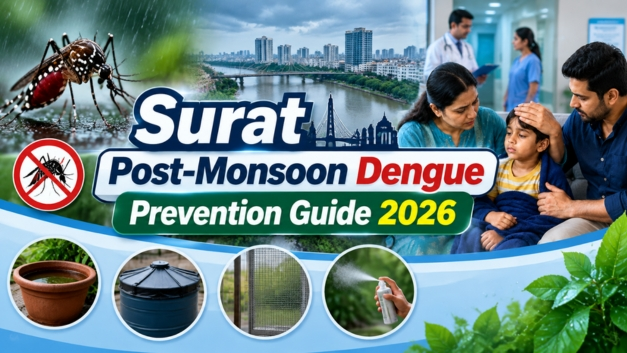
With the 2026 monsoon gradually moving towards its withdrawal phase, Surat residents need to remain alert about mosquito breeding. South Gujarat had received more than 100% of its seasonal average rainfall by August 16, while Gujarat’s normal monsoon withdrawal period is around September 15. The water left behind after repeated rainfall can create breeding conditions for mosquitoes.
Why Post-Monsoon Mosquito Control Matters
Stagnant water in flower pots, buckets, discarded containers, tyres, rooftop areas, construction sites and open plots can become mosquito-breeding sites.
Surat Municipal Corporation’s Vector Borne Diseases Control Department works against diseases including dengue, malaria and chikungunya, with mosquito control and surveillance forming a major part of its activities.
How Surat Residents Can Prevent Dengue
The simplest prevention starts around the home.
- Empty stored water regularly.
- Keep water tanks properly covered.
- Clean flowerpots and trays.
- Remove discarded tyres, bottles and containers.
- Check balconies and terraces after rainfall.
- Do not allow water to collect in coolers.
- Keep drains and surrounding areas clean.
- Use mosquito screens where possible.
- Wear clothing that covers the skin when mosquitoes are active.
- Use mosquito repellent according to its instructions.
Eliminating stagnant water is particularly important because dengue-transmitting Aedes mosquitoes can breed in relatively small water collections.
What Is SMC Doing?
SMC’s vector-control system includes anti-larval measures, mosquito surveillance and anti-adult measures. Its disaster-management plan also provides for mosquito-control activities around identified malaria and dengue cases, including fogging and intensified surveillance.
Residents can also use SMC’s Citizen’s Connect system to register civic complaints. The official app includes complaint registration and a GPS-based feature to identify the nearest municipal zone or civic centre.
When Should You See a Doctor?
Dengue can cause symptoms such as fever, headache, body or muscle pain, nausea and rash. Symptoms can overlap with other infections, so residents should avoid self-diagnosis.
If a person develops a high or persistent fever, severe weakness, repeated vomiting, abdominal pain, bleeding or other concerning symptoms, medical attention should be sought promptly.
Final Word
The end of the monsoon does not immediately mean the end of mosquito-related health risks. For Surat residents, removing stagnant water and preventing mosquito breeding should continue through the post-monsoon period.
With South Gujarat experiencing heavy seasonal rainfall in 2026, household-level prevention combined with municipal mosquito-control measures can help reduce the risk of dengue and other vector-borne diseases.
This article is for public health awareness and does not replace medical advice. Residents with suspected dengue symptoms should consult a qualified healthcare professional.
Also read, Surat Railway Station Guide 2026: Platforms, Facilities and Nearby Transport
Watch Latest News Videos on KRH News: Click Here