


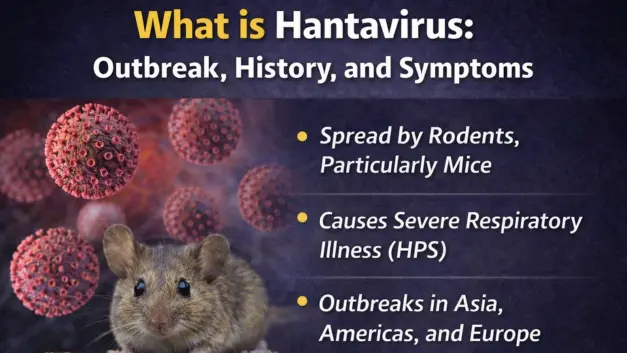
In May 2026, the World Health Organization (WHO) was notified of a concerning cluster of severe respiratory illnesses aboard a cruise ship in the South Atlantic.
This latest incident has reignited global interest in the Hantavirus, a family of viruses transmitted primarily by rodents. As of May 6, 2026, at least seven cases have been linked to this specific cluster, resulting in three deaths and leaving others in critical condition.
The 2026 Hantavirus Cluster: What Happened?
The recent outbreak occurred on a cruise ship that departed from Ushuaia, Argentina, in April 2026. Passengers reported symptoms ranging from high fever and gastrointestinal issues to rapid progression of pneumonia and acute respiratory distress syndrome (ARDS).
Multi-Country Response
Because the vessel carried passengers from over 23 nationalities, the response has been a coordinated international effort involving:
- The United Kingdom & South Africa: Managing cases that were medically evacuated.
- Cabo Verde: Serving as the current mooring location for patient evaluation.
- The Netherlands & Spain: Participating in epidemiological tracking and notification.
Testing confirmed that the Andes virus (ANDV), a specific strain of hantavirus found in South America, was responsible for the infections.
The History and Discovery of Hantavirus
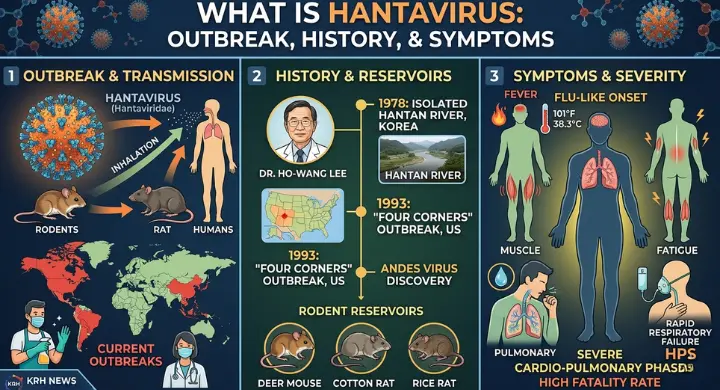
The name “Hantavirus” originates from the Hantan River in South Korea, where Dr. Ho-Wang Lee first isolated the virus in 1978 from a field rodent. However, the disease has been around much longer.
The “Four Corners” Outbreak of 1993
In the United States, Hantavirus gained national attention in 1993 during an outbreak in the “Four Corners” region (New Mexico, Arizona, Colorado, and Utah). Young, healthy individuals were suddenly dying of unexplained respiratory failure. This led to the discovery of the Sin Nombre virus, the primary cause of Hantavirus Pulmonary Syndrome (HPS) in North America.
Ancient Origins
Research into stored tissue samples revealed that Hantavirus has affected humans for decades, with confirmed cases dating back to at least 1959.
Symptoms: How to Identify Hantavirus
Hantavirus is notoriously difficult to diagnose early because its initial symptoms mimic the common flu.
Early Symptoms (Prodromal Phase)
These usually appear 1 to 8 weeks after exposure:
- Fever & Chills: High temperature often exceeding 101°F.
- Muscle Aches: Intense pain in the large muscle groups like thighs, hips, and back.
- Fatigue: Deep exhaustion that precedes respiratory issues.
- GI Issues: Nausea, vomiting, and abdominal pain are common in 50% of cases.
Late Symptoms (Cardiopulmonary Phase)
Four to ten days after the initial phase, the disease can escalate rapidly:
- Shortness of Breath: Caused by the lungs filling with fluid.
- Coughing & Chest Tightness: Signs of impending respiratory failure.
- Low Blood Pressure: Can lead to shock and organ failure.
Transmission: How Does It Spread?
Hantavirus is a zoonotic disease, meaning it jumps from animals to humans. Unlike many other viruses, it is not primarily spread by insects or ticks.
The Role of Rodents
Rodents like deer mice, cotton rats, and rice rats are the primary reservoirs. They carry the virus without getting sick themselves. Humans become infected through:
- Aerosolization: Breathing in dust contaminated with rodent urine, droppings, or saliva.
- Direct Contact: Touching contaminated surfaces and then the eyes, nose, or mouth.
- Bites: Though rare, a rodent bite can transmit the virus.
Important Note: While most hantaviruses do not spread between people, the Andes virus (found in South America) is the only strain known to have rare person-to-person transmission.
Prevention and Safety Tips
Since there is no specific cure or vaccine for Hantavirus, prevention is your best defense.
1. Rodent-Proof Your Home
- Seal Gaps: Use steel wool or caulk to fill holes larger than a 1/4 inch.
- Food Storage: Keep all pet and human food in airtight containers.
2. Safe Cleaning Practices
Never sweep or vacuum rodent droppings, as this kicks the virus into the air. Instead:
- Wear gloves and an N95 mask.
- Spray the area with a mixture of bleach and water.
- Let it soak for 5 minutes before wiping with a paper towel.
3. Caution in Unused Spaces
Be extremely careful when opening cabins, sheds, or attics that have been closed for a long time, as these are prime nesting grounds.
Conclusion: Staying Informed with KRH News
The 2026 Hantavirus outbreak reminds us that vigilance is key. While the global risk remains low, the severity of the disease means that early detection and medical intervention are life-saving. For more real-time health updates and deep dives into emerging science, keep following krhnews.
Also read, Deadly Hantavirus Outbreak on Cruise Ship Raises Concerns after 3 individuals died
Watch Latest News Videos on KRH News: Click Here